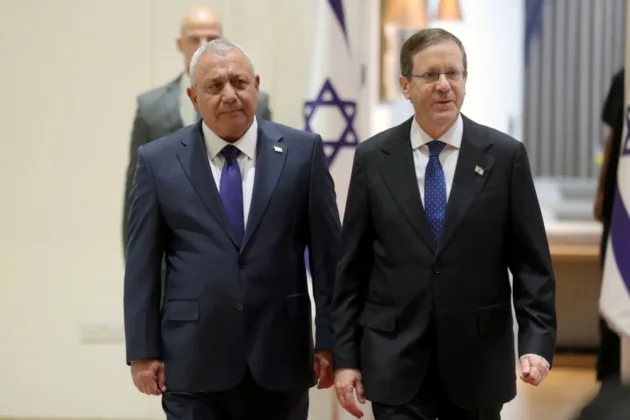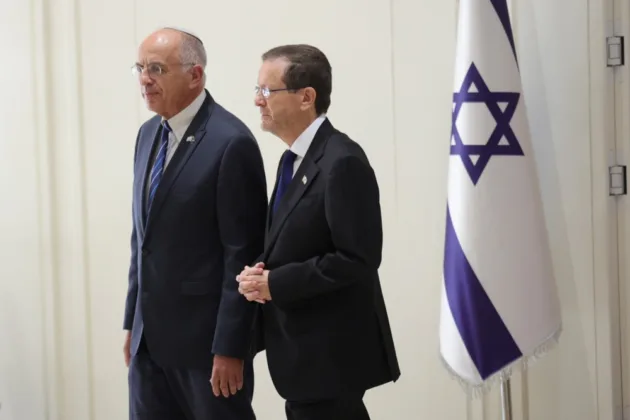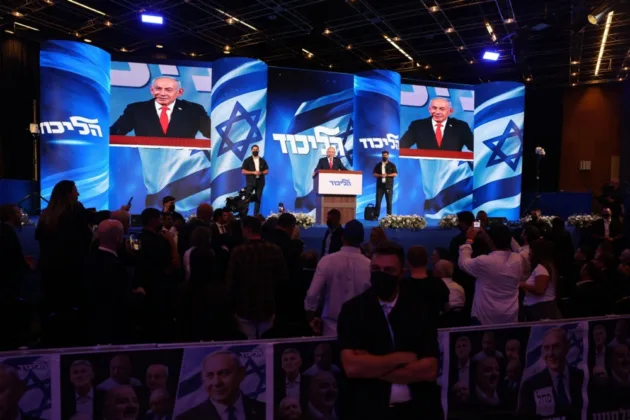







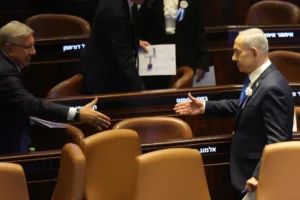



Israel’s caretaker prime minister and the politician charged with assembling the country’s next government have announced they would meet for a diplomatic and security briefing, amid speculation over possible military action against Iran.
Prime Minister Benjamin Netanyahu and Yashar party leader Gadi Eisenkot said in a joint statement that the meeting would take place today at the Prime Minister’s Office in Jerusalem. Netanyahu’s military secretary Maj-Gen Guy Markizeno would also attend.
The announcement followed a letter Eisenkot sent to Netanyahu yesterday urging him to show exceptional caution and responsibility in security matters during the transition. The former army chief warned that deploying security forces without a direct and immediate threat could have devastating consequences for Israeli democracy and public trust.
The letter did not mention Iran. It came, though, amid reports in Israeli media that Netanyahu was seeking military action there despite objections from security chiefs.
Eisenkot reminded Netanyahu that only 46 lawmakers had backed his continued tenure. He also asked attorney general Gali Baharav-Miara to intervene so that he would receive regular security briefings, saying his earlier requests had been turned down.
By law the prime minister must brief the opposition leader at least once a month. With no coalition yet in place, there was no formally designated opposition leader to brief.
Netanyahu’s office dismissed the letter as irresponsible and accused Eisenkot of politicising national security. It said all government decisions had been based solely on security considerations and taken in full coordination with the defence establishment.
Israeli defence minister Israel Katz said on social media this morning that the government needed no approval from the opposition or any legal authority to order military operations in Gaza, Lebanon, Syria or the West Bank.
On Iran, Katz said Israel had acted with resolve and sound judgement in coordination with the military and would continue to do so as circumstances required. Israel’s security was not on hold while political processes ran their course, he added.
Netanyahu’s right-wing and religious bloc lost its parliamentary majority in the October 27 election, winning 53 of the Knesset’s 120 seats against 48 for the opposition and 19 for Arab-led parties. President Isaac Herzog formally tasked Eisenkot with forming a government on November 8 after factions holding 67 seats recommended him.
Eisenkot had until December 6 to build a coalition, with a possible extension to December 20. Until a new cabinet was sworn in, Netanyahu would retain control of the government and the security forces.
Relations between Israel and the European Union have been strained by the Israel-Hamas war in Gaza. In April, Spain, Ireland and Slovenia renewed a push to suspend the EU-Israel Association Agreement but were blocked by Germany and Italy.