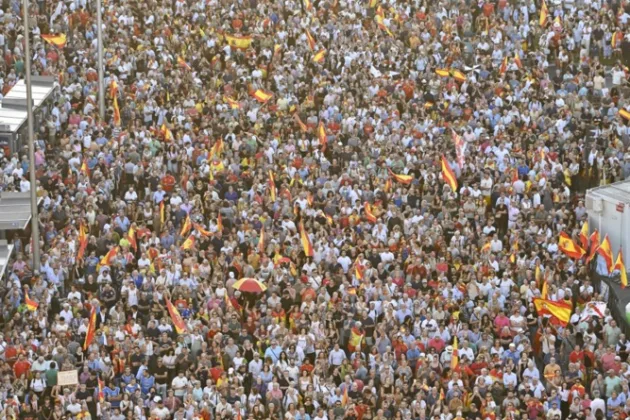






Co-ordinated demonstrations against mass tourism took place across southern Europe, including Barcelona, Palma, Ibiza, Lisbon and Venice.
Local residents of popular hot spots in Spain, Portugal and Italy have been turning against mass tourism, blaming visiting foreigners for overcrowded city centres and housing shortages.
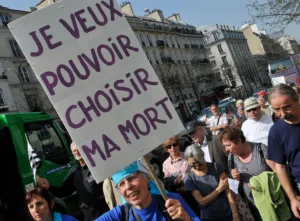
On June 15 in Barcelona, locals used water pistols against tourists to annoy them. Protestors carried signs reading “Tourists go home” and “Tourism is stealing from us”.
Police intervened as they marched near the Sagrada Família Basilica, one of the city’s most popular tourist attractions.
In other cities, there was more symbolical protest.
Genoa, Italy, saw protesters dragging suitcases along the city centre’s cobblestone alleys in a “noisy stroll” to highlight what they saw as over-tourism’s impact.
In Lisbon, demonstrators paraded a handcrafted effigy of the city’s patron saint from his namesake church to the site of a planned five-star hotel, symbolising local resistance.
In Majorca, Spain, residents halted a double-decker tourist bus on June 14, igniting flares and draping a banner across its side to protest mass tourism.
This follows similar incidents in July 2024. Since then, many people claim little has been done as tourist numbers have continued to rise.
At the time, locals also used water pistols against tourists, gaining much attention in the media.
The Spanish Government issued stricter regulations on vacation rentals and made it obligatory for short-term rental providers to register their properties on a newly created database in an effort to prevent illegal offers.
In April this year, there was also a large protest in Madrid against Airbnb, the online platform that dominates short-term accommodation in Europe.
The demonstrations were organised by the Sur de Europa contra la Turistisacion (Southern Europe against Touristification) and was supported by local campaign groups, including The Menys Turisme Mes Vida (Less Tourism More Life).
Short-term rental prices have risen, while traditional shops have also increasingly been replaced by outlets targeting tourists with souvenirs, swimming gear and fast food.
Tourists, though, do in bring a lot of revenue. In Mallorca, tourism accounts for more than 40 per cent of total income.
In 2023, the tourism sector made up 12.8 per cent of the Spanish GDP, equivalent to €186.6 million.
In 2024, almost 94 million international travellers visited Spain, making it the world’s second-most popular tourist destination after France.
According to a recent report by the tourism industry association Exceltur, the number of short-term rental properties in Spain has increased by 25 per cent over the past two years, despite the country’s ongoing housing crisis.