

The Polish Government has approved legislation which is to allow local authorities and housing bodies to ban short-term rentals of privately owned accommodation currently offered on services such as Airbnb.
The cabinet adopted the measure on September 2 as an amendment to its own bill, hours before the Sejm, the lower house of parliament, held a first reading of the text.
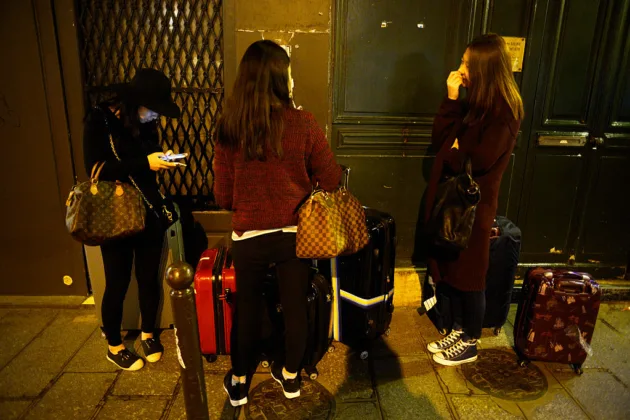
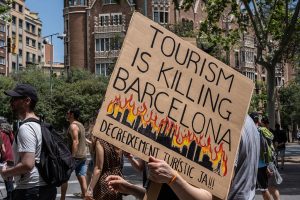
Similarly to other parts of the world there has been a boom in the short-term rentals market in Poland in recent years which has led to protests in some localities against disruptive short-term tenants and alleged reduction in and increase in the price of available housing for long-term rent.
The legislation is to give greater rights for residents, communities, condominiums and housing cooperatives as well as local authorities regarding the situation in the short-term rental market.
According to the government, when order, safety and basic comfort of life are threatened, decisions can be made by local authorities to exclude these types of businesses.
The bill was drawn up by sport and tourism minister Sławomir Nitras and its core purpose is to implement the EU regulation on the collection and sharing of short-term rental data, which has applied across the bloc since May 20, 2026.
It would treat stays of up to 30 days as a hotel service, create a Central Register of Tourist Accommodation Facilities and set fines of up to 50,000 złoty (€11,600) for operators who fail to register.
The new rules on bans, which are not due to come into force until January 1, 2028, to give time for businesses to adapt, would allow condominiums and housing cooperatives to prohibit short-term rentals.
In housing communities the decision would be taken by a majority of owners weighted by their share of the property, while in cooperatives more than 50 per cent of all those entitled to vote would have to back a ban. Operators of short-term rental properties would then have six months to end operations.
Municipal councils, at the request of the mayor, would also be given the power to designate specific areas within their territory in which short-term rentals would be banned or restricted to a specified number of days per month.
There would also be greater powers for residents and housing groups to initiate official inspections of properties if they believe there are violations of public safety and order rules.
If inspectors confirmed three violations within six months, the local authority would be obliged to strike the property from the register of accommodation providers, with re-entry possible only after a year. The remaining provisions would take effect 14 days after publication, and Prime Minister Donald Tusk said measures dealing with breaches of public order would apply immediately.
The move comes in the wake of reports that the European Commission is preparing new regulatory rules designed to give individual cities and member states more power to restrict and regulate Airbnb and other short-term rental platforms. The initiative responds to growing housing shortages across major European cities, where residential properties have increasingly been converted to tourist accommodation.
The Financial Times reported on August 30 that the measures would form part of an Affordable Housing Act which the Commission intends to present by the end of 2026. The proposed EU framework is to enable municipalities facing acute housing crises to implement stricter controls over short-term rentals, potentially including licensing requirements, occupancy caps or area-based restrictions, moving from the current patchwork of national and local rules toward a more coordinated European approach.
Commission figures put short-term rentals at 1.2 per cent of the EU’s housing stock, rising to as much as 20 per cent in tourism hotspots.
Speaking before a cabinet meeting on September 2, Prime Minister Donald Tusk, who heads Poland’s centre-left coalition government, said that following a “difficult process” of discussion, his coalition, which ranges from left to centre right, had agreed on the legislation to restrict short-term lets.
There have been tensions within the ruling coalition over the issue with The Left (Lewica) and the centrist Poland 2050 party pushing for greater restrictions while the Polish People’s Party (PSL) and parts of Tusk’s Civic Coalition (KO) wanted to protect the short-term lets market and its landlords from too much intervention.
Funds and regional policy minister Katarzyna Pełczyńska-Nałęcz, of Poland 2050, had attacked the July text for leaving local authorities with no powers and warned of the spread of what she called “patohotele”, or problem hotels, in residential blocks.
The country has seen a boom in tourism in recent times and in 2025 recorded 7.2 per cent growth in the number of nights spent in tourist accommodation, the European Union’s second highest, behind only Malta on 10.1 per cent, according to Eurostat.
The government has of late talked of tourism as one of the important growth engines of the economy and therefore there was anxiety that restrictions on the short-term lets market could slow down the country’s drive for a greater share of the European tourist market.
When the legislation was first submitted to parliament in July, some parts that had previously been included, such as provisions allowing municipalities to ban short-term rentals in certain areas, were removed but after pressure from The Left and Poland 2050 the bill has been toughened up again.
That tightening of the bill looks also to be in tune with the right-wing opposition Law and Justice (PiS) party’s demands that power should be placed in the hands of local communities to decide on the scope of short-term lets.
President Karol Nawrocki, who is allied to the opposition, has not as yet expressed a view on the matter. But given that the ruling majority and a large part of the opposition is now likely to support the measure he will be less inclined to veto the legislation.
Nawrocki has vetoed many government bills but not those which have been supported by the opposition.
If Poland does introduce restrictions on short-term lets, its cities could follow the example of many of their European counterparts, such as Barcelona, Paris and London, which have recently introduced various restrictions on short-term rentals.
One such city is Kraków, Poland’s second largest city and its major tourist destination, which in July 2024 appointed a “night mayor”, an official responsible for reconciling the interests of the city’s residents with those of business owners and tourists.
In September 2020 the city signed a letter of intent with Airbnb to promote responsible and sustainable tourism, the platform’s first such agreement with a city in central and eastern Europe, and in 2021 it launched eKON, an online register of accommodation providers.
City hall said in August that more than 3,500 properties offering over 47,000 beds were listed on that register, and that it had again asked the Government for powers to regulate short-term lets and to levy a tourist tax.
The issue is being raised as part of the ongoing election campaign in the city after the last mayor, Aleksander Miszalski, was recalled in a referendum on May 24. Turnout reached 29.99 per cent and 171,581 voters backed his removal; a parallel vote on dissolving the city council fell short of the threshold.
Miszalski, who represents Tusk’s KO, was criticised for cronyism in appointments and of being too close to developers and business. He was also attacked for introducing a clean air zone restricting cars entering the centre.
The early election is set for September 27, with a run-off on October 11 if needed. Polls show Tusk’s party’s candidate trailing an independent: an Opinia24 survey for Polityka Insight published on August 26 put Łukasz Gibała on 25.2 per cent and the KO and PSL candidate Monika Piątkowska on 15.3 per cent, with a quarter of respondents undecided.
Availability of housing is a big issue in Poland. Despite economic growth the European Commission put at 3.6 per cent in 2025, the demand for housing and prices of housing have been rising.
The large influx of Ukrainians in the aftermath of the Russian invasion of Ukraine has pushed up prices of both purchases and rentals in the cities.
The last PiS government had tried to help first time buyers by subsidising mortgages at 2 per cent but that if anything accelerated the rise in prices by increasing demand without increasing the supply of housing.
The current Tusk government had promised to introduce zero-rated mortgages for first time buyers but after wrangling inside the coalition the proposal was scrapped.
Both The Left and the centrists from Poland 2050 argued that there was a need to increase the supply of social housing rather than subsidise mortgages.
The expanding short-term rental market has limited supply on the market of properties for long-term rent thereby pushing up prices.
Though there is also a different issue which concerns policy makers, the number of empty properties which are not rented out or available for sale.
The reason for this is because property taxes in Poland are relatively low and many owners have found that over the past decade or so their asset was increasing in value with that increase exceeding the costs of taxing and servicing the property.
This is why a debate is ongoing within the present government over the possibility of making those who own more than three apartments pay far more in property tax as an incentive for them to either sell or rent their properties and also in order to raise more revenue for the State in order to invest in social housing.
The Left tabled a bill in the Sejm on March 20 which would tax third and subsequent flats at 0.5 per cent of their value a year, rising to 1.5 per cent, while leaving first and second homes broadly untouched.
Though Tusk’s party, the PSL and the opposition are reluctant to travel in this direction, fearing that such a tax would be a stalking horse for introducing a cadastral tax based on property values. Such a tax is felt to represent an increase in the tax burden that would prove highly unpopular and be a vote-losing policy.
Given the country will be voting in 2027 in a highly contested parliamentary election there is little or no appetite for introducing policies that could be interpreted as being a drain on the pockets of the population.
But giving local authorities the power to restrict short-term lets is a policy which benefits the majority while affecting a small minority of multiple property owners and is therefore seen as politically safe ground.