


At least four people have died and more than 100 have been injured after Russia launched one of its most powerful attacks on the Ukrainian capital Kyiv since the start of the war, deploying drones, ballistic missiles and the hypersonic Oreshnik projectile.
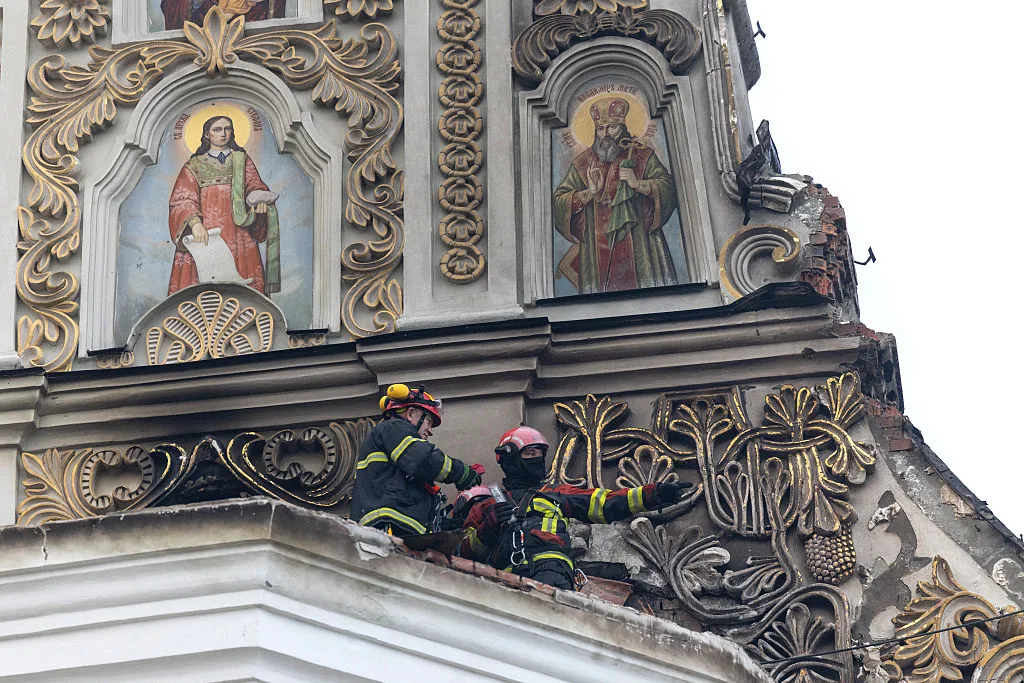
Ukrainian President Volodymyr Zelensky said the bombardment had damaged or destroyed more than 30 buildings in the capital. The Chernobyl Museum, the National Art Museum and the local bureau of German public broadcaster ARD were almost completely destroyed.
Falling debris damaged the World Health Organisation’s offices in the city and struck the residence of Albania’s ambassador, who escaped unhurt. The Albanian Government summoned the Russian ambassador in Tirana in protest.
Explosions began shaking Kyiv and its outskirts at about 1am local time on May 24, with further waves around 3am as the Ukrainian Air Force detected dozens of missiles heading towards the capital.
Regional officials confirmed deaths in the outlying districts of Bucha and Obukhiv. The head of the Kyiv regional administration, Mykola Kalashnyk, reported a further nine injuries on the periphery.
Russia’s acknowledgement that it used the Oreshnik missile carries particular weight, since the weapon is designed to carry a nuclear payload. European allies of Kyiv said its use had added a layer of intimidation to the wider bombardment.
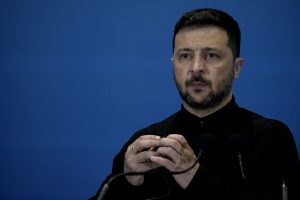
“Russia has launched three missiles against a water supply plant. They set fire to the market, damaged dozens of homes and several schools. They launched their Oreshnik. Today, anyone in the world who does not stay silent and helps Ukraine is a defender of life,” Zelensky said.
The head of the Kyiv military administration, Timur Tkachenko, reported strikes across multiple districts including Obolonskyi, Shevchenkivskyi, Holosiivskyi, Solomianskyi, Desnianskyi, Darnytskyi, Dniprovskyi and Podilskyi.
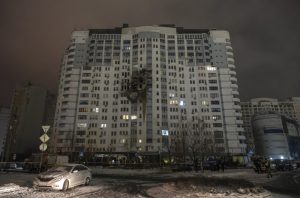
Kyiv mayor Vitali Klitschko said missile fragments had struck a 24-storey residential block in Shevchenkivskyi district. Thirty injured people were hospitalised, including two children.
Outside the capital, Ukrainian media reported explosions in the cities of Cherkasy and Kropyvnytskyi, and in the Khmelnytskyi region of western Ukraine. Earlier strikes in the south and east had already wounded civilians in the Odesa and Kharkiv regions, with nine injured in Odesa, three of them children aged between eight and 12.
European Commission President Ursula von der Leyen and EU foreign policy chief Kaja Kallas joined Kyiv’s allies in condemning the attack as an “aberrant act of terrorism”.
Russia’s Ministry of Defence confirmed using drones, Iskander, Kinzhal, Tsirkon and Oreshnik missiles, but said the strikes had targeted “military command facilities, airbases and Ukrainian defence industry enterprises”. Moscow described the bombardment as retaliation for a Ukrainian strike on May 22 against a student dormitory in Starobilsk, in the Luhansk region, which Russia said killed 21 people — most of them aged between 19 and 22 — and injured 38 others.