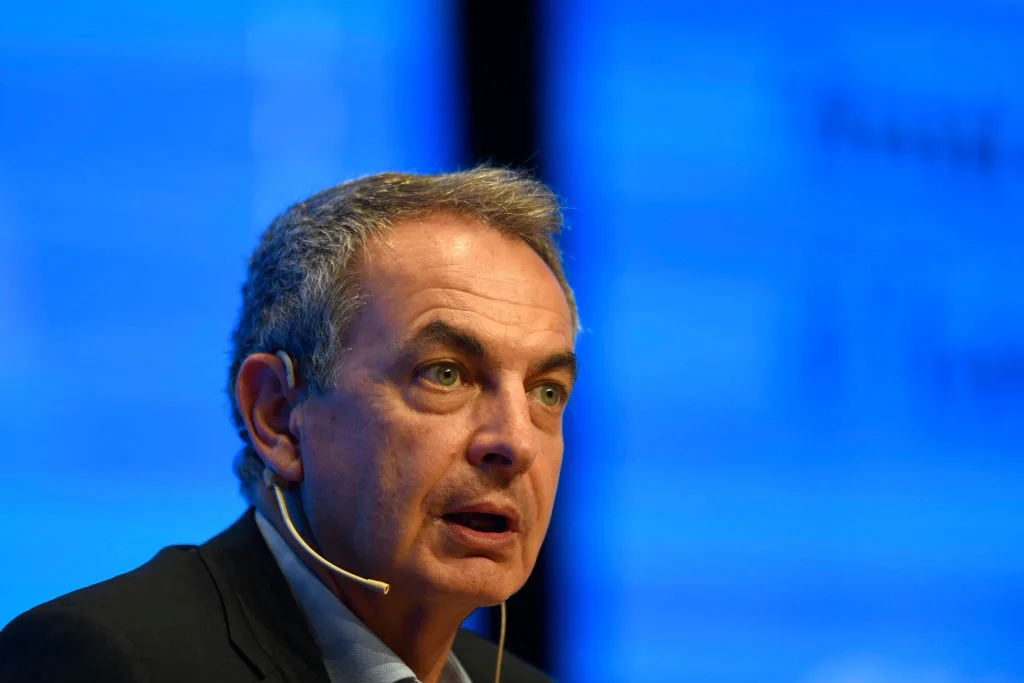



When Spain’s former Socialist prime minister José Luis Rodríguez Zapatero appears before Judge José Luis Calama at the country’s high criminal court, the Audiencia Nacional, on June 2, he will become the first former Spanish head of government questioned as a corruption suspect since the country’s return to democracy in 1977. The proceedings — based largely on report 1908/26 of Spain’s UDEF financial crimes unit, dated April 22 — are only one of four fronts now closing on the former leader at the same time.
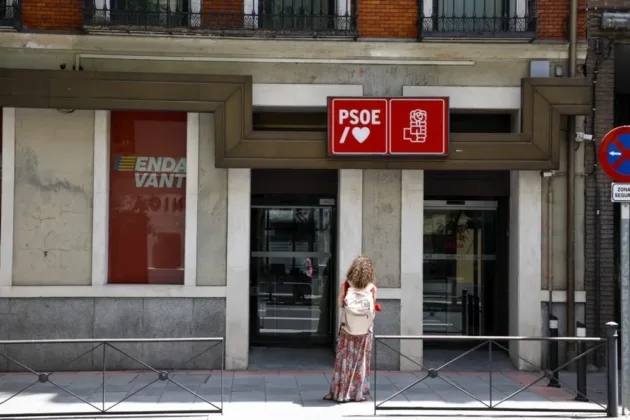
Calama’s 85-page order, signed on May 18, was followed the next day by Operation Tibet — a search by the UDEF of Zapatero’s office at 35 Ferraz Street, directly opposite the headquarters of the governing Spanish Socialist Party (PSOE). Investigators seized a concealed safe, diaries and cash.
What makes the Plus Ultra case unusual is its scope. Earlier Socialist corruption files — the Andalusian ERE scandal over regional unemployment funds and the more recent Koldo affair around former transport ministry contracts — were essentially domestic. This investigation interlocks Spanish criminal procedure with a US sanctions inquiry, a perjury complaint in preparation at the Spanish Senate and the diplomatic mediation channel that has held the Sánchez minority government in office.
THE SPANISH COURTS
The 158-page UDEF report reconstructs, message by message, the steps that led Spain’s State holding company SEPI to grant €53 million in March 2021 to Plus Ultra Líneas Aéreas, a small airline with documented ties to Venezuela. The raw material is twofold: an extraction of the mobile phone of Rodolfo Reyes Rojas, the airline’s main shareholder, handed over by the US Homeland Security Investigations (HSI) office; and devices seized in a Spanish police operation on December 11, 2025.
According to the report, the suspects refer to their own structure as a “finance boutique” — a phrase attributed to Plus Ultra’s chief financial officer Roberto Roselli Miele in May 2020. From March 23, 2020, six days after Spain declared its first Covid-19 state of alarm, Reyes is said to have activated two parallel channels: one through then-Transport Minister José Luis Ábalos, run by his aide Koldo García Izaguirre, and another opened on March 30 via Venezuelan national Ramón Gordils, allegedly leading to Zapatero. On April 28, Reyes is quoted as saying “the bridge with ZP has just been made”. The two channels converged on July 8, 2020 in a meeting organised by the then secretary of state for transport Pedro Saura.
The police conclusion is explicit. At “the top of the influence network”, the report states, “José Luis Rodríguez Zapatero would be located”, exercising “non-visible leadership” and “strategic supervision”. Calama charges him with influence peddling, criminal organisation, document falsification and money laundering, naming businessman Julio Martínez Martínez — owner of consultancy Análisis Relevante — and Manuel Aarón Fajardo as intermediaries, and his long-time secretary María Gertrudis Alcázar together with Cristóbal Cano at the operational level.
The most compromising thread is dated February 26, 2021. According to the report, Martínez Martínez congratulated Reyes that day on the “upcoming obtaining of the SEPI loan” and predicted approval in the Council of Ministers of March 9 — six days before SEPI’s FASEE management board would meet. For the UDEF, this evidences “the capacity of the influence network to access privileged information”.
THE SOUTHERN DISTRICT OF NEW YORK
The international dimension is structural, not incidental. The HSI was already investigating Reyes as part of a transnational organised crime group dedicated to money laundering and the circumvention of US sanctions, with Plus Ultra named in the network. Cooperation between Madrid and Washington — explicitly noted in Calama’s order — has been the channel through which the most damaging evidence reached the Spanish court.
The US Southern District of New York prosecutor’s office has included Zapatero on a list of 64 individuals under investigation for alleged ties to Chavismo, the political movement founded by the late Hugo Chávez. The US Treasury Department has separately traced a $519,000 (€478,000) transfer to a Swiss account linked to alleged Venezuelan oil-related corruption.
THE SPANISH SENATE
The Spanish Senate, controlled by an absolute majority of the opposition People’s Party (PP), is preparing a perjury complaint. Under oath on March 2, 2026, Zapatero denied any involvement in the Plus Ultra rescue and any relationship with the airline. The documentary evidence held by the court contradicts both claims, and the PP intends to pursue the matter as a separate criminal action.
POLITICS AND MEDIATION
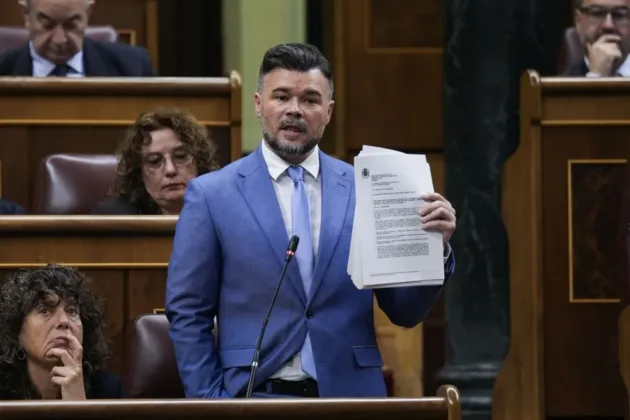
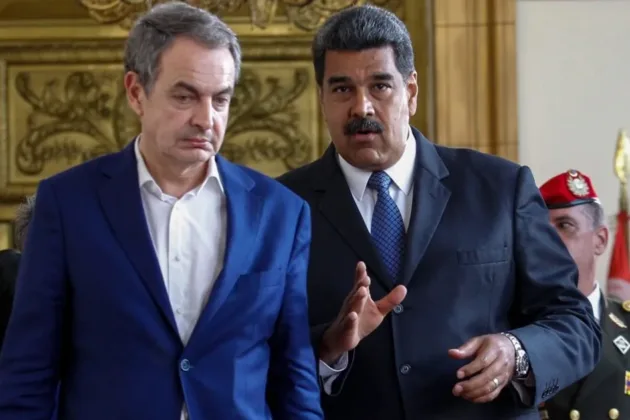
The fourth front is political. Following the pretrial detention of former PSOE organisation secretary Santos Cerdán, Zapatero had assumed a central mediating role between the Sánchez government and Junts per Catalunya, the Catalan separatist party led by fugitive Carles Puigdemont. Spanish press reports document trips by Zapatero to Waterloo, Brussels and Geneva and commitments — including a “Catalan CGPJ” and the continuity of the so-called Bolaños amnesty law — on which the parliamentary arithmetic of the legislature depends. The indictment has effectively decapitated that function.
Reactions came swiftly. Aitor Esteban, leader of the Basque Nationalist Party (PNV), has said it “would be irresponsible for Sánchez to continue beyond 2026”. Prime Minister Sánchez has publicly offered Zapatero “all my support”. Zapatero himself denies wrongdoing. The PP is demanding fresh elections, while right-wing Vox is calling for pretrial detention and the withdrawal of his diplomatic passport.
The hearing on June 2 will test not only Zapatero’s legal defence but the political durability of the Sánchez minority government — whose parliamentary arithmetic the former prime minister had helped to hold together.