





Michael Grade, the recently departed chairman of the Office of Communications (Ofcom), has accused critics of GB News of seeking to restrict free speech to a narrow “liberal, Islington consensus”, claiming that broadcasters are embarrassed by the right-leaning channel because it reflects the views of a large section of the British public.
In a series of outspoken interviews since stepping down from the media regulator, Lord Grade — a veteran broadcasting executive who previously ran ITV, Channel 4 and the BBC — has defended GB News and pushed back against what he sees as an elite-driven push to limit viewpoint diversity in British media.
Grade said he is now “free of the shackles” and can speak openly.
He argued that GB News covers issues such as immigration and Brexit with a weighting that mainstream outlets, particularly the BBC, have historically underplayed.
“A large swathe of the voting population… have no voice on the BBC,” he said, adding that the channel “speaks to the agenda of the majority”.
Grade explicitly linked opposition to GB News with an ideological impulse to curtail expression: “They just don’t like the idea that there’s any voice or any agenda… different from the kind of liberal, Islington consensus.”
He maintained that the same impartiality rules apply to GB News as to the BBC, Sky and ITN, and that differing editorial choices are not inherently wrong.
Grade told The Guardian that a long-term failure to give “the white majority a voice in the debate” would damage social integration in Britain.
“The fact is, what people don’t like is the fact that there is a television station giving voice to a strong body of opinion in this country which has been ignored for years,” he said.
“They just don’t like the idea that there’s any voice or any agenda, news agenda, which is different from the kind of liberal, Islington consensus.”
The remarks have drawn sharp criticism from former Ofcom insiders and academics.
Chris Banatvala, Ofcom’s founding director of standards, accused Grade of misunderstanding the broadcasting code’s due impartiality requirements, arguing that a single sentence in a script is rarely sufficient to balance controversial topics.
Professor Steven Barnett of the University of Westminster said Grade appeared to have “rewritten the law on impartiality”.
Others have raised concerns that Ofcom under Grade’s tenure was insufficiently robust in enforcing rules against GB News, particularly over interviews such as the one with Donald Trump.
Ofcom itself has distanced itself from Grade’s personal comments, stressing that it applies rules “fairly and equally” to all broadcasters and has taken action against GB News where breaches were found.
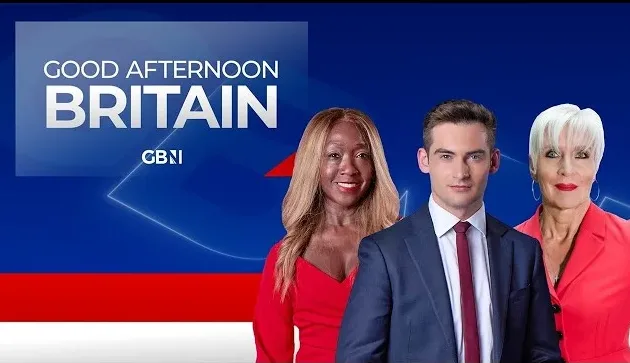
GB News described itself as Britain’s number one news channel, serving the public rather than the “media establishment elite”.
The debate comes amid ongoing tensions over broadcasting impartiality rules, the role of partisan-leaning channels, and wider arguments about free speech in the UK.
Grade, who retook the Conservative whip in the House of Lords after leaving Ofcom, has long been associated with resistance to what he once called the “woke brigade”.