



For a quarter of a century an ice cream parlour in the Silesian town of Pszczyna in southern Poland has been giving free ice cream on the last day of the school year to children who have recorded distinction on their annual report but this year the business decided to end the practice following an intervention from the children’s rights commissioner Monika Horna-Cieślak.
In Polish schools, pupils who earn a distinction on their school reports are traditionally rewarded at the official end-of-year ceremony with gifts such as books, and the ice cream parlour wanted to reward them too with a free ice cream.
The commissioner, who was elected in Parliament by the centre-left majority which backs the coalition government led by Prime Minister Donald Tusk, wrote two letters to the ice cream parlour in which she pressed the business to adopt a “fully inclusive” approach and give free ice creams to all children regardless of their school grades.
“I am writing to urge you to consider, in future, forms of support and rewards for children that do not divide them on the basis of their academic achievements, but are equally accessible to all, regardless of their school report marks,” wrote Horna-Cieślak.
She went on to claim that linking rewards to academic performance places unnecessary pressure on children and excludes those facing learning difficulties beyond their control.
The business owner acknowledged that the children’s commissioner did not have the power to force them to end the practice but decided not to enter into a confrontation with a state institution.
The business owner confirmed to portal Do Rzeczy that she had felt pressured by the Commissioner’s original letters.
“Even if there was nothing in the letters saying I was being forbidden from such actions it was stated that I should cease the practice. I wanted to avoid the problems of someone informing on me again for continuing the practice. How am I to know what exact consequences I might face?”
According to local councillors in Pszczyna the ice cream parlour concerned often gave free ice creams to children without top grades too, but some parents reported the business to the commissioner leading to the intervention.
The official’s intervention which led the ice cream parlour to end the practice of giving ice cream to school pupils with top grades was widely criticized by both Polish politicians and the country’s media for ending a popular local tradition and sending totally the wrong signals with regard to recognising academic achievement.
The intervention was criticized by education minister Barbara Nowacka who saw nothing wrong with rewarding academic effort and achievement.
“The hard work, ambition and talent of pupils are worth recognising and rewarding because it motivates other children to study and work hard. Schools, parents, local authorities and NGOs all do this. It’s good that sometimes ice-cream parlours do too,” wrote Nowacka on platform X on June 5.
Other politicians also pointed to the fact that the state itself formally rewards high achieving students by scholarships to universities and places in better high schools. Therefore they felt that there was nothing wrong with private businesses awarding children for their efforts with a discount, ticket to an event, book or treat.
Former Prime Minister Mateusz Morawiecki of the opposition Conservatives (PiS) mocked the commissioner’s approach by applauding the official for spotting real danger.
“We await further interventions: A ban on medals in sports competitions and a ban on diplomas in competition. Nothing encourages children like a message of don’t try too hard, or someone’s feelings may get hurt!”
Poland’s most popular current affairs YouTube channel Kanał Zero joined in the criticism of the commissioner’s actions by announcing that it would be offering free ice-cream for the best performing school children in several locations as their act of support for rewarding effort.
The broadcaster’s leading commentator Grzegorz Sroczyński said that “it is amazing that the children’s commissioner objects to free ice cream being given to some pupils but makes no intervention in cases of discrimination with regard to free school meals”.
Sroczyński was referring to media reports in Poland that in some local authorities children who qualified on the basis of a needs assessment for free school meals were being given poorer food than those whose parents were paying for their school meals.
The children’s rights commissioner hit back against her critics rejected the criticism, describing allegations against her as being a form of hate speech.
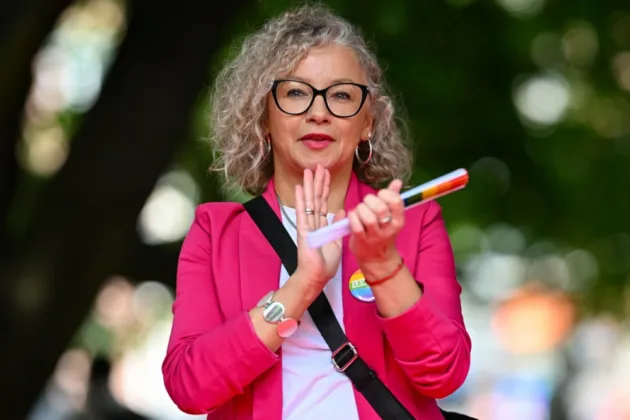
In a social media post she shared a photograph with the ice-cream parlour’s owner announcing an event to be held on June 26, the last day of the school year which was being organised jointly with local authorities and open to all children.
“Let’s celebrate together and stand up against hate speech,” Horna-Cieślak wrote, without explaining in what way defending a local tradition of awarding children for excellence at school in any way constituted hate.
The commissioner’s visit to Pszczyna last week came as the media covered the dispute. She called the ice cream parlour owner suddenly and asked for a meeting.
The parlour’s owner was not altogether happy with the commissioner’s visit.
“The commissioner contacted me suddenly. I did not really want the meeting but agreed to it after some pressure. The Commissioner argued at the meeting that she had been misunderstood and that she wished we had talked earlier on the subject.”
But there had been no attempt to visit the business before the two letters asking for an end to the practice had been issued.