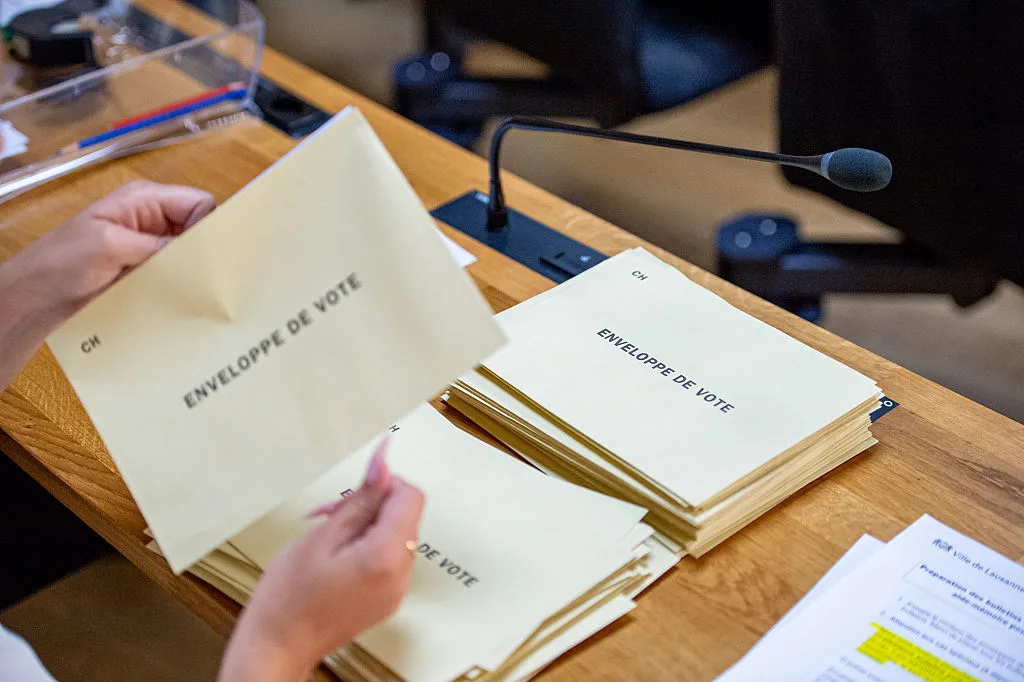






As Swiss voters prepare to decide on the Swiss People’s Party’s (SVP/UDC) proposal to cap the country’s population at 10 million, a coalition of healthcare institutions, business groups, and government officials are campaigning against what they warn would be a profound disruption to the country’s economy and public services.
The initiative, which will be put to a vote on June 14, reflects growing anxieties over housing shortages, strained transportation networks, and rising living costs.
Its supporters argue that decades of population growth have placed unbearable pressure on infrastructure while contributing to higher rents and social tensions.
The right-wing SVP presents the proposal as a necessary corrective to what it describes as “uncontrolled immigration”.
However, key sectors in Switzerland have become structurally dependent on foreign labour.
Hospitals, nursing homes, and social care providers rely heavily on workers recruited from abroad to compensate for chronic labour shortages.
Alarmed by the prospect of tighter immigration rules, major healthcare organisations, including the Swiss National Association of Hospitals and Clinics and the Swiss Nurses’ Association, have formed a joint committee to oppose what they call the SVP’s “chaos initiative”.
They argue that limiting migration would further strain an already overstretched workforce and ultimately undermine patient care.
The federal government has echoed these concerns, warning that the proposal could threaten the functioning of essential public services.
The SVP rejects these criticisms, insisting that Switzerland should invest more in training domestic workers rather than relying on labour imported from neighbouring countries.
Party leaders note that their proposal would still permit the annual immigration of up to 40,000 foreign nationals.
Switzerland already has a population of 9.1 million, and according to federal projections, the country could surpass the 10 million threshold as early as 2040.
Recent polling suggests a closely divided electorate, with 45 per cent supporting the initiative and 52 percent opposed.
Opposition for the referendum initiative remains strongest among younger voters, women, and urban residents, while support is concentrated among men, middle-aged voters, and residents of rural and semi-rural regions.
The vote on June 14 reflects broader political cleavages that have emerged within neighbouring members of the EU bloc where everyday concerns such as housing, public services, and economic insecurity are looked at into the prism of immigration.
Few parties have mastered the use of referendum as effectively as the Swiss People’s Party (SVP). In Switzerland, if campaigners gather 100,000 signatures, they can trigger a nationwide vote on a constitutional amendment.
Since the 1990s, the party has repeatedly used popular initiatives to shape Switzerland’s debate on immigration, national identity, and relations with Europe.
Several of its proposals have won voter approval. In 2010, they approved the automatic expulsion of foreign nationals convicted of certain crimes. In 2014, voters narrowly supported a proposal to curb mass immigration, a decision that strained relations with the European Union. In 2021, another SVP-backed initiative banned face coverings in public, a measure widely known as the “burqa ban”.
The referendum on Sunday may prove to be the party’s most ambitious demographic proposal yet. If approved, it would place a constitutional ceiling on Switzerland’s population growth and could once again put the country on a collision course with Brussels.
A yes vote would reopen long-standing disputes between Brussels and Berne. In 2014, Switzerland voted to limit immigration, a move that clashed with the EU’s principle of free movement. The result was a diplomatic dispute that led to Switzerland’s temporary exclusion from the Erasmus+ student exchange program and the Horizon research program.