









Despite being presented as a breakthrough, the ceasefire agreed in Washington on June 3, 2026 has already been rejected by Hezbollah and is being violated on the ground. From Beirut, Brussels Signal analyses the political and strategic obstacles that could prevent the agreement from ever taking hold.
Seen from Beirut, the ceasefire reached on the night of June 3, 2026 between Israel and Lebanon appears extremely difficult, if not impossible, to implement in practice.
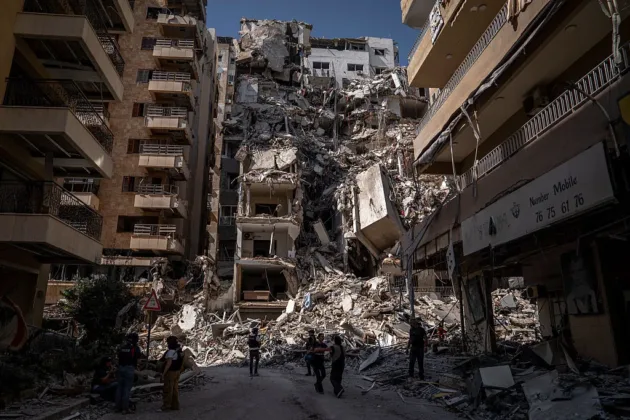
Indeed, within hours of its announcement, both sides resumed military activity. Hezbollah has continued low-intensity guerrilla operations in areas of southern Lebanon occupied by Israeli forces, while Israel has maintained airstrikes and artillery fire across the country. Israeli strikes killed at least 10 people in southern Lebanon on June 3, 2026 and further raids hit towns in the Bekaa Valley, eastern Lebanon, the following day. Far from ending the conflict, the agreement appears to have institutionalised an unstable status quo in which violence continues below the threshold of full-scale war.
The ceasefire, negotiated in Washington, DC by Lebanese and Israeli delegations under US supervision in the fourth round of direct talks since fighting escalated on March 2, 2026, is built around a broader objective shared by both governments: Reducing Hezbollah’s military and political influence in Lebanon, which they view as the principal obstacle to a lasting peace between the two countries.
Yet the deal suffers from a fundamental flaw: It was negotiated while paying little attention to Hezbollah’s own demands, effectively asking the movement to accept an outcome that it regards as a strategic defeat. Hezbollah, which was not party to the talks, formally rejected the deal on June 4, 2026, with its leader Naim Qassem saying the group sought only a comprehensive halt to Israeli operations and a full Israeli withdrawal. In doing so, the agreement risks undermining its own implementation.
Its central provision is the withdrawal of Hezbollah from areas currently occupied by Israeli forces and its replacement by units of the Lebanese Armed Forces (LAF), which would act as guarantors that the movement does not re-establish a military presence there. Under the joint statement, the two sides also agreed to create “pilot zones” in which the LAF would take exclusive control of the territory, to the exclusion of all non-state actors. Crucially, thoughthe agreement does not require an immediate Israeli withdrawal from occupied territory. Nor does it provide for the return of the local Shiite population, which before the war constituted the overwhelming majority of residents across much of the border region.
This omission may prove one of the principal reasons why the ceasefire is unlikely to hold. Following the Israeli advance into southern Lebanon, much of the local population fled towards other parts of the country. Many displaced families settled in Beirut, where some continue to live in schools converted into collective shelters, while others share overcrowded apartments, hotel rooms or makeshift encampments along the coast. Hundreds of thousands of people have been displaced from the south since fighting resumed in March 2026, according to Israeli and Lebanese officials, while the earlier 2024 war displaced more than a million at its peak.
Israel has shown little willingness to facilitate their return. Israeli officials argue that Hezbollah’s influence among large segments of the Shiite population remains too strong. Israeli Defence Minister Israel Katz said on June 4, 2026 that the military would continue operations in Lebanon and would not withdraw, and that the hundreds of thousands forced from their homes in the south would not be allowed to return. The movement itself often refers to this social base as the “society of resistance”, the civilian environment that sustains Hezbollah’s confrontation with Israel. From the Israeli perspective, the return of residents could create the conditions for Hezbollah’s gradual re-infiltration of the border areas, allowing the organisation to rebuild networks and logistical infrastructure close to Israel’s northern frontier.
As a result, Israeli military planners increasingly view restrictions on civilian returns as a security necessity, in what risks becoming a permanent displacement. Together with the continued presence of Israeli troops on Lebanese territory, this is one of the main reasons why Hezbollah rejects the ceasefire in its current form. For the movement, any arrangement that leaves Israeli forces on Lebanese soil while preventing displaced Shiite communities from returning home amounts not to a ceasefire but to the consolidation of a new status quo imposed by force.
A second and perhaps even more fundamental obstacle is the wider nature of the conflict itself. Despite its local specificities, the Lebanese theatre is only one front in the broader confrontation between the United States and Iran. Israel enjoys extensive political and military backing from Washington, while Hezbollah remains one of the central pillars of the Islamic Republic’s regional security architecture and deterrence strategy.
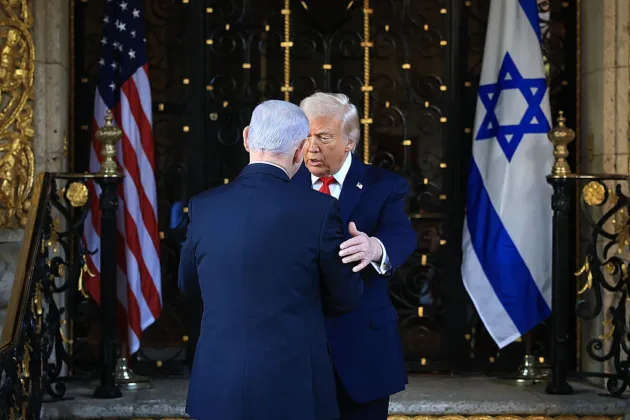
Both the Lebanese and Israeli governments have sought to present Lebanon as a separate dossier, insulated from any broader negotiations involving Washington and Tehran. United States President Donald Trump said on June 3, 2026 that he wanted to separate the Lebanon talks from negotiations on the US-Israeli war on Iran. Iran, though, has little incentive to accept such compartmentalisation. From Tehran’s perspective, Hezbollah is not merely a Lebanese actor but a strategic asset within a regional network. Iran’s foreign minister, Abbas Araghchi, warned that any attack on Beirut would trigger a “full-scale resumption” of the war. Any wider understanding with the United States and Israel would therefore have to address Hezbollah’s position and security concerns.
Finally, there is a crucial point. If Hezbollah has little incentive to implement this ceasefire, the same can be said of Israel, despite having agreed to it.
Several sources who spoke to Brussels Signal in recent weeks said the Israeli government remains dissatisfied with the outcome of its broader confrontation with Iran. According to these sources, since the escalation in March 2026, Israel has failed to achieve several of its key strategic objectives.
In particular, Israeli officials are said to be concerned by ongoing diplomatic efforts between Washington and Tehran, from which they feel increasingly sidelined. They have therefore pushed to keep the Lebanese dossier separate from negotiations involving Iran, allowing Israel greater freedom to continue military operations against Hezbollah.
Yet neither Tehran nor Hezbollah accepts such a distinction, viewing the various regional fronts as interconnected. As a result, Lebanon risks becoming the arena through which Israel can maintain military pressure in an attempt to influence wider negotiations and potentially derail broader diplomatic agreements involving Iran and its regional allies.