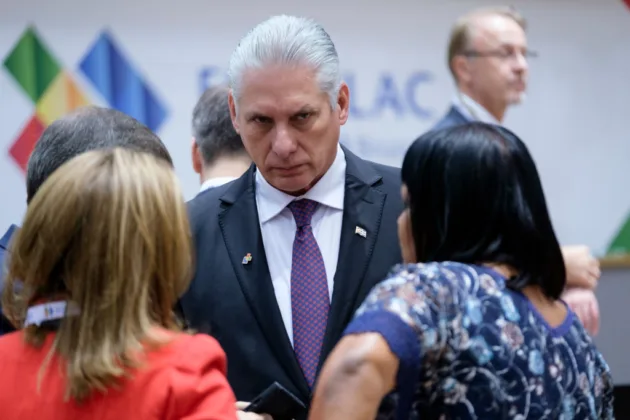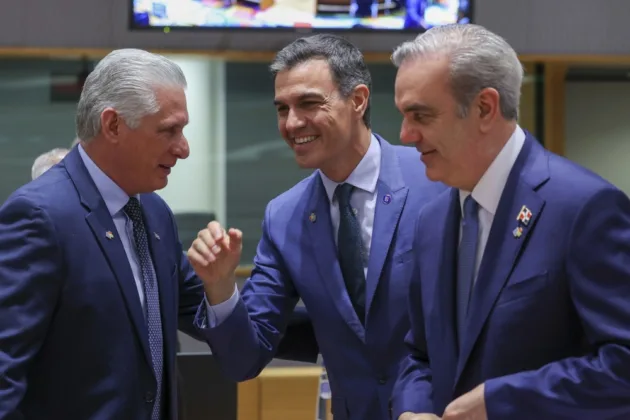


The European Parliament has called on the European Union to impose sanctions on Cuban President Miguel Díaz-Canel and to suspend its cooperation agreement with Havana unless the communist regime frees all political prisoners and moves towards democracy.
In a resolution adopted by 283 votes to 199, with 85 abstentions, MEPs said that after five decades of communist rule Cuba was close to becoming a failed state.
The text was carried by the European People’s Party (EPP), the European Conservatives and Reformists (ECR) and the liberal Renew Europe, over opposition from the Socialists and the Left.
Parliament said the island’s humanitarian emergency, with 89 per cent of families living in extreme poverty, was not the fault of the decades-old United States embargo but “the direct consequence of the regime’s own model and failures”.
It put the number of political prisoners at a record 1,281 at the end of May 2026, including minors, and demanded their immediate and unconditional release alongside an end to torture and ill-treatment.
The resolution urged the EU to adopt targeted measures under its global human rights sanctions regime against those responsible for repression, naming Díaz-Canel and the leadership of GAESA, the military conglomerate that controls close to half of the island’s economy.
It said that, in the absence of clear steps towards a democratic transition, the bloc should suspend the political dialogue and cooperation agreement signed with Cuba in December 2016.
Critics have long argued that the pact legitimised and helped finance the government while delivering little on human rights.
MEPs also condemned the regime’s material support for Russia’s war against Ukraine, including the recruitment of Cuban nationals to fight Ukrainian forces, and its alignment with Belarus.
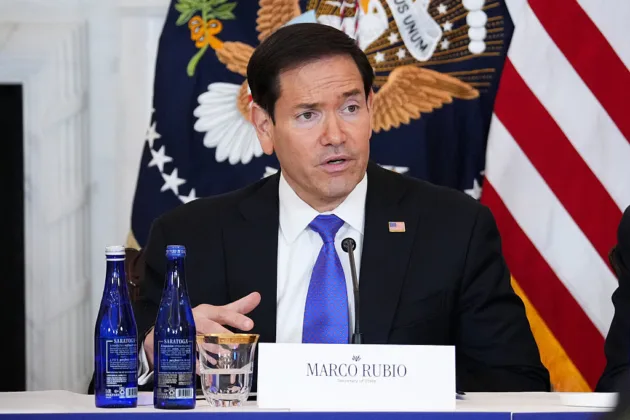
The vote came two weeks after the US placed Díaz-Canel on its sanctions list for the first time. The EU’s foreign policy chief, Kaja Kallas, had told Parliament in May that the agreement had not produced the results once expected.
Parliament further urged the European Commission and member states to open humanitarian channels delivering energy, food and medicine directly to the Cuban people, and called on the regime to allow exiles to return without reprisals.