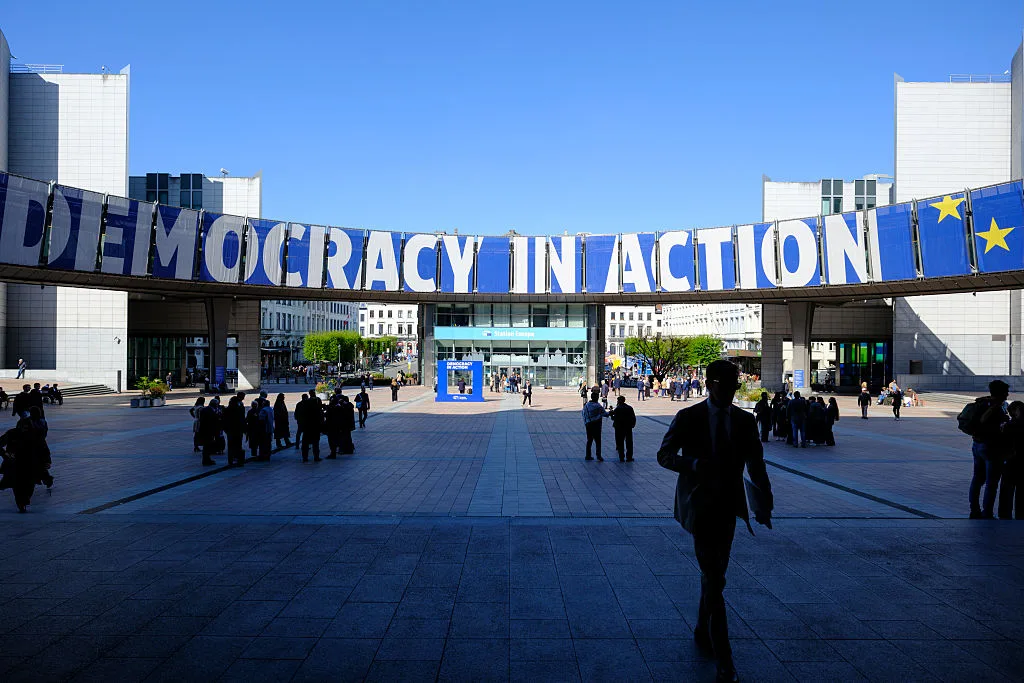








The European Parliament’s Committee on Petitions has taken up a case demanding that the European Commission explain why it has never moved to suspend the European Union’s cooperation agreement with Cuba.
The petition was lodged by the Center for a Free Cuba and the Spanish association Cuba en Transición. It was listed for debate in Brussels on July 15.
Its promoters said Parliament had called on five occasions for the activation of the so-called democratic clause in the Political Dialogue and Cooperation Agreement (PDCA) and for the accord to be suspended. The Commission has not opened the procedure.
The petitioners argued that the agreement had become one of the main props of the Cuban Government. They said the Parliament, directly elected by EU citizens, carried a democratic legitimacy the Commission had disregarded.
Signed in December 2016 and provisionally in force since November 2017, the PDCA makes respect for democratic principles and human rights an essential element. Article 85 allows either party to call the joint committee and, in cases of special urgency, to suspend the deal.
According to the petition, the number of political prisoners has risen ninefold since the agreement took effect, leaving Cuba with more prisoners of conscience than the rest of Ibero-America combined.
Madrid-based Prisoners Defenders counted 1,281 political prisoners at the end of May, a record, including minors.
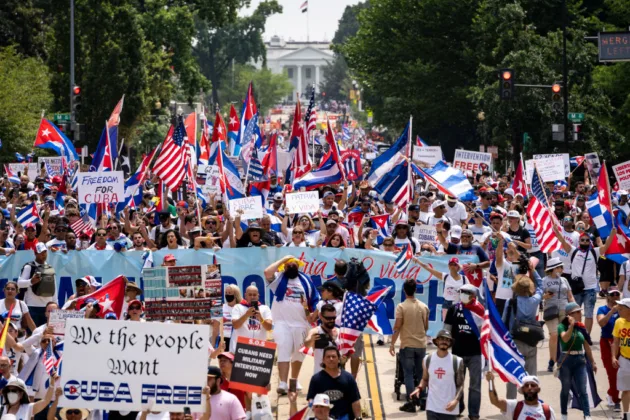
The petition also cited intensified repression after the protests of July 11, 2021, and said living conditions had deteriorated to the level of a social emergency despite Havana receiving more international funding than any comparable government.
Parliament has hardened its line through 2026. On January 21 it adopted an amendment tabled by the European Conservatives and Reformists (ECR) questioning the continuation of privileged cooperation with Havana, carried by 331 votes to 241 with 63 abstentions.
MEPs went further on June 18, adopting a resolution by 283 votes to 199 with 85 abstentions that called for the PDCA to be suspended in the absence of clear steps towards a democratic transition.
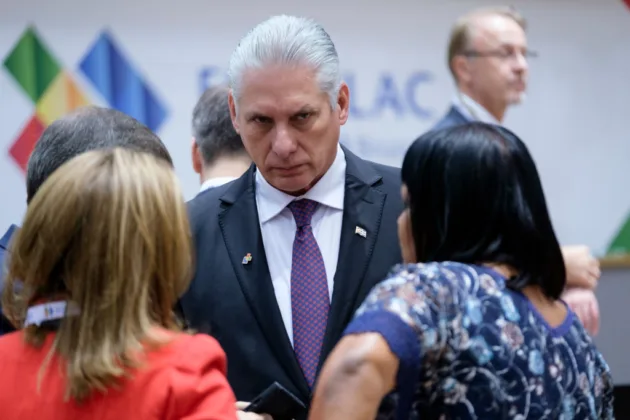
That text also sought sanctions against Cuban President Miguel Díaz-Canel and the leadership of GAESA, the military conglomerate that controls much of the island’s economy.
EU foreign policy chief Kaja Kallas told the Parliament in May that the agreement had not produced the results expected of it and that a review was under way.
Havana rejected the June resolution as interference, arguing the Parliament had no competence over the agreement.
Should the Committee on Petitions agree to keep the case open and request observations, the Commission would have to send a report setting out why it has not triggered suspension. It would be the first time the executive was obliged to put that reasoning on paper.