

Hungary’s public television has resumed news broadcasts 44 days after the Hungarian Government ordered them stopped, with the first bulletin going out at 6am on August 20, the country’s national holiday. The relaunch was prepared by an interim management team appointed by parliament’s culture committee.
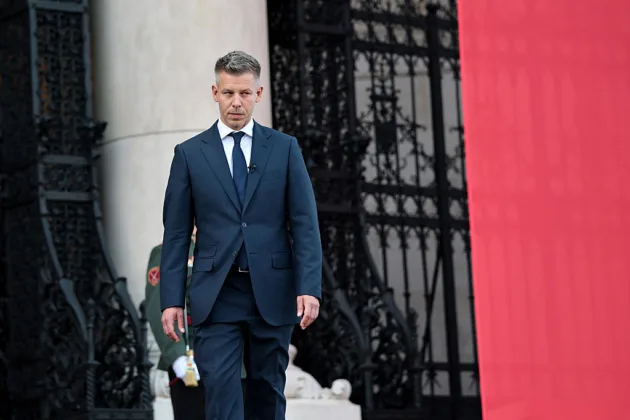
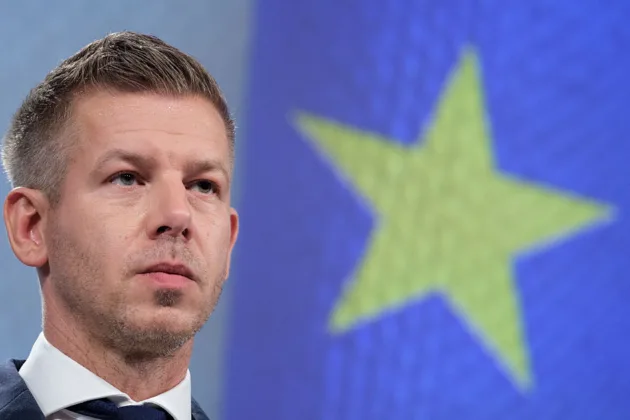
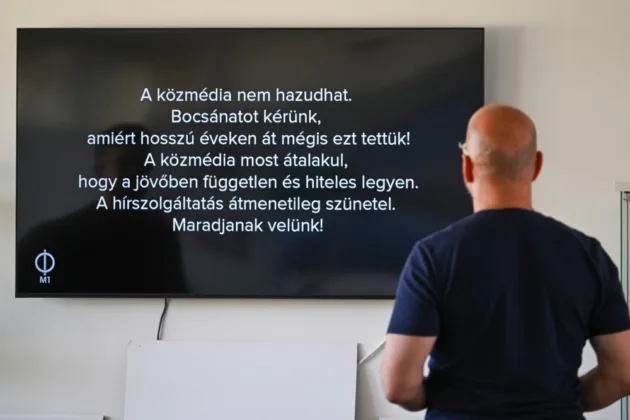
News output on the main channel, M1, was switched off on July 7 and replaced by a black screen carrying an apology for years of lying to viewers. Prime Minister Péter Magyar hailed the shutdown at the time as a historic day and said the broadcaster would be rebuilt as independent and credible.
Earlier in August the interim managers named an editor-in-chief and a presenter for the revamped bulletin. Both appointments were withdrawn the following day after Magyar objected in a comment on Facebook. News site 24.hu had reported that the incoming editor-in-chief previously worked for companies owned by figures close to Viktor Orbán.
Independent news site Index noted that a management decision at an institution whose independence had just been proclaimed was reversed within 24 hours by a comment from the Prime Minister.
The first bulletin, presented by Máté Kiss, opened with a report on President András Baka, who took office on August 19. Parliament elected him on August 11 by 140 votes to six in a secret ballot boycotted by Fidesz and its ally the Christian Democratic People’s Party (KDNP), after a constitutional amendment cut short the mandate of his predecessor, Tamás Sulyok.
Index wrote that no opposition politician was heard on air during the programme. Independent site Telex reported that the item on Baka carried government figures alongside Gábor Horn of the Republikon Foundation and set out the positions of Fidesz and Mi Hazánk (Our Homeland Movement).
The bulletin made no mention of a Telex report published the previous evening, in which an employee said the same editors and reporters who had produced the channel’s output for years were preparing the new programmes. Balázs Bodacz, the interim news director, replied on Telex’s Facebook page that nobody who had worked there before took part in editing the August 20 edition.
The broadcaster has reopened under managers installed by the government of a man who, less than two years ago, brought thousands of supporters to its gates as an opposition leader.
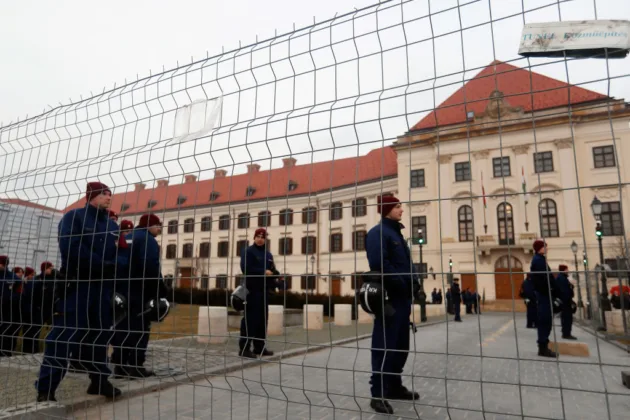
On October 5, 2024, Magyar led a demonstration to the public media headquarters on Kunigunda Way, in Óbuda, northern Budapest. He had appeared outside the building the previous evening to pin his party’s 16-point list of demands to a door, among them the closure of what he called a propaganda factory and the immediate dismissal of director-general Dániel Papp.
In an open letter to Papp, Magyar demanded that the state broadcaster carry the demonstration live and read out his demands on air. Police blocked an attempt to encircle the building with a torchlit human chain. Magyar spent roughly a minute inside before an employee told him he had no right to enter and handed him a statement, which he read aloud to the crowd.
Freedom-of-information figures obtained by news site Média1 show the public media paid out more than 201 million forints (about €510,000) to staff whose contracts ended between the April 12 election and August 2.
Fidesz, which held power for 16 years, has described the overhaul as a purge conducted under the banner of democratic restoration. The party said in July it would take the shutdown to the Constitutional Court. MP János Pócs said Magyar had pulled the public media out of the socket and that a dictatorship was being built.
The interim head of the public media companies is András Horváth, a lawyer approved by parliament’s culture committee by seven votes to four. Committee chairwoman Alexandra Szentkirályi, a Fidesz MP, said the appointment had been made on the basis of a CV and a covering letter alone.
Party MEP Csaba Dömötör told Brussels Signal in July that new institutions were being built to continue a political witch hunt rather than to improve governance.
The European Parliament passed repeated resolutions on Hungarian media freedom during Orbán’s years in office. It declined in July to hold a debate on possible rule-of-law breaches under the new administration.
The European Commission, which kept Hungary’s cohesion and recovery money frozen throughout Orbán’s final term, agreed in May to unlock some €16.4 billion weeks after Magyar took office. The Hungarian parliament approved the accompanying reform package in June.
Polish journalists have compared the Hungarian shutdown to the takeover of public broadcasting in Poland in December 2023, days after Donald Tusk returned to power in Warsaw. That takeover drew no comparable response from the EU institutions.
A permanent chief executive is due to be chosen through open competition before the end of October. The appointee would then carry out recommendations drawn from professional and public consultations now under way.