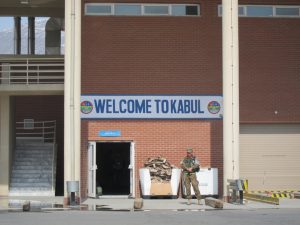

“Brezhnev took Afghanistan and Begin took Beirut”, sang Roger Waters back in 1983. Forty-three years after Pink Floyd’s last album, Moscow is back in Kabul while the Israelis are in Lebanon. Almost half a century after the Soviet Union sent the 40th Army across the Amu Darya, Russia is securing Afghanistan. Except this time, there are no tanks, no Stingers, no Mujahideen. Moscow is taking Kabul without firing a shot.
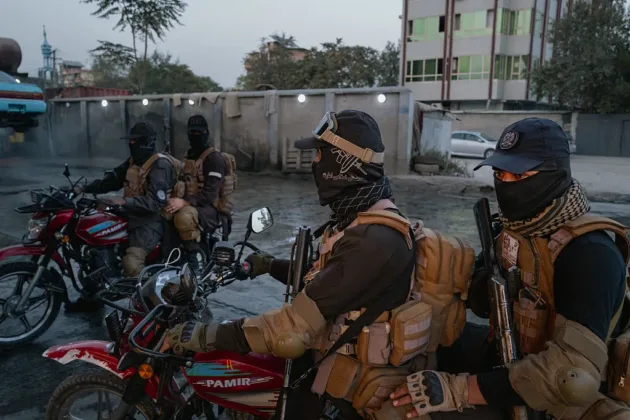
A few days ago Russia formally recognised the Taliban as the legitimate government of Afghanistan, becoming the first country in the world to do so. This quiet conquest shows the collapse of Western influence in the region. The catastrophic 2021 Biden withdrawal ended up being a permanent retreat. Today, Kabul has pivoted entirely away from the West, integrating itself into a new Eurasian alignment led by Russia, alongside India and China.
What Moscow has done is borderline unthinkable. Granting de jure recognition to the Taliban administration? Yes, indeed. Having already removed the group from its official list of terrorist organisations, the Kremlin formally accepted the credentials of Kabul’s new ambassador to Moscow, Gul Hasan. What began a few years ago as a cautious tactical engagement, has now officially transformed into a full-fledged strategic partnership.
The alliance is economic as well as military. Bilateral trade between Kabul and Moscow has surged dramatically, driven by a major comprehensive memorandum. Russia is now actively supplying millions of tonnes of heavily discounted gasoline, diesel and wheat directly to the sub-continent. In exchange, Russian companies have been granted preferential access to Afghanistan’s massive untapped copper, lithium, and rare-earth mineral deposits.
At the same time, the signing of a comprehensive military cooperation agreement in Moscow, attended directly by the Taliban’s Defence Minister, signals a new reality. The pact offers technical support for Russian equipment and establishes formal intelligence-sharing channels aimed at suppressing shared regional threats, specifically mentioning the Islamic State-Khorasan (IS-K). Moscow has successfully erected a strategic buffer zone on its vulnerable southern flank, moving entirely under Western radars.
The open border warfare and deep diplomatic rift between Kabul and Pakistan has been the tilting point of the whole story. For decades, Islamabad played a dubious double game, pocketing billions in aid in order to contain radicals, while nurturing the very forces that eventually chased the West out of Kabul. Now Moscow and Beijing bypass the Pakistani gatekeeper to deal directly with the Taliban. The manipulation of Afghan instability has proven repeatedly not to be a particularly bright idea.
As for Europe, it is yet another negative development on the global chessboard. Eurasia is being increasingly controlled by actors who do not share Western values and are not necessarily interested in the Western rules-based order. Russia, China, and India now effectively form Kabul’s new entourage, treating the country not as a humanitarian project, but as a hard strategic asset. They have realised that stability in Central Asia does not require a parliament. It requires a deal.
So, the latest complete reorientation of Afghanistan toward the East is a structural defeat for the West. It proves that nature abhors a geopolitical vacuum, and that Western retreat anywhere is most likely to be followed by Russian and Chinese advance. In this case, while the United States and its European allies occupied themselves with issuing declarations and applying toothless sanctions, Moscow quietly achieved one of its oldest imperial ambitions.
For millennia, the high passes of the Hindu Kush have served as a siren song for world powers. From Alexander the Great and the Mongols and from to the 19th century Great Game to George W. Bush and the consequent 21st century realignments, empires have struggled to secure this gateway to and from Asia. The Great Game is far from over. On the contrary, it is very much on. And, to tap on Trumpian vocabulary, we are losing “big time”.