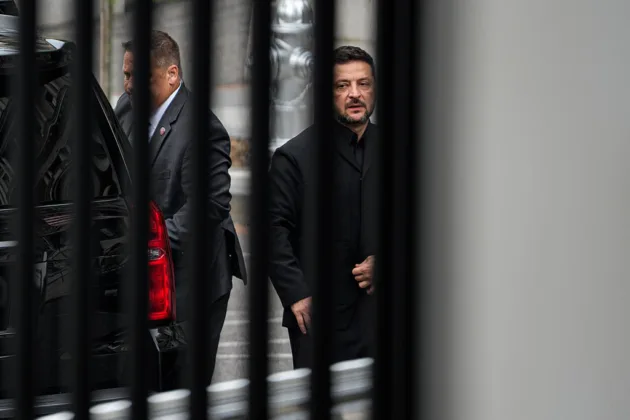





The flag over the White House had been at half-mast for a while when Benjamin Netanyahu was bidding farewell to “a beloved friend”, Volodymyr Zelensky was honouring “a true defender of freedom” and the ayatollahs’ television was crowing that the “warmongering” and “anti-Iran” politician had “gone to hell”.
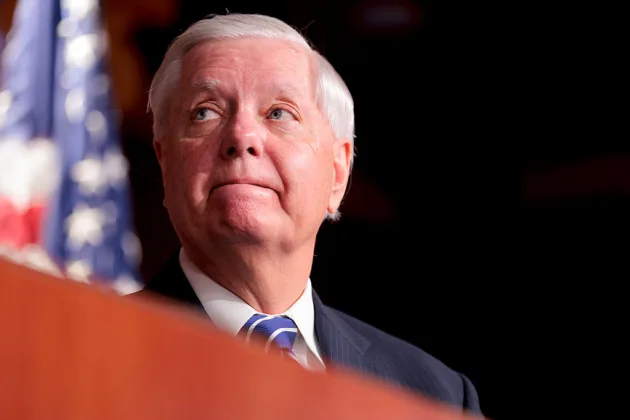
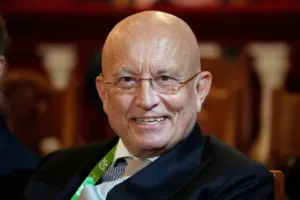
Lindsey Graham, senator for South Carolina for almost a quarter of a century, died on the night of July 11 from an aortic dissection, according to preliminary findings by the Washington DC medical examiner, two days after his birthday and hours after returning from his 10th trip to wartime Kyiv.
He was born on July 9, 1955 in Central, an industrial town in northwest South Carolina, in the back room of the family business. He was orphaned young and at 21 he took in his sister Darline, then 13. He never married and had no children. He was the first of his family to go to university, worked as a military lawyer, rose to colonel and strung together a series of short-term reserve tours in Iraq and Afghanistan. He entered the House of Representatives in 1995 and the Senate in 2003, succeeding Strom Thurmond.
The September 11, 2001 attacks forged the political identity that would define him for the rest of his career. He became a hawk, one of those who entrust peace to weapons, some of them with real relish for it, on trips to Iraq and Afghanistan alongside John McCain, Obama’s opponent in 2008, and Joe Lieberman, Al Gore’s running mate in 2000. General David Petraeus christened the trio “the three amigos”, a label that caught on in Washington.
When Donald Trump began his political career, Graham gave him a reception better suited to the Democratic benches, or to any New York late-night host, than to a supposed ally. He was not short of epithets: “kook”, “xenophobic”, “unfit for office”.
Giving no quarter, he ran for the Republican nomination for the 2016 election. Sorrow came at once, he did not last long in the race, and the glory came later. Because the President of the United States, whose faults do not include holding a grudge, would come to make him his confidant in the Senate, his golf partner and someone he treated “like a member of the family”.
The other two “amigos” never made that journey. Trump denied McCain the status of a Vietnam war hero, “I like people that weren’t captured”, and the senator for Arizona returned the favour until his death. He accused him of firing up “the crazies” and of a “half-baked, spurious nationalism”. Lieberman, more measured, withdrew from consideration to lead the Federal Bureau of Investigation.
A decade of adaptation, or of calculation, that Graham never hid, built on concessions at home in order to shape policy abroad. Moral flexibility, which he cast as realism, in explanation of a gamble that suited his interests. The proof: while he preached that there was no sense in defying his rival, over the years he brought the foreign policy of the second Trump closer to Graham’s than to that of the first.
For two decades the senator pursued an agenda remote from the interests of his South Carolina voters, run out of Washington, with its epicentre in the Middle East. Witness his photograph beside Netanyahu holding the sign that demanded “More for Israel”, and the extra $1 billion he wrung out of his compatriots in military aid to a foreign power. Funds that have gone towards driving the offensive against Iran, his great obsession.
He shaped White House foreign policy far from the Mediterranean and the Persian Gulf too. Ukraine, his last cause, where he travelled at least 10 times after the Russian invasion and, the day before he died, pushed a final package of sanctions against Moscow. Or Venezuela, where he drove the night raid in which special forces took Nicolás Maduro from Fuerte Tiuna, the largest military complex in Caracas, and which he celebrated aboard Air Force One alongside a Donald Trump who, according to fellow Republican senator Rand Paul, was “under the thrall of Lindsey Graham”.
After the deaths of McCain, in 2018, and Lieberman, in 2024, he remained, and remains, one of the last hawks in the Senate pushing the United States military to act as the world’s policeman. Behind them are Tom Cotton, chairman of the Senate intelligence committee, who has spent a decade calling for Iran to be bombed, the ailing Mitch McConnell, always worried about isolationism, and Roger Wicker, who leads the armed services committee.
All of them the last of the Republican wing that promoted the invasions of Iraq and Afghanistan, whose consequences years later fed the exasperation that took Trump to the White House. Conflicts that, amid promises of peace, he has inherited in his second term, while the America First generation disowns war, turns away from Israel and disdains the missions that Graham made his cause and his career.
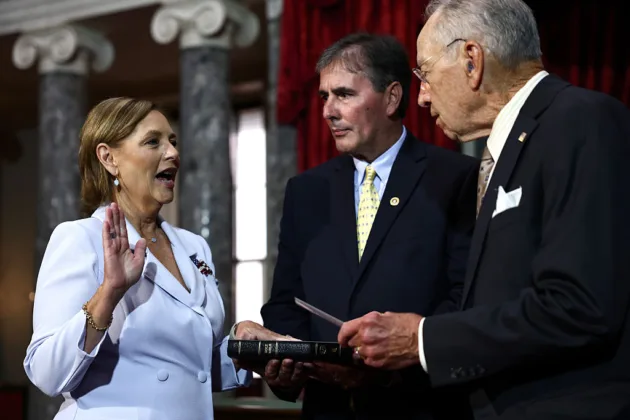
Since July 11 that political legacy taken up by the administration has been posthumous. So has his seat, already occupied by his sister Darline Graham Nordone, at Trump’s urging as “a fabulous tribute to Lindsey”. She will hold it until January, when whoever wins November’s midterm elections takes office. A primary had already been held for that contest, and it will be re-run on August 11 at short notice.
It remains to be seen how Graham’s death will play out in geopolitics, whom it harms and whom it benefits. For now, the sanctions he pushed have advanced further in a few days of mourning than in 15 months of political arm-wrestling. Without him, and with McConnell spending more time in hospital than in the Capitol, Trump is left holding wars he can no longer pin on any heavyweight senator.