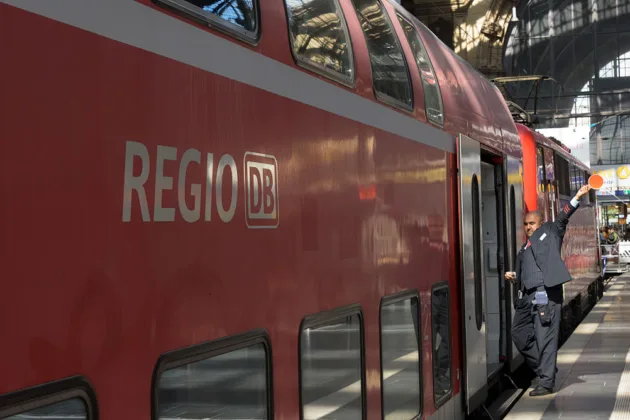












Germany’s national railway operator Deutsche Bahn is to ban the consumption of alcohol at all of its roughly 5,400 railway stations in a nationwide effort to improve safety.
The ban will be introduced gradually and is due to be fully implemented by October 15. It already applies at around 30 stations, including those in Cologne, Hamburg and Munich.
“We are taking action: we are banning alcohol consumption from our railway stations,” Deutsche Bahn CEO Evelyn Palla said. “Too often we have had to observe that where too much alcohol flows, violence also increases.”
She said that alcohol bans lead to lower crime and less waste.
The decision follows a series of incidents involving intoxicated people, including a violent attack on a railway employee last week that left the worker seriously injured.
Alexander Poitz, deputy chairman of the German Police Union (GdP), described the country’s large stations as “hotspots of criminal activity”, saying that violent crime there increasingly involved alcohol and other intoxicating substances.
The GdP has also said that resistance and attacks against security personnel are a frequent problem.
The ban will apply to drinking alcohol on platforms and in station halls. Restaurants, bars and other licensed hospitality businesses inside stations will be exempt, while passengers will still be allowed to carry unopened alcohol with them. Alcohol consumption on trains will also remain permitted unless separate rules apply.
The measure will be enforced under Deutsche Bahn’s property rights. Violators could be ordered to leave the station or receive a ban from the premises.
The plan has already faced criticism from the German Police Union, which said it would be difficult to enforce without substantial investment in security staff, surveillance technology and lighting.
Experts have pointed out that problems such as violence due to the influence of alcohol could only be shifted to other places by the ban.
Brandenburg’s Transport Minister Robert Crumbach, a member of the Social Democratic Party (SPD), meanwhile argued that the ban should also be extended to trains and other forms of public transport.
Deutsche Bahn said it was responding to concerns from passengers and employees who wanted a calmer and safer environment at stations.
The move also comes against the backdrop of Germany’s post-2015 migration surge and concerns about crime at railway stations. In 2024, German federal police recorded 27,160 violent offences in and around railway stations and trains. Of the identified suspects, 10,476 were German nationals and 9,222 were non-German nationals, with the nationality of a further 6,913 suspects either unknown or unclear.