



One of Germany’s (and Europe’s) most ambitious and controversial infrastructure projects, Stuttgart 21, has suffered yet another major setback.
The full commissioning of the new underground through-station and digital rail hub will now not occur until the end of 2031 — five years later than the most recent target and twelve years behind the initial planned opening.
According to an investigation by broadcaster SWR, Deutsche Bahn laid more than 1,000 kilometres of cables and cable ducts incorrectly in a rush to meet earlier deadlines.
A large majority of this infrastructure must now be replaced.
The errors occurred because cabling work began before the final technical planning for the new digital signalling system was complete.
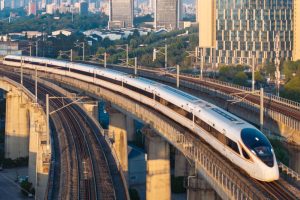
The project is intended to be the first fully digitised major railway system in Germany, with routes and trains equipped with the European Train Control System (ETCS) and controlled by digital interlockings, a pioneering pilot scheme.
However, four years ago Deutsche Bahn realised that freight trains without ETCS equipment will continue to operate for years in the outer sections of the rail junction.
As a result, conventional signals must be retained alongside the new digital technology in those areas. This late discovery forced the railway to install additional kilometres of cabling and ducts after much of the work had already been completed to the original digital-only plan.
Additional problems include faults in the emergency power supply and construction defects on station platforms and flooring. These combined issues have made the previous goal of a 2026 partial opening impossible.
One railway expert told SWR that the constriction site looked more like a “pigsty”.
He estimated that installing the 450 new signals alone will cost around €45 million. Deutsche Bahn has confirmed the need for dual equipment but has declined to comment on the exact extra costs.
Politicians in Baden-Württemberg have reacted with fury.
Baden-Württemberg’s Minister-President Cem Özdemir (Greens) described the project as slowly becoming “a national joke”.
He demanded “reliable figures” and clear answers from Deutsche Bahn on when individual stages and the entire project will finally be completed. “It has to end at some point,” Özdemir said.
Transport Minister Winfried Kretschmann and local leaders described the latest delay as “unacceptable” and demanded full transparency from Deutsche Bahn, which has so far declined detailed comment and referred questions to an upcoming press conference.
Originally approved in 2001 with a planned opening in 2019 and a budget of around €4.5 billion, Stuttgart 21 has become a symbol of German infrastructure failure.
Costs have now surged past €11 billion, while repeated delays have turned the prestige project into a national embarrassment.
There were also at least €726 million in EU grants for the project as well.
Stuttgart 21 was never only a transport project. In 2001, the city of Stuttgart acquired the majority of the freed-up railway land, totalling 109 hectares, for nearly €460 million.
The ambitious plan was to create several new residential and urban quarters, including the Rosenstein district, with minimal restrictions for investors.
Those developments can now only begin years later due to the repeated delays. Since missing the original 2019 opening target, Deutsche Bahn has already been forced to pay millions of euros in contractual default interest to the city, a sum that continues to grow with every year of postponement.
The latest fiasco comes as Germany struggles with chronic problems in major public works, from the BER airport debacle to repeated rail infrastructure issues.
Critics argue that political pressure for rapid “green” and “digital” modernisation, combined with poor project management, continues to produce expensive and humiliating results for taxpayers.
The Bund der Steuerzahler (Taxpayers Association) has long criticised the project as a bottomless pit. A spokesman warned that further billions from the federal budget and Deutsche Bahn are being poured into what he called a “classic example of unchecked project mismanagement.”
German Christian Democrats have called for a committee of inquiry into the former Green Federal Minister of Economics, Robert Habeck, for “wasting billions of taxpayers' money”. https://t.co/PketJQVavd
— Brussels Signal (@brusselssignal) August 28, 2025