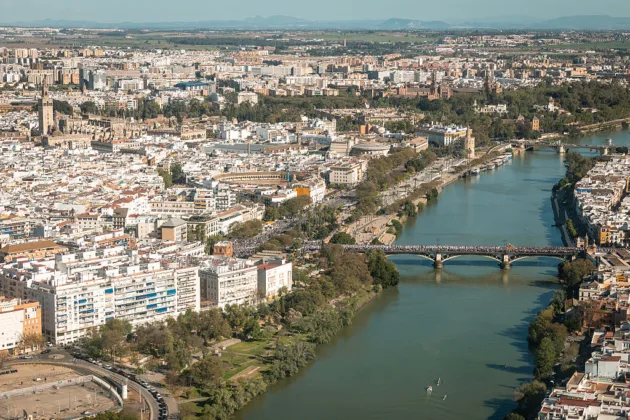




Seville city council has granted a building permit for a mosque and Islamic cultural centre in the Polígono Sur district, prompting the right-wing Vox party to freeze its working relationship with the People’s Party (PP) administration that runs the Andalusian capital.
The governing council of the municipal planning office approved the licence on July 28, after technical and legal reports concluded that the project met the requirements of the city’s planning rules.
Within hours Vox announced an administrative appeal and cancelled a meeting of the committee that monitors its budget agreement with the PP, which had been due the following day.
The party said in a statement that confidence in the municipal government had been “gravely broken”, according to the broadcaster COPE. Its municipal spokesman, Gonzalo García de Polavieja, said the group would go to the administrative courts should the appeal fail.
Seville mayor José Luis Sanz said refusing the licence would have exposed officials to a charge of misconduct in public office. He told reporters he had never abused his office and would not start now.
Sanz said the agreement his party signed with Vox covered the approval of the city budget and contained no provision on planning consents or on any mosque. He described the deal as public and said the PP had honoured it in full.
The council had nonetheless already altered the course of this file at Vox’s request. On July 10 it withdrew the licence from the planning committee’s agenda after the party lodged a written challenge, then commissioned fresh technical and legal reports to weigh the objections raised.
Planning councillor Juan de la Rosa said at the time that the council would decide whether to take the matter into consideration only once those reports were on the table.
Sanz held up a copy of the Spanish constitution and pointed to article 16, which guarantees freedom of worship. He said the alliance could become the first political agreement in Spanish democracy to collapse because one partner had obeyed the law.
He also questioned the grounds of the objection. “What is being questioned? The religion or the race?” he asked, according to the news agency EFE.
Sanz said the city already had 14 mosques and the province 35, among them one beside a Catholic church and the headquarters of a Holy Week brotherhood in the centre of Seville.
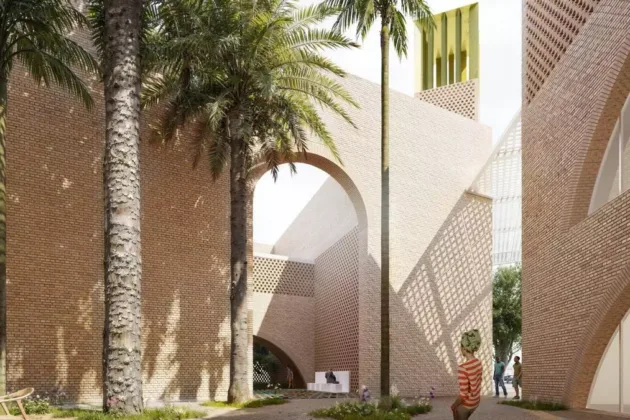
The scheme is promoted by the private Fundación Mezquita de Sevilla and designed by the architect Guillermo Vázquez Consuegra. It includes a prayer hall, ablution rooms, a courtyard and a 30-metre minaret alongside social and cultural facilities on Victoria Domínguez Cerrato street.
Vox has framed its objection as a planning question rather than a religious one. The party argues that the file sets a specific orientation as a requirement for the prayer hall, which in its reading makes worship the principal use of the building rather than a secondary one.
On that basis the group says a different article of Seville’s 2006 general urban plan should apply, capping complementary uses at 40 per cent of floor space. It wants the courts to settle whether the building is a mosque or an Islamic centre.
The planning office’s reports rejected both strands. They found the proposed use compatible with the classification of the plot and no planning grounds for the additional public consultation Vox had demanded.
Polavieja said residents of the district did not want the project and that the area needed a metro line, health and education facilities, security and street cleaning first. Vox organised a protest near the site on July 21, which was attended by members of groups outside the party.
Polígono Sur has appeared repeatedly at the bottom of the Instituto Nacional de Estadística urban indicators series, which ranks neighbourhoods in Spain’s larger cities by average income per resident.
The row has moved beyond city hall. Vox leader Santiago Abascal wrote on X that Spaniards should be listened to and allowed to vote on matters that affect them, adding that institutions could not keep imposing what people did not want.
Javier Cortés, the party’s spokesman in the Andalusian parliament, said Vox would fight the project in the street, in the courts and in the institutions, and described it as a further step in the islamisation of Spain.
Sanz governs without an absolute majority and has relied on Vox to pass the city budget for 2025 and 2026. Municipal elections are due in the spring of 2027.
The dispute lands weeks after the two parties reached a governing pact in Andalusia. Vox entered the regional government for the first time on July 2, when Juanma Moreno was sworn in for a fourth term after conceding the “national priority” principle that ties welfare, housing and subsidies to long-term local roots.
Vox stopped short of tearing up the Seville agreement. The party said the suspension of the monitoring committee was a first step, leaving open how far it intends to push before the city returns to the polls.