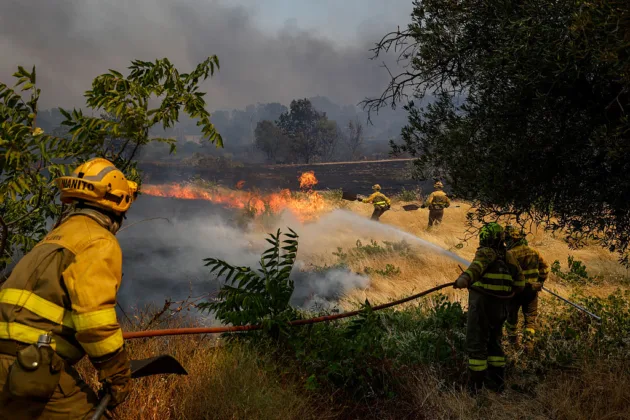










Spain’s Government has ended the national emergency declared over the wildfires in the Madrid region and Ávila province, six days after taking central control of the response.
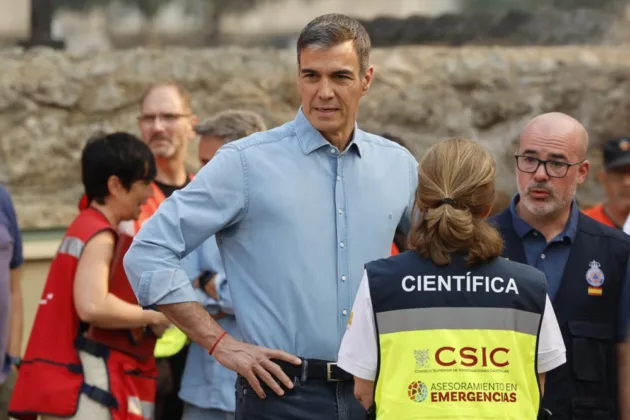
Prime Minister Pedro Sánchez announced the decision on July 30 during a visit to the forward command post at Navaluenga, in Ávila province, central Spain. He said the operation would drop to level 2, returning day-to-day command to the regions.
The move followed formal requests from the regional governments of Madrid and Castile and León, both run by the centre-right Partido Popular (PP), and technical assessments of how the fires had evolved.
The Spanish Government had declared an emergency of national interest in the early hours of July 24, covering Madrid and the provinces of Ávila and Toledo, after three separate blazes in the Sierra Oeste west of the capital merged into one.
Madrid authorities said overnight conditions had cooled the ground and reinforced a perimeter that had not advanced for several days, leaving no active fronts and few smouldering points. About a thousand people were still unable to return home.
Roughly 34,000 hectares have burnt in the Madrid region alone, and more than 56,500 residents were evacuated or confined at the height of the emergency.
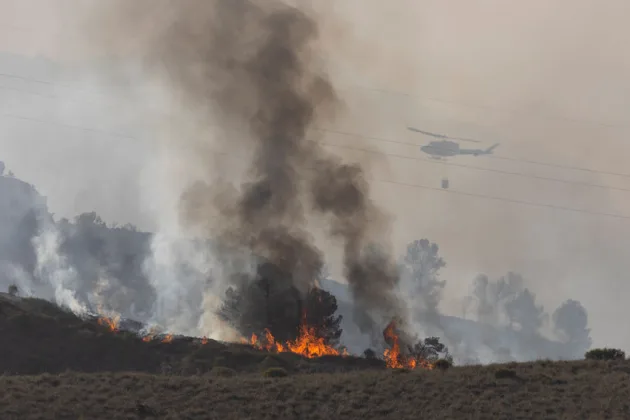
The linked Burgohondo fire in Ávila has consumed more than 50,000 hectares, making it the largest ever recorded in Spain. Investigators believe it started when heavy machinery was used without authorisation in woodland.
Officials warned that the meteorological risk of fire remained very high and extreme in places, with a fresh heatwave forecast. The most sensitive area was around the San Juan reservoir, about 60 kilometres from central Madrid, where two towns remained evacuated.
A new fire declared on July 29 at Fermoselle, in Zamora province near the Portuguese border, has meanwhile forced the evacuation of about a dozen villages inside the Arribes del Duero natural park.
Residents of Fermoselle and Fariza were ordered to shelter indoors and several roads were closed. Spain’s Military Emergency Unit sent a battalion from León to join roughly 40 ground and aerial teams.
The blaze spread overnight, prompting the evacuation of Villar del Buey and Pasariegos, among them 25 residents of a care home. Other fires remained active in Castellón and León provinces.
The European Commission has coordinated assistance through the EU Civil Protection Mechanism, with amphibious aircraft from Greece and Italy deployed to Spain from the rescEU fleet. Its Emergency Response Coordination Centre has warned that the heat could push major blazes into Italy and Greece.