





Spain’s ruling Socialist Workers’ Party (PSOE) has fallen to its lowest level of support in the current parliament, according to the first poll conducted entirely after the Urda rail disaster. The survey by Sigma Dos for El Mundo, published on November 1, put the party on 24.6 per cent, down 1.5 points in a week.
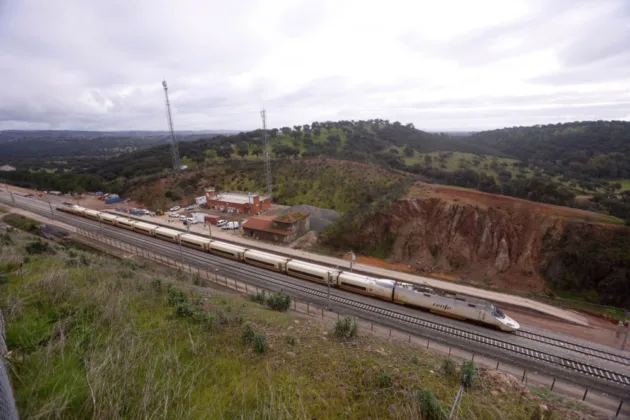
Fieldwork took place on October 29 and 30, after a Renfe AVE bound for Seville ran into the back of a stationary Iryo train near Urda, in Toledo province, central Spain. The crash on October 28 left 69 dead and more than 100 injured, according to the official toll.
The pollster, which interviewed 2,505 people, gave the PSOE between 97 and 103 seats in the 350-seat Congress of Deputies. That would leave Prime Minister Pedro Sánchez’s party well short of the 121 seats it won in July 2023 with 31.7 per cent of the vote.
The Partido Popular (PP) of Alberto Núñez Feijoo rose by half a point to 31.1 per cent and would win between 133 and 139 seats. Its lead over the Socialists widened to 6.5 points.
Vox, led by Santiago Abascal, slipped 0.6 points to 19.3 per cent but would still take between 63 and 69 seats, about double the 33 it secured in 2023. Together, the PP and Vox would command at least 196 seats, comfortably above the 176 needed for an absolute majority.
On the Left, the Frente Amplio alliance would win between 11 and 14 seats, far below the 31 taken by Sumar in 2023. Podemos, on 1.9 per cent, risked disappearing from Congress, with an estimate of zero or one seat.
Other surveys published on November 2 pointed in the same direction. NC Report for La Razón put the Socialists on 25.6 per cent and between 100 and 102 seats, while Target Point for El Debate gave them 25.5 per cent.
Urda was the second fatal high-speed crash on the corridor linking Madrid and Andalusia this year, after the Adamuz collision in January. Transport Minister Óscar Puente ruled out resigning and blamed a decision taken at the control centre of State-owned infrastructure manager Adif, which he called inexplicable.
The disaster has also revived questions over investment in the network. Spending on domestic railways remains 66.7 per cent below its 2009 peak, according to research published in March by the BBVA Foundation and the Valencian Institute of Economic Research (Ivie).
Sánchez called the snap election on October 5, after Congress rejected two of his Government’s housing decrees. Before the crash, several polls had suggested the Socialists were narrowing the gap with the PP, with some giving them up to 113 seats.
Spaniards are due to vote on November 29.