

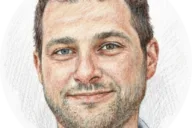
Turkish stand-up comedian Deniz Göktaş was detained at Istanbul Airport on Thursday upon his return from abroad, following a widely viewed performance that included satirical jokes about President Recep Tayyip Erdoğan and religious themes.
The 32-year-old faces investigations for “publicly insulting religious values” and insulting the president, offences under Turkish law that carry potential prison sentences.
Authorities acted after receiving numerous complaints about excerpts from his show “Ölü Deniz,” which was posted online on June 24 and has amassed over nine million views on YouTube allone.
Göktaş was taken into custody at the airport and is due to appear in court on Friday, his lawyer Metin Aslan said.
Short clips from the routine had previously been blocked on social media platforms for reasons of “national security and public order.”
In the 90-minute performance, recorded at a show in Istanbul’s Harbiye district, Göktaş took aim at various political figures and topics, including jailed Istanbul mayor Ekrem İmamoğlu and broader Turkish politics.
Specific lines that drew complaints include satirical remarks on religion and the president.
On the Qur’an, he said: “I think it’s the best of the four books; for one thing, it’s a bold statement in the 600s. It’s also very difficult for the author; if a new idea comes to mind, too bad, we’ve said, ‘This is the last book…’”
Regarding President Erdoğan, Göktaş referred to him as a “dictator” who is “finally at peace with his desires.”
Other segments included ironic commentary on Erdoğan’s leadership style and personal development-style self-help references. He also poked fun at multiple sides of the political spectrum.
Pro-government voices, including former AKP official Şamil Tayyar, accused the comedian of crossing red lines, prompting complaints and the subsequent probes.
Göktaş’s arrest fits a pattern of legal actions against artists, journalists, and critics in Turkey.
Laws against insulting the president (Article 299 of the Penal Code) and religious values have been used in numerous cases in recent years.
Authorities have increasingly targeted online content deemed offensive to the government or traditional values.
Before his arrest, Göktaş had been abroad. He returned knowing he would likely face detention. His lawyer has not yet commented in detail on the defence strategy.
The case has sparked debate online and in Turkish media, with supporters viewing it as an attack on artistic freedom and critics arguing the routine crossed boundaries of acceptable satire.
Opposition figures have condemned the arrest, with some calling it evidence of shrinking space for humour and dissent.
Turkey’s record on press freedom and freedom of expression has long been criticised by international watchdogs, with dozens of journalists and artists facing legal pressure.
COMMENT: The track record of how arbitrary Turkish justice is in practice echoes loudly in the latest case of Greek nationals detained, while both Athens and Brussels are shockingly silent and absent, writes @BogdanosK. https://t.co/FiyrH5LeNP
— Brussels Signal (@brusselssignal) May 4, 2026