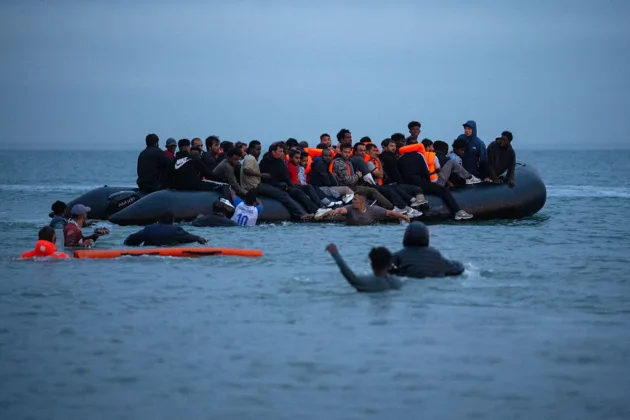




Two parties leading the polls on either side of the Channel have set out, on paper, the one mechanism that would end small-boat crossings: Interception at sea followed by return to the coast the boats left from.
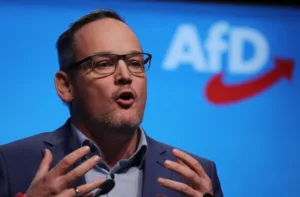
Jordan Bardella, president of the National Rally (RN), formerly the National Front (FN), signed the memorandum of understanding with Reform UK leader Nigel Farage at the British party’s annual conference in Birmingham on September 4.
The text is a political declaration between two opposition parties, not a treaty, and would apply only if both won power at home. It provides that the United Kingdom would intercept boats launched from French shores which had entered British territorial waters and return those on board to France, according to the version published by Reform UK.
France would “ordinarily” accept them, the document says, before removing them to their countries of origin in line with French expulsion law. Farage, asked whether that qualifier left Paris room to refuse, told reporters it was drafting language, and called the accord “a genuine new entente cordiale”.
The point of the arrangement is not administrative but behavioural. If everyone who pays a smuggler ends up back where they started, there is nothing left to sell.
That is a sharper instrument than anything the two governments have managed. Britain and France have run a returns scheme since August 2025 under a treaty signed the previous month, which sends back a share of small-boat arrivals in exchange for Britain accepting an equal number of asylum seekers with British family ties.
The pilot was reported to be capped at around 50 returns a week. More than 25,000 people had crossed in 2025 by the time it took effect.
The reaction in Paris was immediate and near-unanimous, running from Éric Zemmour on the national-conservative right to Jean-Luc Mélenchon on the radical left.
Gabriel Attal, the Renaissance candidate for the presidency, wrote on X that the signature betrayed an unworthy weakness, and later described it as a total submission of French interests.
Édouard Philippe, a former prime minister standing for Horizons, called the accord a U-turn for the RN and asked whether Marine Le Pen shared it. Bruno Retailleau, of The Republicans (LR), accused Bardella of amateurism, French media reported.
Mélenchon said France would become the gatekeeper of the English and told voters that rejecting Le Pen in April 2027 had become a question of national dignity. Benjamin Haddad, the French Government’s Europe minister, denounced the signing as a humiliation.
What almost none of them addressed was the substance. The migrants in question are in northern France because they intend to leave it, and the camps at Calais and Dunkirk exist because the crossing works often enough to be worth attempting.
Bardella made that argument himself. He told Mélenchon that the camps in the north, the crossings and the record immigration figures were the legacy of those who had governed, and said an RN government would do everything in its power to cut illegal immigration in France and in Britain.
Speaking in English to Reform delegates, he said France would no longer be the gateway for illegal immigration into Britain. His position is that a France which controlled its own borders would have nobody in Calais to send back in the first place.
The obstacles are real and both signatories know it. Under the 1951 Refugee Convention, states may not return people to a country where they would face persecution, and Reform’s wider deportation programme would require Britain to leave the European Convention on Human Rights and repeal the Human Rights Act, a step Farage has long advocated.
Nothing in the memorandum binds a French government, which would have to negotiate a fresh treaty, and removals to countries of origin depend on readmission arrangements that Paris has never made work at scale.
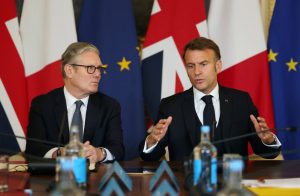
Those are arguments about how, not whether. The alternative on offer was displayed in London on September 2 and 3, when President Emmanuel Macron made the first visit by an EU head of state since Andy Burnham became Prime Minister in July, and Burnham said cooperation with France was working.
Le Pen remains the RN candidate for April 2027 after the Paris appeals court on July 7 upheld her conviction for misusing European Parliament funds but shortened her ban from public office. She has said Bardella would serve as her prime minister. The next British general election is not due until 2029.
Two electorates will decide whether the document becomes policy. On present polling, both are closer to signing it than the men who called it a humiliation.