


The Dutch Minister of Education, Culture and Science, Rianne Letschert, has begun the formal procedure to withdraw the provisional recognition of Ongehoord Nederland (ON!), the right-wing public broadcaster, after the media regulator and the Nederlandse Publieke Omroep (NPO), the umbrella body of the Dutch public system, both concluded it could no longer remain inside the system.
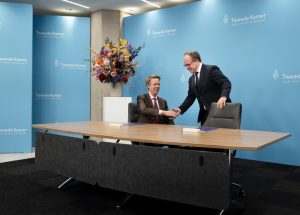
The D66 minister announced the step on September 8 following a meeting with ON! director Peter Vlemmix.
She described it as the “most serious means at my disposal” and said it was not based on a single incident but on a pattern of breaches since the channel joined the public networks in 2022.
“There are clear rules for broadcasters that want to make programmes with public money. And if you repeatedly fail to abide by them, there comes a point where it has to stop,” she said.
She added that her decision concerned an organisation that was not functioning, and stood apart from the views or the people it represented.
Letschert set out three legal grounds, each of which she said could on its own justify withdrawal: The regulator’s finding of structural failure, the NPO request to intervene, and two formal sanctions imposed within a single year.
The immediate trigger for the regulator’s letter was an online panel discussion posted on July 31. The minister said the programme was not itself the legal basis for her move, as media law did not allow her to act against editorial content.
The programme, Let’s Twist Again, showed a clip from a 1933 speech by Adolf Hitler delivered on November 10 that year to workers at the Siemens plants in Berlin, in which he attacked a “rootless international clique” that, he claimed, set peoples against one another. A voice in the crowd is heard shouting “Juden”.
Presenter Arlette Adriani then put a proposition to the panellists: That the cosmopolitan elite is inherently hostile to ordinary, rooted people.
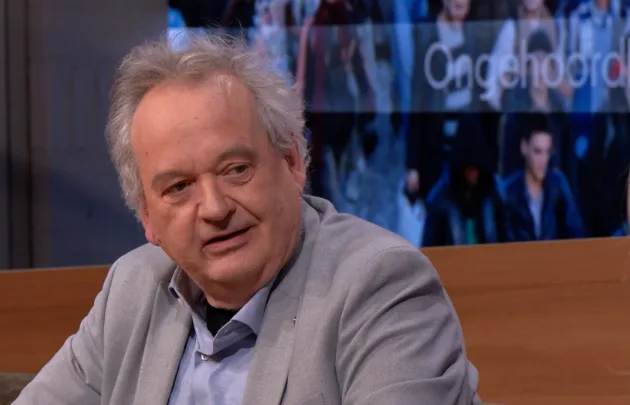
Editor-in-chief Joost Niemöller and presenter Raisa Blommestijn agreed. Niemöller added that Hitler had expressed certain points “just very well” and that there were “certain things of Hitler” with which he also agreed, while rejecting the Nazi leader’s anti-Semitism.
Vlemmix said at the time that both panellists had distanced themselves from the crimes committed under Hitler, but that ON! had given too little consideration to the sensitivities involved.
ON! later took the video offline. Niemöller, who had held the post since February 2025, resigned at the beginning of September, with the broadcaster citing “a difference of view about the editorial direction and recent programming”.
The Commissariaat voor de Media (CvdM), the Dutch media regulator, told the minister the broadcast was a “turning point”.
In a letter it said the item fitted a pattern in which ON! failed to uphold journalistic quality standards, spend public money properly or meet its legal obligations.
The regulator stated it no longer had confidence that the organisation could put its operations in order and fulfil the public media mandate.
Two earlier formal sanctions had already been imposed since September 2025: A fine for conflict-of-interest breaches and for failing to observe its editorial statute, and an order backed by a penalty payment after ON! withheld complete records of its financial administration.
The NPO, which had previously said it lacked a sufficient legal basis to request expulsion, changed position on September 7.
It asked the minister to revoke the recognition, arguing that co-operation had become “unbridgeable” and that further attempts to improve working relations were no longer useful. Other public broadcasters had already called for ON! to be removed, telling the ministry in a joint letter that they could not work with it.
A large majority in the Tweede Kamer, the lower house of the Dutch parliament, has demanded action. A parliamentary debate on the future of the broadcasting system is scheduled for September 24.
Letschert has undertaken to inform MPs of her reasoning well before that date.
The channel will not be taken off air immediately; ON! has the right to respond to the proposal and to appeal any final decision.
ON! was founded in November 2019 and granted provisional recognition as an aspirant broadcaster in July 2021 by then-education minister Arie Slob, for a five-year term running from January 1, 2022. It began transmissions in 2022 with an annual subsidy of €3.6 million.
It presented itself as a counterweight to what its founders called one-sided coverage by the established public outlets, particularly on immigration, climate policy, the European Union and Dutch identity.
Membership stood at just under 39,000 at the end of 2024, below the 50,000 threshold originally required for entry.
The channel has been under heightened supervision for years. The public broadcasting ombudsman has repeatedly found that it mixed fact with opinion, failed to offer sufficient rebuttal and promoted unverified claims.
Margo Smit, the current ombudsman, said in August that dozens of complaints had reached her office over the Hitler item.
Earlier NPO requests to have it removed, the last of them in 2023, were rejected by ministers on legal grounds.
Vlemmix has said the organisation will contest the latest move and accused critics of overlooking improvements made over the past year. He described the minister’s announcement as “a very worrying day for Dutch public broadcasting” and pledged to defend “the views of the right in general”.
Letschert stressed that a free public system must leave room for views that clash and sometimes cause offence, but added that “that freedom is only strong if everyone observes the rules that protect it”. The final decision remains subject to ON!’s response and possible court review.
Founder Arnold Karskens, who was ousted by the channel’s leadership in 2024 and won €100,000 in April, when the appeal court in The Hague found the inquiries behind his removal had been careless but let the dismissal stand, said the channel could still survive only if Vlemmix and Blommestijn left at once, together with the supervisory board, and a new members’ council were installed.
He argued that the present leadership had lost the confidence of many original members and that the Hitler clip was the predictable result of the editorial course taken after he was forced out.