









Israel and Morocco have agreed to raise their diplomatic missions to full embassies and to appoint ambassadors, completing a step left unfinished when the two countries restored relations in December 2020.
The agreement was reached on September 16 at a trilateral meeting in New York hosted by Mike Waltz, the US ambassador to the United Nations, alongside Israeli foreign minister Gideon Saar and his Moroccan counterpart Nasser Bourita.
Israel has kept a liaison office in Rabat, and Morocco a comparable mission in Tel Aviv, since normalisation under the Abraham Accords, the US-brokered framework that also brought Bahrain and the United Arab Emirates into relations with Israel.
Under the joint declaration the two governments said they would complete agreements on investment protection and on the avoidance of double taxation by the end of 2026.
They also undertook to reinstate direct flights operated by both Israeli and Moroccan airlines before the end of the year and to arrange reciprocal visits by senior officials in the coming months.
The text listed trade, technology, tourism, water, agriculture, energy and regional security among the areas marked for closer work.
Saar said the declaration “outlines practical ways to upgrade ties between Israel and Morocco”, according to a statement from the Israeli foreign ministry.
He praised King Mohammed VI and credited US President Donald Trump, whom the joint statement described as a leader capable of delivering peace where others had failed.
The United States and Israel used the same document to restate their recognition of Moroccan sovereignty over Western Sahara and their support for Rabat’s autonomy plan as the only credible basis for settling the dispute. Any other route, the declaration said, “prolongs the status quo and is unacceptable”.
That wording sits awkwardly with the European Union’s position. The Court of Justice of the European Union ruled in October 2024 that trade agreements covering the territory could not be applied without the consent of its people.
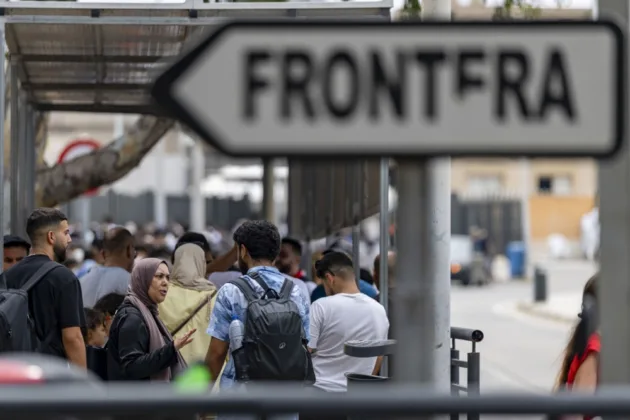
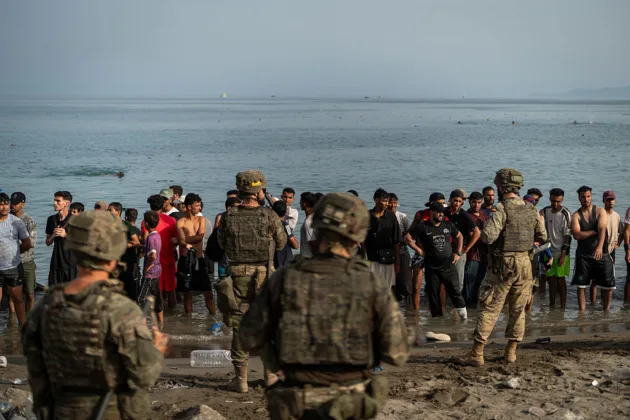
The New York meeting also came while Spain was still dealing with the consequences of the mass crossings into Ceuta, the Spanish city on the north African coast that with Melilla forms the EU’s only land border with Africa.
Some 72,000 people entered from Morocco from July 30, according to Spanish interior ministry figures, in an episode that led the European People’s Party (EPP) to demand that Frontex be turned into a full European border guard agency.
The Guardia Civil has since identified Moroccan intelligence agents among those who crossed into the city, in a report drawn up for Spain’s National Court.