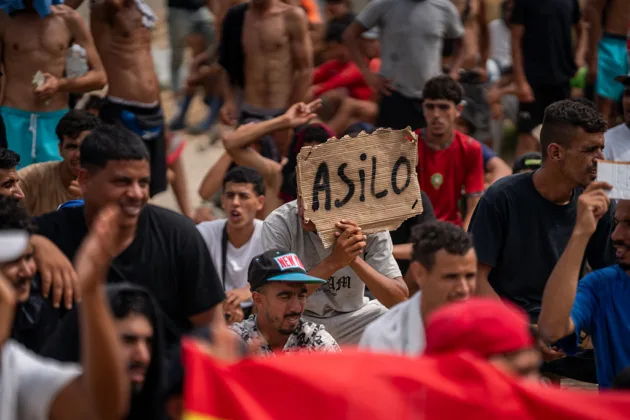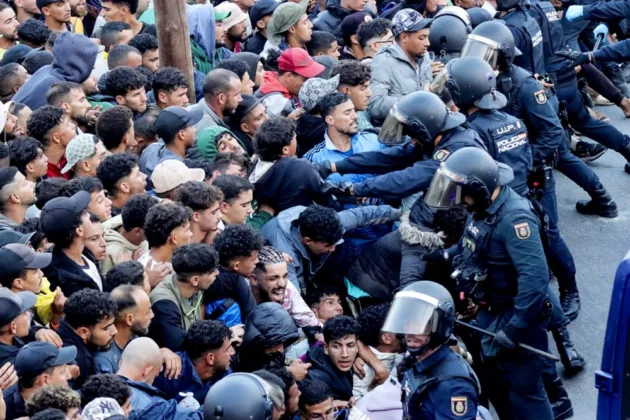


Spain’s Guardia Civil has drawn up a second report for the National Court which identifies members of Morocco’s intelligence services among the tens of thousands of people who crossed into Ceuta on July 30 and 31.
ABC reported on September 3 that the force picked out the agents through the camera system covering the border perimeter and that they entered the Spanish city concealed among the migrants.
The Madrid daily said the document was being finalised at the request of National Court judge María Tardón.
Tardón asked the Guardia Civil and the National Police on July 31 for reports establishing whether there were indications of an offence against the independence of the State.
The police contribution reached her first and has already convulsed Spanish politics. Its National Centre for Immigration and Borders concluded that the entry of more than 70,000 people had been planned rather than spontaneous.
Uniformed Moroccan gendarmes guided the crowds on the ground under the direction of officers in plain clothes, according to the account of the document published by El Español on September 1.
The director general of the National Police, Francisco Pardo, told Interior Minister Fernando Grande-Marlaska on September 2 that no police report attributed the planning or execution of the events to Moroccan security forces.
Pardo said Tardón had instructed the investigating team not to brief their superiors and had lifted that restriction only that day.
Government sources quoted by ABC described the judge’s conduct as a judicial plot and recalled that she sat as a People’s Party councillor in Madrid in 1999.
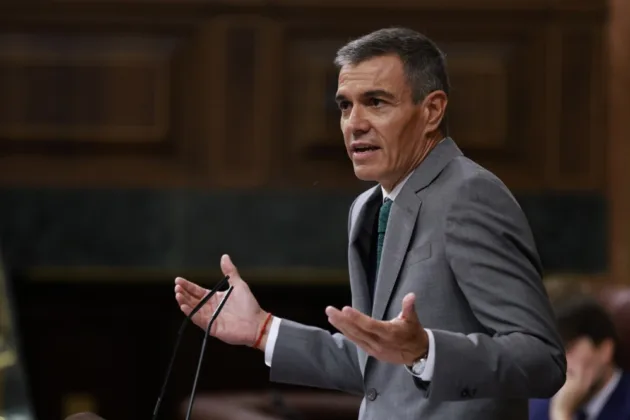
Prime Minister Pedro Sánchez has blamed trafficking networks and false claims spread on social media for the crossings, and has praised Rabat’s subsequent cooperation.
He was due to address the Congress of Deputies on September 3 on his handling of the crisis, in his first appearance on the matter since it began.
The European External Action Service said on September 1 that it had no conclusive evidence that disinformation by foreign states caused the crisis, though it had recorded Russian attempts to exploit it online.
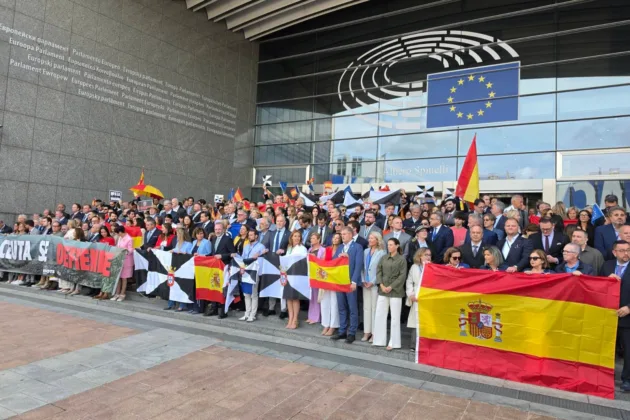
People’s Party leader Alberto Núñez Feijoo has asked the Government to summon the Moroccan ambassador and to recall Spain’s envoy in Rabat for consultations.
The police union Jupol has demanded the resignations of both Grande-Marlaska and Pardo.
Between 5,000 and 10,000 people are still thought to be in Ceuta, a city of about 84,000 on the European Union’s only land border with Africa.
Ceuta President Juan Jesús Vivas said on September 2 that many questions about the crisis remained unanswered.