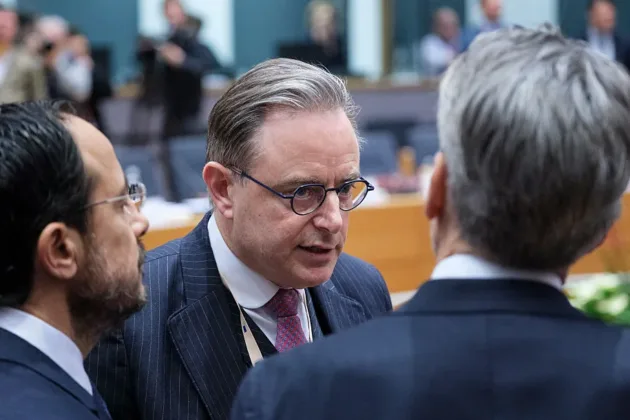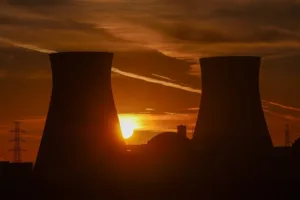



Prime Minister Bart De Wever has ordered draft legislation that would allow the Belgian State to forcibly nationalise the country’s nuclear power plants if voluntary negotiations with French operator Engie collapse by the November 4 deadline.
According to reporting by Belgian business newspapers De Tijd and L’Echo, the government has prepared the legal texts for an expropriation route.
Under the scheme, the State would unilaterally determine the method for calculating compensation owed to Engie, based on what it deems fair.
Engie could challenge the decision in court, but the government would be free in the meantime to press ahead with reactor life extensions and its broader nuclear strategy.
That November 4 cut-off is itself a reprieve. Both sides had set October 1 as the date for settling the main elements of the transfer, then let it pass, citing the complexity and scope of the operation.
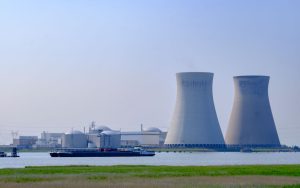
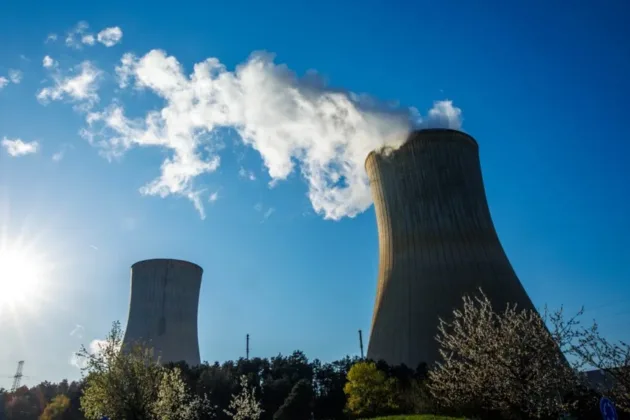
The move marks a sharp escalation from the letter of intent signed in April, under which the state was to negotiate the takeover of Engie’s entire Belgian nuclear portfolio, seven reactors at Doel in Flanders and Tihange in Wallonia, associated personnel, subsidiaries, assets and the multi-billion-euro decommissioning and dismantling liabilities.
Decommissioning work was suspended with immediate effect on April 30 so that all options remained open. Despite a proposed deadline of November 4, talks have made little progress.
Those liabilities are the core of the deadlock. Dismantling the fleet is estimated to cost between €11 billion and €12 billion, against the €8.7 billion Engie has provisioned, and the company has signalled it does not intend to go beyond that figure.
Rothschild & Co and KPMG have been brought in to assess whether the reactors can run for longer, at what cost and on what legal basis.
De Wever has long framed the nuclear question in stark terms. On January 29, at a Brussels event hosted by De Tijd and L’Echo, he described the decades-long phase-out policy — driven by Green participation in government and codified in a 2003 law — as “the stupidity of the century”, a set of dogmatic choices that left Belgium vulnerable to high energy prices, supply risks and de-industrialisation.
He has repeatedly warned that the earlier December 2023 deal with Engie, negotiated by the previous government, constrained Belgium’s room for manoeuvre and will leave the country paying “for an entire century”.
Under that agreement Engie paid €15 billion to transfer all its nuclear waste obligations to the State, in return for a 10-year extension of the Doel 4 and Tihange 3 reactors.
Belgian Prime Minister Bart De Wever has launched a sharp attack in parliament on past energy policy, warning that decisions to phase out nuclear power could saddle the country with costs “for an entire century”. https://t.co/6mV3ZTLDii
— Brussels Signal (@brusselssignal) March 13, 2026
The current centre-right coalition has already repealed the phase-out law, in a federal parliament vote on May 16, 2025, and committed to maintaining long-term nuclear capacity alongside renewables, exploring further life extensions (including of recently closed units where feasible) and developing new capacity, including small modular reactors.
Ministers are targeting 4 gigawatts of nuclear capacity. Doel 4 and Tihange 3, the only units still generating, supply about 2 gigawatts between them, and the government wants both kept open until 2045 rather than 2035.
The Federal Planning Bureau has ranked nuclear-inclusive pathways as the lowest-cost route to climate neutrality by 2050, in a September 2025 study that expects Belgian electricity demand to double over the period, and energy-intensive industry has pressed for clarity and extensions to protect competitiveness.
Engie, on the other hand, has made clear for years that nuclear no longer fits its strategy.
The company has pivoted towards renewables, networks and regulated assets offering more predictable returns, and has limited interest in further investment in Belgium’s ageing fleet amid political uncertainty and open-ended liabilities.
It also remains unclear whether the State would operate the reactors itself or bring in an industrial partner, with EDF among the names under consideration.
Expropriation would be unprecedented in Belgium.
The nearest recent parallel is Germany’s 2022 takeover of Gazprom’s German subsidiary, placed under trusteeship weeks after the invasion of Ukraine and nationalised that November as Securing Energy for Europe.
Legal challenges from Engie could drag on for years, and the ultimate price tag, including residual decommissioning costs, remains opaque.
Greens have already criticised the voluntary takeover plans as an “irresponsible waste of billions” on ageing reactors while other budgets are constrained. Groen president Aimen Horch said the price tag remained unknown and could not be reconciled with a government that says it has no money for pensions.
A group of former senior managers and technical heads of Germany’s nuclear power plants have written an open letter to Chancellor Friedrich Merz, Economy Minister Katherina Reiche and Union parliamentary group leader Jens Spahn calling for the reactivation of the country’s…
— Brussels Signal (@brusselssignal) June 25, 2026