





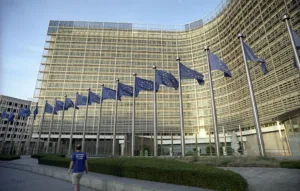




The European Commission has proposed admitting candidate countries to parts of the European Union before they formally join, and has asked for the power to suspend their voting rights for up to 15 years afterwards if they breach the bloc’s founding values.
The two ideas anchor a package of reforms put to the member states and the European Parliament on October 6. Brussels said the package would prepare the Union’s institutions, policies and budget for a larger membership.
The whole exercise is built on the treaties as they stand. The Commission has ruled out reopening them, a route that would need the unanimous agreement of all 27 member states and ratification in every capital.
Timing matters. Montenegro wants to close its negotiations before the end of the year and to become a full member state in 2028, and several other candidates have picked up pace behind it.
On the institutions, the Commission wants to shrink the number of areas in which a single capital can block the rest. It proposes wider use of the so-called passerelle clauses, which allow unanimity to be swapped for qualified majority voting without amending the treaties.
Enlargement Commissioner Marta Kos told a press conference that the treaties already permit this. She pointed to sanctions, the fight against tax fraud and intermediate steps in accession talks as areas that could move across.
There is a catch the document itself acknowledges. Activating a passerelle clause requires the unanimous backing of the 27 in the first place, so the instrument meant to end national vetoes can be stopped by one.
The Commission also wants more frequent recourse to enhanced cooperation, under which a group of countries moves ahead on a policy and leaves the door open for the others to join later.
It has gone further and reopened the question of its own size. The treaties allow a College of Commissioners equivalent to two-thirds of the member states, filled by equal rotation, rather than today’s one commissioner per country.
A smaller executive would mean broader portfolios and simpler internal coordination, the Commission argued, though it conceded that the present arrangement gives the college direct knowledge of the political, economic and administrative reality of every country in the Union.
The second pillar is gradual integration. Candidates would take part in European programmes and structures before accession, in step with the reforms they deliver.
In practice that could mean early access to Erasmus+ and Horizon Europe, a larger role in agencies such as Frontex and phased entry into parts of the single market, along with the European transport, energy and digital connectivity networks and a seat in expert groups and committees.
Kos said the approach was not a substitute for full membership but “an accelerator of enlargement”. She added that it would depend both on the pace of reform and on a candidate’s strategic alignment with the Union.
Participation would also be reversible. Benefits could be withdrawn if a candidate stopped meeting the conditions or moved away from the bloc’s values and strategic interests.
The safeguards address a different problem: what happens once a country is inside. The Commission wants tools to respond to serious breaches of fundamental values, democracy and fundamental rights, or of the principle of sincere cooperation, during a new member state’s first 15 years.
It described the mechanism as an insurance policy. In the gravest cases it would allow the suspension of a country’s voting rights in the Council.
Kos said the Union had to be certain that new entrants never fell back below the standards they met on the way in, and spoke of cutting financial support or restricting voting rights where they did.
The treaties already contain a procedure of that kind. Article 7 is rarely used and its heaviest step requires the unanimous agreement of every other member state, which has left it close to unusable in practice.
Brussels also wants future members to sign an optional, time-limited pledge not to block later enlargements over bilateral disputes. Such quarrels have repeatedly stalled accession talks in the Western Balkans.
Beyond the institutional questions, the analysis concludes that the Union could absorb new members under most of its existing policies. It identifies areas that would need specific adjustment, agriculture foremost among them, should Ukraine join.
The reason is the scale, structure and very high productivity of Ukrainian farming. The Commission said it would study measures to limit financial support and market access significantly for certain sensitive products, while helping Kyiv recover its traditional export markets outside Europe.
Montenegro, Albania, Moldova and Ukraine have been identified as the four most advanced candidates. Indicative roadmaps for each, setting out next steps, timelines and targets, are due on October 28 alongside the annual enlargement reports.
The proposal now goes to the member states and the European Parliament, where the appetite for surrendering vetoes and national commissioners is likely to be tested quickly. Kos, for her part, insisted that each candidate would still advance on its own merits.
“There will be no shortcuts,” the Slovenian commissioner said.