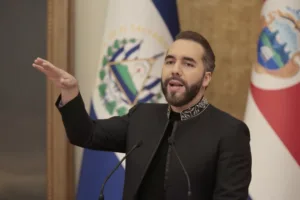


El Salvador’s President Nayib Bukele has waded into European politics once again, asserting that France could resolve its recurring domestic security crises and street violence in seven days if the French Government adopted his uncompromising approach to law enforcement.
Posting on social media in French on October 18, Bukele pushed back against narratives declaring France beyond saving: “I have heard people say that France is finished, that it is too late to save it [ … ] We overcame a problem a hundred times more serious in one year, without having the resources available to France. France could achieve it in a week.”
The Salvadoran President’s intervention comes as European nations grapple with civil unrest, urban violence, and rising crime rates, placing Bukele’s law-and-order governance model at the centre of an escalating debate between conservative reformers and international human rights watchdogs.
J’ai entendu dire que la France était finie, qu’il était trop tard pour la sauver.
Mais la France est toujours aussi belle, enviable même. Sa grandeur n’a pas disparu, elle ne demande qu’à renaître.
Nous avons surmonté en un an un problème cent fois plus grave, sans avoir les…
— Nayib Bukele (@nayibbukele) October 18, 2026
Once described as the homicide capital of the world, El Salvador underwent a drastic security transformation following Bukele’s implementation of a nationwide “State of Exception” (Régimen de Excepción) in March 2022.
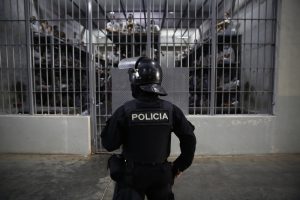
To dismantle powerful transnational criminal cartels Bukele deployed a series of sweeping measures, including mass incarceration, suspension of constitutional rights via emergency decrees, the construction of high-security mega-prisons and a judicial overhaul with mass trials involving hundreds of defendants at the same time.
About 90,000 people have been arrested under the measure, renewed by parliament every month since.
The strategy resulted in a precipitous drop in violent crime. El Salvador’s homicide rate plummeted from 106.3 per 100,000 residents in 2015 to 0.97 per 100,000 in the first nine months of 2026, turning the country into one of the safest nations in Latin America and beyond, and securing Bukele overwhelming domestic popularity and re-election.
Despite its domestic popularity, Bukele’s policy has drawn severe condemnation from international human rights organisations, non-governmental organisations, and left-wing activists.
Human Rights Watch (HRW) and Amnesty International, for example, have come out strongly against the Salvadoran leader. His government acknowledged in 2024 that some 8,000 of those detained had been released after no gang links were established.
France has little room to lock up more people. Prison figures published in September showed 89,668 inmates for 63,303 places on August 1, an occupancy rate of 141.6 per cent.
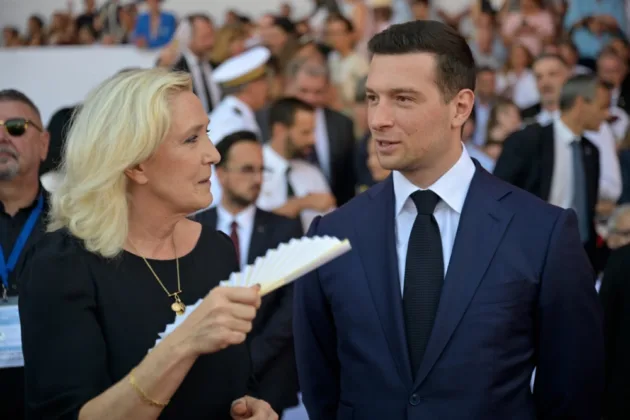
French right-wing politician Éric Zemmour has praised Bukele before. In September he noted that Bukele has made a once very unsafe country safe with his policies.
“I’m in favour of creating 100,000 prison places and putting a lot of people in prison,” Zemmour said on BFMTV on September 17, where he also confirmed he would run in 2027.
I’m not sure people fully grasp what it means to send our worst criminals to El Salvador. This isn’t like sending them to a U.S. prison with cushy amenities and endless appeals. El Salvador has built some of the largest, most hardcore prisons in the world—and trust me, they don’t… https://t.co/p59abPoO6t pic.twitter.com/vRUYnrK92T
— A Guy on X Striving to be the VA Change Agent (@VaChangeAgent) February 4, 2025