






Sweden’s 75-day political deadlock has moved close to an end after the leadership of the liberal Centre Party announced on November 26 that it would recommend backing caretaker Prime Minister Ulf Kristersson in the November 30 parliamentary vote.
The pivot paves the way for a four-party centre-right minority government—uniting Kristersson’s Moderate Party, the Centre Party, the Christian Democrats and the Liberals—just days after the country seemed headed for snap elections.
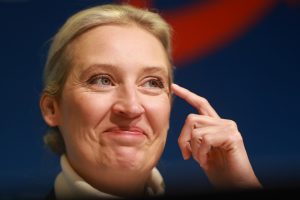
Centre Party leader Elisabeth Thand Ringqvist has convened the party’s council (förtroenderådet), its highest decision-making body between congresses, to ratify the leadership’s recommendation to vote in favour of Kristersson on November 30 and formally enter his cabinet.
Speaking on public broadcaster SVT’s Morgonstudion on November 27, Thand Ringqvist acknowledged that the arrangement was “our third choice”, reflecting the reluctance behind the party’s reversal.
“After we in the Centre Party have exhausted all alternatives, this is the one that gives the flank parties the least power while giving the Centre Party the greatest impact for its policies,” she said.
Prior to the election the Centre Party had campaigned on keeping what it calls the most radical parties, the Sweden Democrats (SD) on the Right and the Left Party on the Left, out of government.
Attempting to reassure sceptical liberals over the government’s need for support from the Sweden Democrats, she stressed that no concessions had been made to the nationalists.
“There is no agreement on structured budget cooperation with SD. No promises have been made to them. They are not in the government, they get no officials in the Government Offices, no joint political programme and no joint press conferences with the government. They get nothing we do not want.”
Even so, she conceded that “we are, I will be completely honest about this, dependent on them letting this government through, as they have said”.
While the proposed four-party coalition commands 136 seats in the 349-seat Riksdag, Sweden’s parliament, the nationalist Sweden Democrats have indicated they intend to abstain during the November 30 ballot—a move that would allow Kristersson to pass the threshold and retain power, provided the Centre Party’s council approves the deal.
Under Swedish rules, a prime ministerial candidate is approved unless an absolute majority of 175 MPs votes against. With SD’s 62 MPs abstaining, the Social Democrats, the Left Party and the Greens would muster 151 votes against.
SD leader Jimmie Åkesson has said his party would then go into opposition, warning the new government on X: “You’re on your own.”
Kristersson welcomed the shift, telling Swedish media that “a coalition government with our four parties focusing on growth and welfare would be good for Sweden”, while stressing his respect for the Centre Party’s internal decision-making process.
Social Democratic leader Magdalena Andersson, though, dismissed the prospective administration as a “Tidö 2 government” that “would be historically weak and lack the ability to get its policies through”, adding that she understood the frustration of voters who had cast ballots to keep the Sweden Democrats away from decisive influence.
The term refers to the 2022 Tidö Agreement, under which SD backed Kristersson’s outgoing three-party coalition in exchange for influence over policy.
The breakthrough follows more than two months of gridlock since the September 13 general election, in which the four-party centre-left opposition—comprising the Social Democrats, the Left Party, the Greens and the Centre Party—secured a parliamentary majority of 176 seats to 173.
Despite that numerical advantage, repeated attempts by Andersson to assemble a cabinet collapsed over the parties’ red lines.
The Left Party refused to back an Andersson government without receiving ministerial portfolios, while the Centre Party refused to tolerate Left Party ministers in cabinet over perceived radicalism.
On November 24, Andersson formally conceded that no viable conditions existed to form a government, blaming the Left Party’s refusal to engage in substantive negotiations.
Hours later, Riksdag speaker Andreas Norlén nominated Kristersson for a third investiture vote, warning reporters that “there is still a significant risk of a new election, that is clear”.
Andersson and Thand Ringqvist have already been voted down, the latter by 324 votes to 25 on November 3. A fourth failed vote would trigger a snap election.
The Centre Party’s decision to break the impasse by crossing the aisle has already triggered internal uproar.
Thand Ringqvist had campaigned in September with Andersson as her preferred prime minister, and the November 26 leadership vote was not unanimous.
Thand Ringqvist has said she told the party board she was not the right person to lead the Centre Party into a government including the Left Party, or into a snap election.
Both the party’s youth wing and its women’s organisation have publicly rejected joining a Kristersson-led cabinet that relies on the passive tolerance of the Sweden Democrats.
“We are against this decision,” said Mari-Louise Wernersson, chair of the Centre Party Women.
Centre Party MP Anna Lasses has already vowed to defy the leadership on November 30, declaring that she “will under all circumstances vote red” against Kristersson and predicting that several colleagues will join her.
One municipal politician, Fredrik Adolphson, was filmed crying over the right-wing shift, according to local newspaper Falu-Kuriren. “How is it possible? I cannot take it in,” he said.
On November 29, the Centre Party’s council will take a position on the party leadership’s proposal to be part of a right-wing coalition.
Even if the council backs Thand Ringqvist ahead of the November 30 vote, the incoming minority administration would immediately face the challenge of passing a state budget while navigating its ongoing parliamentary dependence on Åkesson’s nationalists.
According to broadcaster TV4, the Moderates, the Christian Democrats and the Liberals have been preparing a joint budget adapted to Centre Party priorities, due to be presented on November 27.