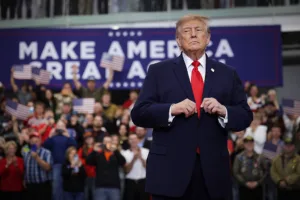


The Danish Government has said the United States holds no preferential right over Greenland’s raw materials, after US President Donald Trump announced the imminent start of large-scale exploration on the Arctic island.
In a written reply to Danish public broadcaster TV2, the Danish foreign ministry said any American search for oil, gas and minerals would have to take place within Greenlandic law. Licensing of the subsoil rests with the government in Nuuk rather than with Washington.
The ministry said the agreement signed last month by the United States, Denmark and Greenland gave American investors no “preferential treatment” over those from EU countries, other NATO members and NATO partners.
Trump wrote on his Truth Social platform on October 14 that exploration was getting ready to begin in “our new and beautiful Greenland”, citing experts who he said believed the island held more easily available oil than almost anywhere else. He gave no detail of the companies involved.
Greenland’s deputy mining minister, Jørgen Hammeken-Holm, told CNN that although American companies were active on the island, “we are very far away from ‘massive’ exploration”. Smaller projects under way could take years to become operational, he said.
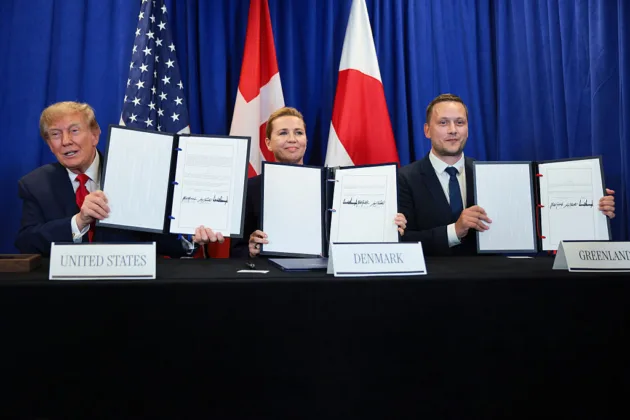
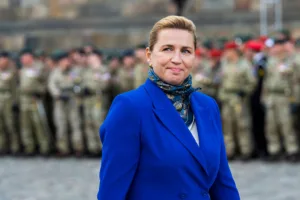
The security pact signed on September 22 at the United Nations General Assembly by Trump, Danish Prime Minister Mette Frederiksen and Greenland’s Prime Minister Jens-Frederik Nielsen amends a 1951 defence treaty and widens the American military presence on the island. Trump said afterwards that it had handed Washington permanent control of Greenland’s security.
The accord acknowledges Danish sovereignty and the right of Greenlanders to self-determination, and refers to minerals cooperation without setting out what that covers. It confers no exploration rights.
Greenland stopped issuing new oil and gas licences in 2021, citing extraction costs and the risk to fisheries, tourism and the environment. In August its government formally warned a US company with links to Trump after drilling equipment was landed on the east coast without approval.
For the European Union the dispute matters because Greenland holds deposits of several raw materials the European Commission has classed as critical. Brussels has answered American pressure with money, Commission President Ursula von der Leyen promising a €200 million partnership package in Nuuk on September 7.
Greenland left the European Communities in 1985 and is now an overseas country and territory associated with the bloc, though its residents hold EU citizenship. It already draws €225 million from the EU budget for 2021-2027, the largest such allocation per head.
The exchange follows more than a year of tension in which Trump demanded American control of the territory and declined to rule out taking it by force. Frederiksen called the September signing a turning point in relations.