
A senior Iranian policymaker behind Tehran’s compulsory headscarf rules and internet censorship apparatus, and a former officer in the Islamic Revolutionary Guard Corps (IRGC), has been lined up to deliver a keynote address at an Islamophobia conference in London on December 13.
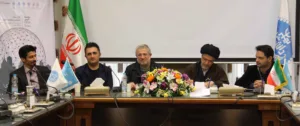
Saied Reza Ameli, a University of Tehran professor who served in the IRGC and was secretary of Iran’s Supreme Council of the Cultural Revolution, is listed as one of three keynote speakers at the Islamic Human Rights Commission’s (IHRC) 13th annual conference, titled Artificial Intelligence and Islamophobia.
Ameli is due to address the gathering via a pre-recorded video message from Iran alongside fellow keynote speakers Shereen Fernandez and Sandew Hira.
Ameli served as deputy commander of the Imam Sadeq Brigade in the Revolutionary Guards’ Seyyed al-Shohada Division, according to the human rights database Faces of Crime and Iranian state-affiliated media biographies.
In a statement on November 22, the IHRC denied that Ameli had ever been a member of the IRGC or held rank within it. It had earlier argued in correspondence with the Daily Mail that wartime military service against Saddam Hussein’s invasion of Iran should not be held against him.
In 2015, Iran’s then supreme leader Ali Khamenei, who was killed in US-Israeli strikes on March 1 this year, appointed him to the Supreme Council of Cyberspace, which oversees the country’s internet policy and social media censorship.
From 2019 to 2023, Ameli served as secretary of Iran’s Supreme Council of the Cultural Revolution, the state body responsible for drafting stricter “chastity and hijab” regulations. He remains a member of both councils.
He was still serving as secretary in September 2022 when 22-year-old Mahsa Amini died in the custody of Iran’s morality police after being detained over her headscarf, sparking nationwide protests.
In February 2023, Canada placed Ameli under personal sanctions over gross and systematic human rights violations in Iran.
Five months later, in July 2023, the United Kingdom sanctioned the Supreme Council of the Cultural Revolution itself for developing and enforcing mandatory dress codes for women, citing the use of unreasonable force. The Supreme Council of Cyberspace was sanctioned on the same day.
In response to the Daily Mail, the IHRC defended inviting Ameli on the strength of his academic work on artificial intelligence and Islamophobia. It noted that he is not personally subject to British sanctions and claimed he is “on public record opposing the enforcement of hijab in Iran”.
Ameli has institutional ties to the London-based organisation hosting the event. He helped establish the IHRC in 1997 and served on its board of directors from 2006 until December 2022 alongside the group’s current chair, Massoud Shadjareh.
Conservative MP Alicia Kearns, the shadow national security minister, has written to the Home Office about the invitation, warning that hosting Ameli was “likely illegal under the State Threats Act”.
The conference programme also features several other figures who have drawn scrutiny.
Alexandra Darby, AI and digital rights lead at the Forum of European Muslim Youth and Student Organisations (FEMYSO), is scheduled to appear as a panellist. On October 8, the European Parliament adopted a resolution naming FEMYSO among structures linked to the Muslim Brotherhood network.
The line-up includes Open University senior lecturer Syed Mustafa Ali, who drew criticism in 2023 for social media remarks following the murder of British-Israeli mother Lucy Dee and her two daughters in a Palestinian terrorist attack.
It also includes University of California, Berkeley associate professor Ramón Grosfoguel. In 2024 he published an essay via the IHRC, Gaza: The Warsaw Ghetto of the 21st Century, which critics say denied that Hamas attacked Israeli civilians on October 7, 2023.
Dead Zionist settler-colonialists. But they’re white females so we are supposed to grieve for them. #WhiteSupremacy #Zionism #SettlerColonialism pic.twitter.com/Bs5m5IkF2c
— Dr Syed Mustafa Ali 🇵🇸 🇸🇩 (@DrSyedMustafaA1) April 10, 2023
According to the IHRC’s conference prospectus, the event aims to examine the impact of artificial intelligence on Muslims’ lived experiences. It alleges that Western governments and technology firms use AI to surveil protesters and accuses Israel of deploying AI in Gaza.
Although the event was originally slated to take place at the P21 Gallery near Euston, a charitable art space that frequently hosts pro-Palestinian gatherings and hosted the IHRC’s previous two Islamophobia conferences, the gallery cancelled its booking following scrutiny of the line-up.
In a statement on November 19, the IHRC accused Britain’s Charity Commission of pressuring P21 Gallery into annulling the contract, alleging an “increasingly authoritarian attitude” toward pro-Palestinian activities. According to the IHRC, the gallery cited an emergency meeting with the regulator about Ameli’s participation.
IHRC chair Massoud Shadjareh insisted that the conference would go ahead: “Despite all the bullying and scandalous attempts to silence us, we will not swerve from telling the truth. The programme will go ahead in full and we will announce a new venue shortly.”
The IHRC operates as a non-governmental company rather than a registered charity, though it receives funding from the Islamic Human Rights Commission Trust, a registered charity sharing the same address in Wembley, northwest London.
The Charity Commission has an active statutory inquiry into the trust**, opened on October 8, 2025,** examining its relationship with the IHRC and its involvement in the group’s events and publications.
The controversy in the UK comes as Iranian authorities on November 23 gave singer Parastoo Ahmadi and four members of her production team 74 lashes each in Qom for “offending public decency”. The punishment followed a December 2024 YouTube livestream of a concert in which she performed without a hijab. A Qom court had handed down the sentences in June, alongside two-year bans on leaving the country and on artistic activity.
Today on @TalkTV I spoke with @petercardwell and warned against the dangers of the so-called Islamophobia conference in London.
Human rights are universal and unconditional. Placing the word “Islamic” before human rights fundamentally undermines that universality, and places… pic.twitter.com/N136O3lM26
— Vahid Beheshti وحید بهشتی (@Vahid_Beheshti) November 23, 2026