











Residents of Barnham, a village of 584 people in Suffolk, eastern England, have voted overwhelmingly to break away from the United Kingdom in protest at government plans to house up to 931 asylum seekers at a nearby former Royal Air Force (RAF) base.
The November 21 referendum asked whether locals supported a petition for Crown Dependency status similar to that of Jersey, Guernsey and the Isle of Man. Of 274 ballots cast, 257 backed the proposal, 16 opposed it and one was spoiled.
The vote has no legal weight. According to local media, between 400 and 500 people were eligible to take part.
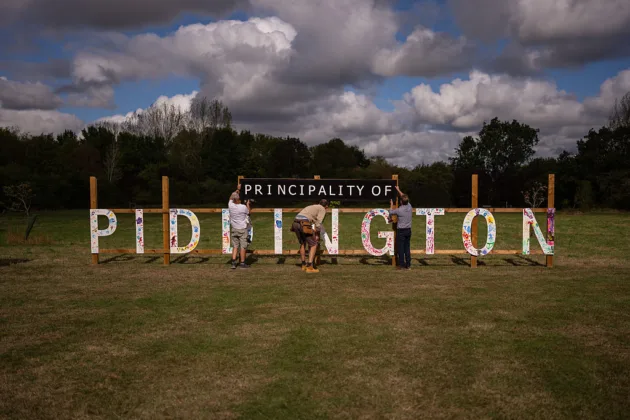
Barnham is the second English village to stage such a protest. In September, residents of Piddington in Oxfordshire voted for symbolic independence over plans to place up to 1,256 male asylum seekers at a former military site nearby.
After the count, villagers unveiled a new flag showing a stone curlew on a blue background. Helen Beck, chairwoman of the Barnham Residents’ Association, said the bird had been named Andy Barnham, after Prime Minister Andy Burnham.
Burnham has argued that wealthier parts of the country must “play their part” in housing asylum seekers. Beck told Sky News that a fair share for a village of Barnham’s size, based on population, would be five people.
She said 931 was “way, way above our fair share” and admitted residents did not expect the vote to change the government’s mind. She said all the arrivals would be men and that residents, women in particular, were worried about walking alone or taking their dogs out after dark.
John Bauer, chairman of Barnham Parish Council, said the referendum was meant to show the village’s anger at not being consulted. He said even the reduced figure would “completely swamp the village”.
The Home Office named RAF Barnham on June 25 as one of three former Ministry of Defence sites under consideration, with a combined capacity of 3,750. It originally proposed housing 1,256 men there.
No final decision has been taken, though the department has already awarded construction firm Kier a contract worth £3.4 million (€4.1 million) for detailed designs. The site, which would be used for at least 10 years, lies within a protected habitat for the stone curlew.
The Home Office said it recognised “the strength of feeling in local communities”. It added that the government was closing asylum hotels and moving people to former military sites with round-the-clock security and CCTV.
Zia Yusuf, home affairs spokesman for Reform UK, attended the count and said people felt “utterly disenfranchised and betrayed by the political class”. Conservative leader Kemi Badenoch also voiced support for the vote.