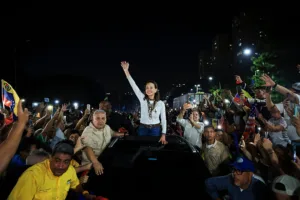
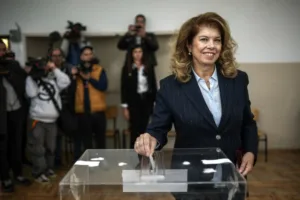


Luiz Inácio Lula da Silva has been re-elected President of Brazil with 51.79 per cent of the valid vote against 48.21 per cent for Senator Flávio Bolsonaro, after a run-off in which voting hours were extended across the country by court order.
The Superior Electoral Court (TSE) declared the result late on October 25, giving Lula 64.3 million votes to 59.8 million for his rival, a margin of about 4.4 million.
Bolsonaro did not concede and said he would go to court.
Shortly before polling stations were due to close at 5pm Brasília time, Supreme Federal Court (STF) Justice Cristiano Zanin ordered every section still open to keep taking votes until 7pm, citing transport failures and heavy rain.
Sections that had already shut stayed shut. In Rio de Janeiro some machines had been powered down and could not be restarted, and in Brasília most poll workers left within minutes of the original closing time.
Zanin acted as Lula’s criminal defence lawyer in the corruption cases that sent him to prison. Lula appointed him to the court in 2023.
Requests to extend polling hours are normally decided by the TSE rather than the Supreme Court, and Bolsonaro’s allies said the ruling had bypassed the electoral court. The TSE suspended its count while the extra two hours ran, then resumed.
Lula’s campaign had petitioned for more time, citing transport failures in at least nine states. Bolsonaro’s team asked for two extra hours in 17 municipalities of São Paulo, Paraná and Santa Catarina hit by storms.
In Salvador, capital of Bahia, at least 75 publicly owned buses were held in garages instead of running, according to a state electoral judge, and the regional electoral court ordered the arrest of the city’s mobility secretary.
Salvador’s mayor, Bruno Reis, an ally of Bolsonaro, blamed union activists for illegally fixing Workers’ Party material to the buses. Lula’s campaign called the stoppage voter suppression.
Constitutional lawyers quoted by Reuters said the extension and the disruption could support a legal challenge once the result is confirmed.
Bolsonaro had taken the first round on October 4 with 47.03 per cent to Lula’s 45.16 per cent, and the Right won a majority in Congress he had promised to use to amend the constitution. It is the first time since Brazil returned to direct elections in 1989 that a candidate has lost the first round and won the run-off.
Brazil is the largest economy in Mercosur, whose interim trade deal with the European Union has applied provisionally since May 1, 2026, and whose wider partnership agreement Poland failed in September to have suspended by the EU’s top court.