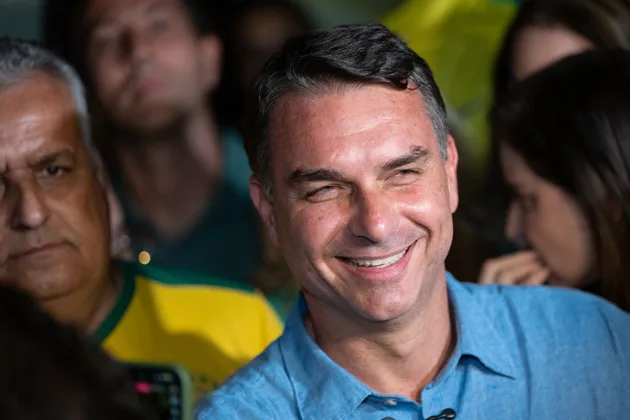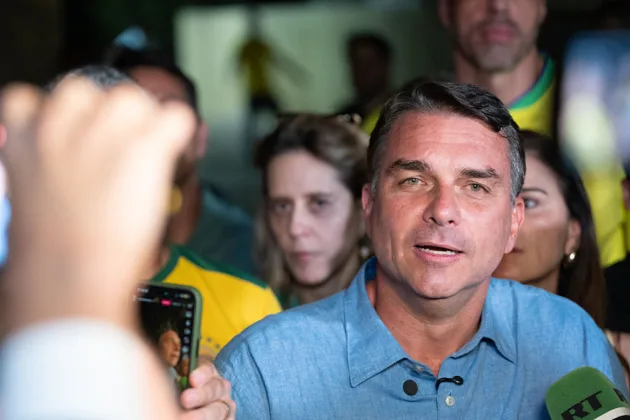
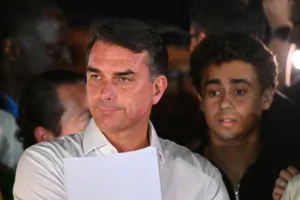
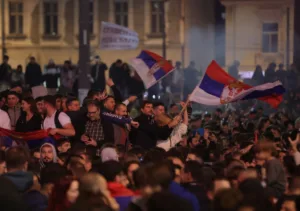

Flávio Bolsonaro has refused to recognise his defeat in Brazil’s presidential run-off and has announced that the Liberal Party (PL) would ask the courts to annul the vote.
The senator for Rio de Janeiro lost to Luiz Inácio Lula da Silva by 51.78 per cent to 48.22 per cent of valid votes, a margin of about 4.4 million ballots. He called what happened during polling day unacceptable and told supporters not to give up.
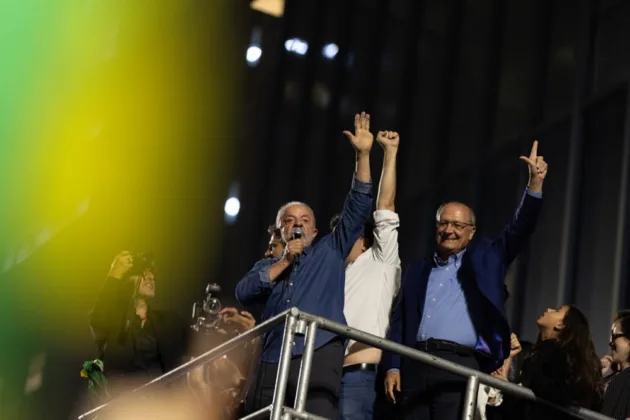
Lula is due to begin a record fourth term in January 2027, with the narrowest mandate of his career and a Congress controlled by his opponents.
The PL case rests on the order to keep polling stations open for two extra hours, issued by Supreme Federal Court Justice Cristiano Zanin as voting was due to end.
Bolsonaro accused the judge of changing the rules in the middle of the contest and of trampling on Brazil’s specialised electoral justice. He said the ruling had broken equality between Brazilians in different cities and states.
Zanin acted on requests from both campaigns. Lula’s lawyers cited bus failures in São Paulo and Salvador, two cities that lean towards him, while Bolsonaro’s team pointed to heavy rain in the south, where the senator was favoured.
Bolsonaro also claimed that his party’s monitors had been removed from the data processing room from the moment the decision took effect, an allegation for which no documentary evidence has so far been produced. His allies have made much of Zanin having served as Lula’s defence lawyer, though the case reached him through the court’s standard random assignment.
The president of the Superior Electoral Court (TSE), Kassio Nunes Marques, acknowledged that the injunction had created difficulties, arriving as it did around the official closing time.
He said no extension of that kind had occurred in the court’s history and that altering electoral timetables had to be planned and calculated because of the technological side effects. Thousands of electronic ballot boxes had already shut by then and their programming prevents them being reopened, he said.
To rule out leaks the TSE blocked the system that receives results, so that no electoral official could see the contents of the vote early. That produced an extraordinary national retention of data and raised doubts about server capacity.
Nunes Marques said the flow was released at 7pm Brasília time and that nothing in the count had been altered by the judicial decision. Of the 499,248 machines in use, 1,551 had to be replaced, or 0.31 per cent, and national and international observer missions had full access to the audit mechanisms and certified the absence of external interference, the court said.
Turnout reached 80.78 per cent, with 128 million of more than 158 million registered electors voting in a country where the ballot is compulsory. That is the highest participation in a Brazilian presidential election since 2006, when Lula won a second term.
Any annulment request would be heard by the same electoral court whose handling of the run-off the PL is contesting, and whose bulletins have already declared the integrity checks intact.
Brazilian electoral law sets a demanding threshold. Annulment requires documented proof that a specific irregularity altered the result, and a gap of 4.4 million votes is a large number to attribute to two hours of extended voting.
The PL anchors the right-wing majority returned in the congressional elections of October 4, which Bolsonaro had promised to use to amend the constitution. That majority gives the Right a second front, in the chambers rather than the courts, and an incentive to keep the legitimacy of the run-off in dispute.
Flávio Bolsonaro stood in place of his father, Jair Bolsonaro, who was ruled ineligible for public office in 2023 and is being held in Brasília over the attempt to overturn the 2022 election. An amnesty for him was among the campaign’s central promises.
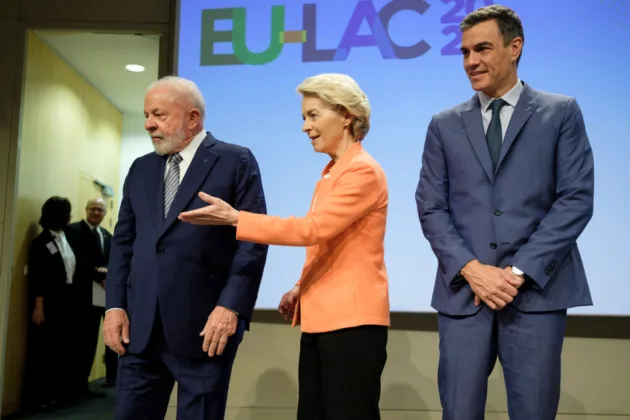
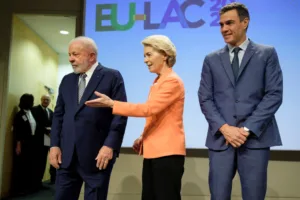
European Commission President Ursula von der Leyen greeted the result by declaring that “democracy and multilateralism have won in Brazil”, and European Council President António Costa telephoned Lula on the night of the count.
The relief in Brussels is commercial as much as rhetorical. Bolsonaro had urged Brazil to loosen its ties to Mercosur and to negotiate separately with Washington, which would have left the European Union holding an agreement signed in Asunción on January 17 with a partner no longer committed to it.
That agreement is not safe either. On January 21 the European Parliament voted by 334 to 324, with 11 abstentions, to ask the Court of Justice of the European Union whether the decision to split the deal into a trade instrument and an association agreement respects the Treaties, which suspends the ratification vote until the Court rules.
A contested presidency in Brasília does nothing to speed that up. The European Council has backed provisional entry into force of the trade pillar once a single Mercosur parliament ratifies, and the government expected to deliver Brazil’s side is the one whose mandate the losing party is asking its own courts to cancel.