

The European Union’s top court has rejected a request by Poland to temporarily suspend the bloc’s trade agreement with South America’s Mercosur countries while it considers Warsaw’s legal challenge to the deal.
The agreement has been controversial in Poland from the outset, particularly among representatives of the agricultural sector.
The deal also triggered mass protests by European farmers, who fear competition from cheaper imports that do not meet EU standards.
One of the main arguments raised by opponents of the agreement is concern over increased imports of agricultural products from South America and their impact on European producers.
Poland’s submission to the European Court of Justice (ECJ) maintained that liberalising trade in agricultural products without imposing the same production standards in both the EU and Mercosur created a risk of harm to human and animal health, the environment, the income of farmers and the functioning of the market in the EU.
In response the ECJ said Poland had failed to show that allowing the agreement to continue to apply could cause serious and irreversible harm for agriculture, consumers and the environment.
The court said the country had not provided sufficient evidence that the deal would disrupt the EU’s agricultural market, noting that farm prices depend on many factors, including energy and fertiliser costs and competition from other countries.
The court pointed out that agricultural products from Mercosur could already be imported to the EU before the free-trade deal, and that they were and continue to be subject to food safety and health regulations similar to those for products manufactured in the EU.
It also noted that the new trade deal includes tools allowing the EU to bar products that do not meet standards, including emergency measures in the case of a serious threat to human, animal or plant life.
Poland sought to annul the Council of the European Union’s January 9 decision concerning the signing and provisional application of the interim trade agreement between the European Union and Mercosur.
The Polish Government had filed its legal challenge in May, arguing that the EU had breached its treaties, abused its powers and failed to properly consult member states when approving the deal.
Warsaw argued, among other things, that splitting the agreement into two separate documents made it possible to circumvent the requirement for unanimity among member states in the adoption procedure.
It sought to have the agreement suspended while the case was heard, but the court said the country had not met the conditions for interim measures.
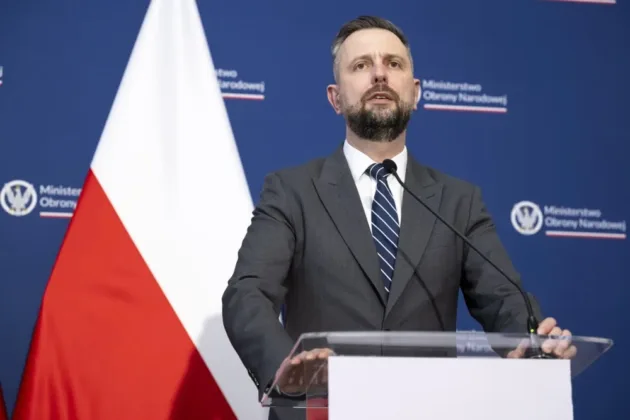
In response to the court’s decision, Polish Government spokesman Adam Szłapka immediately blamed the former Law and Justice (PiS) administration, which was in power from 2015 to 2023.
Szłapka said that the details of the Mercosur deal had been agreed during that period and that PiS had “failed to secure Polish interests in any way” and claimed that it was the current government which secured the addition of last-minute safeguards intended to protect farmers.
The spokesman also argued that Polish agricultural exports to the Mercosur bloc have actually increased under the new agreement while imports from there have fallen, showing that “Polish farmers are profiting from this”.
Marcin Przydacz, foreign policy aide to the PiS-allied President Karol Nawrocki, claimed though that the decision showed the impotence of the current pro-EU government.
“The government and Prime Minister Tusk first said that the EU-Mercosur agreement would be ‘safe for Polish farmers’. Then they failed to build a blocking coalition in the European Council,” wrote Przydacz.
“In the end, under pressure from public opinion in Poland, they filed a complaint with the ECJ which was so weak that they lost the request for interim relief,” he added. “Ineffective policy and ineffective government,” Przydacz concluded.
PiS opposition politicians recalled how on taking office in late 2023 the current Prime Minister Donald Tusk, who leads the ruling centre-left coalition, had boasted that “no one will be able to outplay me in Europe”. According to the opposition, Tusk was outplayed in the EU over Mercosur or he never really wanted to block that agreement in the first place.
The EU’s Mercosur trade agreement covers Argentina, Brazil, Paraguay and Uruguay.
The deal is intended to reduce barriers to trade, including by lowering some tariffs. The final agreement of the trade deal followed nearly 25 years of negotiations between the EU and the Mercosur bloc countries.
EU member states agreed in January to bring the agreement into force, with 21 of the 27 backing the text and Poland, France, Ireland, Hungary and Austria voting against and Belgium abstaining.
Although the agreement has not yet received final ratification, still requiring approval from the European Parliament and national parliaments, it has been applied provisionally since May 1, gradually removing tariffs and introducing preferential quotas for certain agricultural and industrial goods.
The European Parliament suspended its own consent procedure on January 21, when it asked the ECJ for an opinion on whether the deal, and the way it was split into two separate instruments, are compatible with EU law. That opinion is not expected before 2027.
The deal, which eliminates tariffs on more than 90 per cent of trade between the two sides, favours European exports of cars, wine and cheese, while making it easier for South American beef, poultry, sugar, rice, honey and soybeans to enter Europe.
Mercosur exporters have been granted a quota of 99,000 tonnes of beef at a reduced tariff of 7.5 per cent, equivalent to about 1.5 per cent of EU production, along with 180,000 tonnes of poultry, 60,000 tonnes of rice and 45,000 tonnes of honey, with duties on those lines phased out over five years. The European Commission has estimated that EU exporters would save more than €4 billion a year in duties.
Poland’s opposition Right has argued that the deal has been reached to benefit German industry at the expense of European agriculture. Jan Krzysztof Ardanowski, agriculture minister in the last PiS government, which governed from 2015 to 2023, has said that the deal is part of the drive to marginalise agriculture and make Europe dependent on foreign imports.
The ex-minister recalled how important food security proved during the Covid-19 pandemic and said the EU had failed to learn the lessons stemming from that experience.
“Poland coped well with Covid with regard to food security because it was self-sufficient and food self-sufficiency was always at the heart of the Common Agricultural Policy”, said Ardanowski.
The central idea of the EU’s Common Agricultural Policy (CAP), one of the oldest policies of the European Union introduced during the existence of its predecessor the European Economic Community (EEC), was to guarantee that Europe would always have food guaranteed from its own agricultural producers.
This is why the policy was heavily skewed towards protecting farmers, guaranteeing them that what they grew and bred would be paid for. That in turn led to over-production of certain products such as butter, milk and even wine, which was heavily criticised by the media and some member states.
As a result of that fact and later the drive towards protecting the physical environment, the CAP shifted towards paying farmers based on the amount of land they cultivated and measures taken to protect the environment rather than for levels of production. In this way the policy has shifted away from being concentrated on production and has, argue some experts, become effectively a social policy subsidising farmers to be able to continue producing.
European farmers have always feared competition from South America, North America, Russia, Ukraine and Australia because of the vast land mass in those countries allowing for mass production which gives them an advantage in terms of economies of scale.
In addition European farmers argue that they face increasing demands in relation to environmental and production standards which their competitors are able to avoid. They fear that safeguards built into the Mercosur agreement will prove to be insufficient and that the competition from that and other regions will prove damaging.
Polish farmers are already under pressure from Ukrainian food imports into the EU enabled via the EU’s concessions to the Ukrainians made as a result of its war with Russia and the fact that Ukraine is bidding to join the EU. The farmers in Poland fear that they will not be able to compete against Ukrainian producers who have larger and richer stretches of farmland and do not have to meet EU standards.
Tusk has urged his country’s farmers to show that they can outcompete those from Mercosur or Ukraine via the quality of their produce. Farmers’ organisations argue though that in the end wholesalers will always choose cheaper product as they are under pressure from supermarket chains which are becoming dominant in the sale of food.
Direct off-farm sales and niche products are not sufficient to offset the advantage the big chains and wholesalers enjoy on the market. The farming community in Poland has already grasped those opportunities as well as non-farm use of land such as on-farm tourism. But these, argues Ardanowski along with the farming lobby, cannot be enough to sustain key productive sectors of agriculture on which food security depends.