


Romanian MPs have confirmed a new minority government, installing pro-Western career diplomat Luca Niculescu as prime minister in an effort to bring an end to nearly six months of political gridlock in Bucharest.
Niculescu’s technocratic cabinet passed the joint session of parliament on October 20 with a 280 to 58 vote, clearing the 233-seat threshold required for confirmation.
The 18-member team, sworn in the same day, is made up of 11 Social Democratic Party (PSD) nominees and seven independents, with the finance, foreign affairs, energy, education and culture portfolios going to the latter.
The vote concludes an impasse that began on May 5, when former prime minister Ilie Bolojan was removed through a motion of no confidence, prompting President Nicușor Dan to embark on a protracted series of consultations that culminated in Niculescu’s nomination on October 5.
He was the President’s fourth pick. Eugen Tomac stood down before facing parliament, while Adrian Veștea and Siegfried Mureșan failed to muster the numbers.
With the investiture, Bucharest avoided new elections.
Addressing parliament ahead of the vote, the 55-year-old former ambassador sought to set clear expectations regarding his administration’s remit and legislative leeway.
“Today’s vote does not represent a blank cheque. I am very much aware of that,” Niculescu told deputies, pointing to the immediate fiscal tests facing the country. Public confidence, he added, is earned through results.
Speaking after his first cabinet meeting that evening, he played down his own position at the head of a PSD-dominated administration.
“My feelings matter the least. What matters is that we have a government that functions,” he said.
The new administration takes office under urgent economic pressure.
Romania’s fiscal deficit is projected to hit 6.2 per cent of gross domestic product this year, well above European Union guidelines and the largest in the bloc, according to the European Commission’s spring forecast.
That marks a narrowing from 7.9 per cent in 2025, though public debt is still set to climb to 61.6 per cent of GDP.
Under commitments made to Brussels, Bucharest must bring the deficit below 3 per cent by 2030, leaving Niculescu’s team with the task of passing a deficit-reducing 2027 budget by December to avoid sovereign credit rating downgrades.
The Council of the European Union ruled in June 2025 that Romania had failed to take effective action under its excessive deficit procedure, setting a corrective path that caps net spending growth at 4.7 per cent next year.
To secure the confirmation, Niculescu assembled cross-party backing that includes the PSD alongside two centre-right formations, the National Liberal Party (PNL) and the Democratic Alliance of Hungarians in Romania (UDMR).
Neither of the two took ministerial posts and both have said they will sit in opposition.
As part of the political accord, supporting factions signed agreements with the incoming prime minister, with the PSD indicating it would reassess its backing after six months, an arrangement that should provide the administration short-term runway to unblock policymaking.
The governing pact nonetheless faces a deeply polarised opposition.
The right-wing Alliance for the Union of Romanians (AUR), which polled 39.7 per cent in an INSCOP Research survey conducted on September 1-7, voted against the cabinet and dismissed it as an unelected caretaker arrangement designed to maintain establishment control.
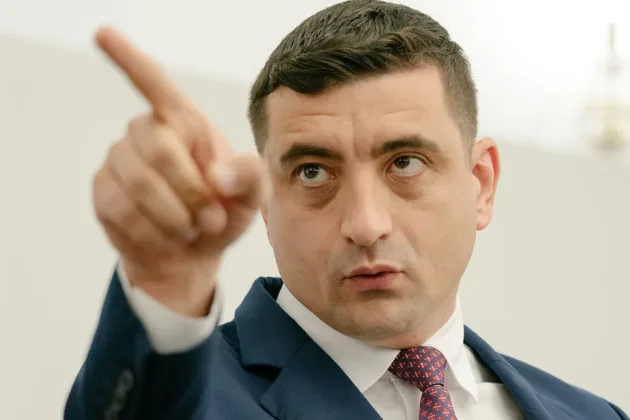
AUR leader George Simion branded it a puppet government and called for fresh elections. The Save Romania Union (USR) also voted against.
With parliament heavily fragmented and political accords historically fragile in Bucharest, analysts caution that the durability of Niculescu’s minority government will depend on its ability to steer contentious spending cuts through the legislature before party alignments shift ahead of the PSD’s six-month review.
Romania has been in political turmoil ever since the presidential election of November 2024, when the Constitutional Court annulled the first round over declassified intelligence alleging a Russian-backed online campaign on behalf of the nationalist candidate Călin Georgescu.
Georgescu, who denied the allegations and has not been convicted of any related offence, was barred from the re-run in March 2025.
Born in Bucharest in 1971, Luca Niculescu spent more than two decades in broadcast journalism before transitioning into the higher tiers of Romanian diplomacy.
A graduate of the University of Bucharest and the University Centre for Journalism Education in Strasbourg, he served from 2000 as editor-in-chief of RFI Romania whilst reporting as a Bucharest correspondent for leading French outlets including Libération, France Culture and France Info.
Niculescu made the pivot to public administration in 2016 upon his appointment as Romania’s ambassador to France, alongside concurrent accreditations to Andorra and Monaco, a six-year tenure in Paris for which France later made him a Commander of the Légion d’honneur.
In 2022, he returned to Bucharest as Secretary of State in the Ministry of Foreign Affairs, where he took direct charge as national coordinator for Romania’s high-priority accession bid to the Organisation for Economic Co-operation and Development (OECD).
In May he said Romania had closed 24 of the 25 technical committees in that process, leaving a single step before membership.
Politically unaligned, his technocratic credentials and multilateral reputation in Western capitals formed the principal basis for President Nicușor Dan selecting him.
COMMENT: The political crisis in Romania is, right now, the clearest indication that the era of a progressive Europe, led by bureaucrats in Brussels, is drawing to a close, writes @AlecoTafo. https://t.co/weMdZTUfSI
— Brussels Signal (@brusselssignal) May 4, 2026