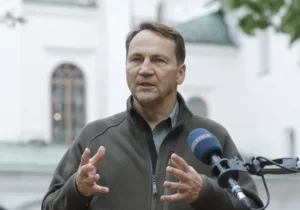

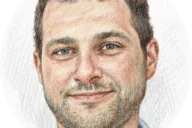
Polish Deputy Prime Minister and Minister for Foreign Affairs Radosław Sikorski has warned Kyiv that the glorification of wartime nationalist formations that sought ethnic cleansing is incompatible with joining the European Union.
Speaking in an interview with Radio Rebeliant, excerpts of which were published by the Polish foreign ministry on October 22, Sikorski said that the ideology of the Ukrainian Insurgent Army (UPA), held in Poland to be responsible for the Second World War massacres of tens of thousands of Polish civilians, has no place in modern Europe.
“We want to make our Ukrainian friends aware that the kind of patriotism or nationalism represented by the UPA — that is, the desire to create an ethnically pure country, without minorities, without Jews, without Poles, without Czechs, without Roma — is unacceptable in modern Europe,” Sikorski stated, adding “And by espousing such an ideology, one cannot join the European Union.”
The statement was also shared by the Polish Ministry of Foreign Affairs on social media.
💬 We want to make our Ukrainian friends aware that the kind of patriotism or nationalism represented by the UPA – that is, the desire to create an ethnically pure country, without minorities, without Jews, without Poles, without Czechs, without Roma – is unacceptable in modern…
— Ministry of Foreign Affairs 🇵🇱 (@PolandMFA) October 22, 2026
In a separate interview published the same day by the Polish portal WNP, Sikorski recalled that “Greece blocked Macedonia for 15 years” and told Kyiv: “We do not want to go down that road, but please do not provoke us.”
Sikorski’s intervention follows an already deteriorating diplomatic dispute between Warsaw and Kyiv over historical memory.
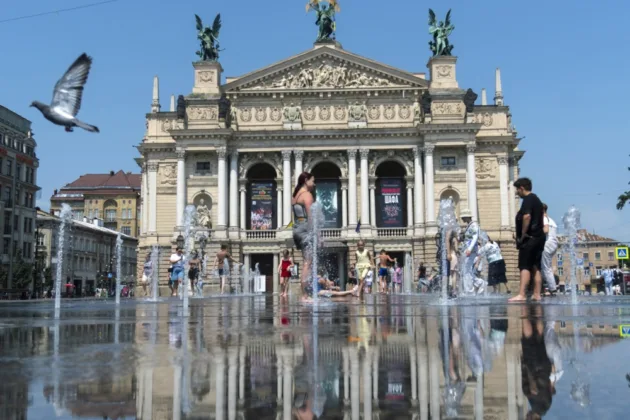
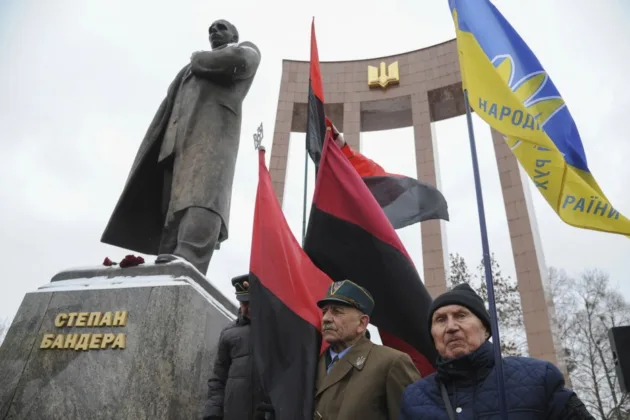
The flare-up was triggered on October 20 when the Lviv Regional Council in western Ukraine adopted a resolution designating 2027 as the Year of the UPA and its military commander, Roman Shukhevych, to coincide with the 85th anniversary of the formation’s founding and the 120th anniversary of Shukhevych’s birth. The text also honours Oleh Olzhych, an Organisation of Ukrainian Nationalists (OUN) poet who died in Sachsenhausen in 1944. The resolution vanished from the council website that evening without being formally withdrawn.
The move provoked swift condemnation across Poland’s political spectrum.
In Warsaw, the UPA and Shukhevych are held directly responsible for the 1943-1945 Volhynia massacres, classified by the Polish parliament in 2016 as a genocide that claimed the lives of an estimated 100,000 Polish civilians in Volhynia and eastern Galicia, alongside Jewish, Czech and Armenian victims. The Institute of National Remembrance (IPN), Poland’s state historical body, puts the toll in Volhynia alone at about 60,000, with coordinated attacks on some 150 Polish villages in July 1943.
Following the Lviv council’s vote, Sikorski announced on October 21 that he had signed a request to place the resolution’s sponsor, regional councillor Sviatoslav Sheremeta of former president Petro Poroshenko’s European Solidarity party, onto Poland’s register of persona non grata. The request goes to the head of the Office for Foreigners, who maintains the register. Sheremeta, who chairs the council’s culture committee, was already barred from Poland in 2017, after Kyiv froze Polish exhumation and memorial work.
Sikorski condemned Sheremeta as a “re-enactor of the Galizien Waffen-SS” and accused Shukhevych of giving orders to systematically slaughter civilians.
Poland’s defence minister and Polish People’s Party (PSL) leader Władysław Kosiniak-Kamysz has similarly warned that Warsaw could leverage its national veto over EU enlargement if Kyiv fails to confront the atrocities committed by wartime nationalists, and called the Lviv resolution “unacceptable”.
Polish Prime Minister Donald Tusk also described the decision as “suicidal tactics” by Ukraine, saying he had told President Volodymyr Zelensky that such gestures make life harder for Kyiv’s friends and hand a pretext to opponents of Ukrainian accession.
While Ukraine’s foreign ministry sought to de-escalate the dispute by framing the Lviv decision as a rogue local initiative taken without central government consultation, it urged Warsaw to avoid abrupt steps, noting that regional councillors hold their own electoral mandates and are not subordinate to the government. Deputy foreign minister Marcin Bosacki said Poland had been assured by Zelensky’s office that the resolution would not enter into force.
With bilateral relations already strained over agricultural imports and refugee benefits — though exhumations of Polish victims resumed after Kyiv lifted its moratorium, with work at Ostrówki and Wola Ostrowiecka completed in July — Sikorski’s latest remarks underline that Ukraine’s path toward European integration will remain conditional on how it addresses the darkest chapters of its 20th-century history.
COMMENT: The Volhynia massacre of 1943 still poisons the Polish attitude to Ukraine, writes Adrian Przybylakhttps://t.co/W8k1cEB6Fs
— Brussels Signal (@brusselssignal) June 2, 2026