Ukraine’s new law creating a national pantheon of heroes has intensified a Polish-Ukrainian dispute over wartime nationalist figures accused of massacring over a hundred thousand Poles in Volhynia during the second world war.
Ukraine’s parliament, the Verkhovna Rada, adopted the law on July 1 after it was submitted by President Volodymyr Zelensky.
The Pantheon is intended to honour leading figures in Ukrainian history. Even though the names to be honoured have not been named, the fact that Ukrainians view the Ukrainian Liberation Army (UPA) as freedom fighters from the USSR means that their leaders, such as Stepan Bandera are inevitably strong candidates for being included.
“No one will tell us which heroes to respect,” Zelensky said,in a reference to the fact that Poland has been protesting his recent decision to name a crack Ukrainian military unit in honour of the UPA. Ruslan Stefanchuk, the Speaker of Ukraine’s parliament,added that the pantheon would include “the best sons and daughters of the Ukrainian nation.”
The Ukrainian National Pantheon is to be a memorial complex, a standing commission, a separate law for each name inducted, an eternal guard funded from the state budget.
Its stated purpose is to consolidate society around a shared history and to draw a direct line between anti-Soviet fighters and today’s soldiers, presenting them as part of a single, continuous struggle for independence against Moscow, thereby legitimizing the current war effort and strengthening national resolve.
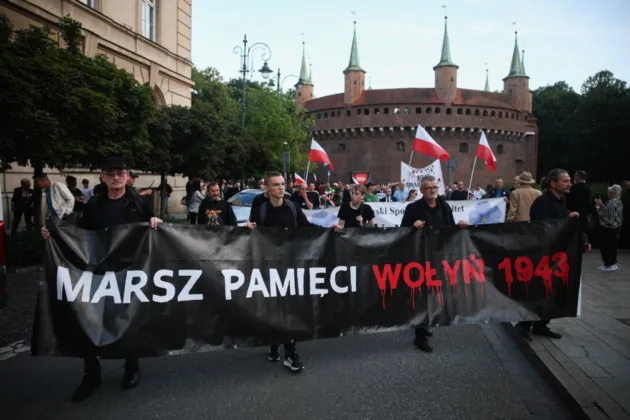
The issue is highly sensitive in Poland because of the Ukrainian Insurgent Army (UPA). Historians say UPA units carried out coordinated attacks on about 150 Polish-inhabited towns and villages in the region of Vohynia in July 1943.
Poland has called the killings genocide, but Ukrainian historians frame the events as part of a broader wartime Polish-Ukrainian conflict. However, their attempt to compare military skirmishes and isolated killings with the systematic killing of over 100,000 civilians inspired by a nationalist ideology that demanded the ethnic cleansing of the territory of Ukraine of Poles have simply enraged and offended Poles all the more.
Bandera remains totally unacceptable to Poles for his views and collaboration with the German Nazis but the Ukrainians regard him as a symbol of resistance to Soviet rule and a martyr in the struggle for independence.
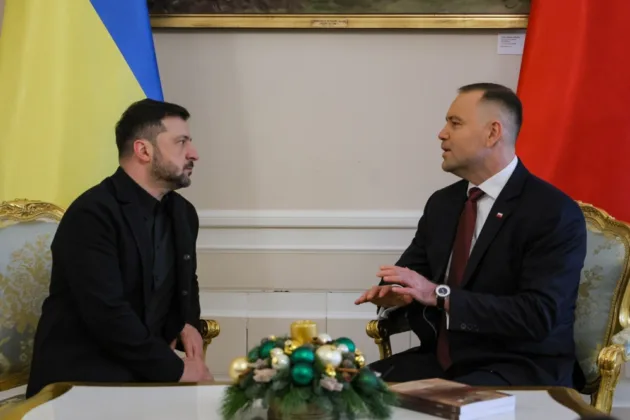
The Pantheon act comes after a separate decision by Zelensky to name a Ukrainian military unit after the “Heroes of the UPA.” which led the opposition Conservatives aligned President Karol Nawrocki to strip the Ukrainian President of the highest Polish state honour in retaliation.
Zbigniew Bogucki, President Nawrocki’s chief of staff, responding to the Ukrainian legislation on the pantheon said that “glorifying Bandera and criminals does not fit within the values of Western civilization.”
He added that Poland would not accept such actions and that “the voice of the victims cannot be drowned out by the voice of Bandera’s followers.”
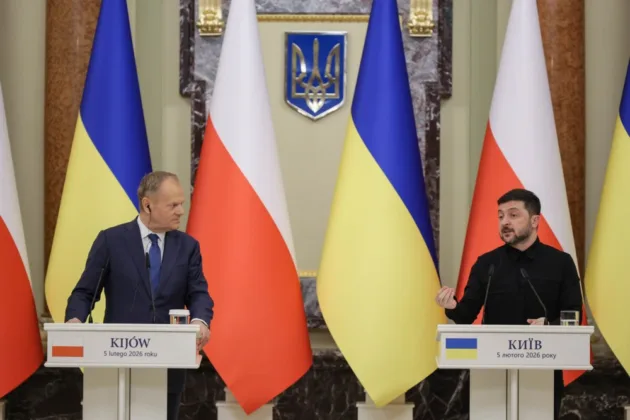
The Polish foreign ministry issued a statement in which it hoped that the pantheon would avoid including people responsible for crimes against Poles but also said that Poland respected Ukraine’s right to build its own national identity.
Only Parliamentary Speaker Włodzimierz Czarzasty, who leads the Tusk coalition’s Left Party called for restraint until the names proposed for the pantheon are known. He said Poland should respond “reasonably” and keep channels of dialogue open, while adding that the final decision was Ukraine’s sovereign choice and that Kyiv would bear responsibility for it.
Opposition parties of the right, PiS and Confederation have called for diplomatic retaliation arguing that the pantheon showed that Ukraine only respected strength and would exploit weakness.
The Ukrainians have rejected the criticism with lawmaker Mykola Kniazhytskyi saying the law was an internal Ukrainian matter and was not directed against any other country.
He also accused Poland of acting in the interests of Ukraine’s opponents, including Russia, by allowing itself to be drawn into a historical dispute.
However, according to Polish foreign ministry sources Ukrainian foreign minister Andrii Sybiha is to visit Warsaw with a compromise proposal to include figures from Ukrainian history that are viewed positively by Polish historians.
Polish diplomats fear a situation developing in which the inclusion of key figures from the Ukrainian nationalist movement permanently poisons relations between the two countries.
“Its like Germany building a shrine to its wartime military generals. It would not of course be about Poland but about Germany trying to establish identity, but it would outrage Poles, Jews and many other nations”, said journalist Igor Zalewski from broadcaster Kanał Zero.
“Ukrainian soldiers we helped to fund and sometimes treat in our hospitals standing in a guard of honour to UPA leaders in central Kyiv is not something that would be acceptable here”, said a government source.
The Pantheon law is viewed in Warsaw as going far beyond spats over the naming of military units or politicians returning honours in protest, because of the permanence of the proposed pantheon.
It is not a gesture or policy that can be reversed or bargained away but an open-ended process designed to build national identity around figures such as Bandera.
Zelensky linked the legislation to 2026 as a year of state anniversaries, the constitution, the armed forces, the state symbols and the hryvnia, culminating in August’s Independence Day arguing that a Pantheon of national heroes is an attribute of a sovereign state, ranked alongside having one’s own currency or flag, not a commemorative nicety but something a serious nation simply has.
In previous disputes over legislation or exhumations there was a way of managing them but a Pantheon is as important a part of national building as the flag, anthem and currency. It is a symbol of sovereignty that cannot be hidden away.
“This will embed the grievance forever” , said a Polish diplomatic source.
The consequence for Poland is that “Ukrainian civic identity and consciousness of young people will now be formed, in part, at the graveside of men whom Polish law itself defines as perpetrators of genocide.”
While the move was not directed at Poland directly because of Nawrocki stripping Zelensky of his Order of the White Eagle as the Ukrainians had identified 98 graves of prominent Ukrainians in 21 countries well before the row about the UPA unit arose, its timing could not be worse.
All the more because although the pantheon law is not directed at Poland the language used in the launch of it about no one dictating to Ukraine which heroes to honour and who to be grateful to certainly was.
Analysts in Warsaw point to the fact that Zelensky is using defying Poland as a way of building his own image of standing up for his country not only against Russia but also, when necessary, the country’s allies such as the Poles.
The feeling is that the Pantheon is part and parcel of Zelensky protecting himself against accusations of capitulation when he has to seek a negotiated settlement with Russia that is likely to include at least tacit acceptance of the loss of territory.
But Poles also worry about the international dimension of the two countries being pitted against each other over who is to lead the region. Up until now Poland assumed that role on NATO’s eastern flank, but Ukraine’s increasing assertiveness shows that it has the same ambition.
“Maybe the Ukrainians are no longer interested in being our partners and see themselves as rivals” said one source.
In that context the Pantheon serves as a demonstration that Kyiv is no longer concerned about the feelings of its western neighbour and sees such a dispute with it as being in its interests.
It is also a sign of growing confidence in Ukraine after resisting the Russian invasion for over four years and launching successful attacks on Russian territory.
Senior politicians in Poland’s current government such as foreign minister Radosław Sikorski and defence minister Władysław Kosiniak-Kamysz, aw well as opposition PiS leader Jarosław Kaczyński have in the past warned that Ukraine would not be able to join the EU if it insisted on honouring its past nationalist leaders such as Bandera.
However, Kyiv believes that Poland will not block Ukrainian membership of the EU against the wishes of Germany, France and the US. Ukraine’s argument will be that it has paid with blood for the privilege and thinks western powers will gladly pay that as the price for ending the war with Russia.
Poland is finding these Ukrainian attitudes difficult to accept after the way it helped Ukraine in 2022 in tghe immediate aftermath of the Russian invasion. It supplied the Ukrainians with nearly 300 gtanks and over a dozen MIG fighter planes, hosted two million refugees and was at the forefront of international efforts to help Ukraine.
The country has acted as a hub for military and humanitarian aid through the Rzeszów airport in the south -east and it gave Ukrainian refugees estensive rights not available to other foreign subjects for seeral years.
But the disputes over history and differing economic interests relating to agriculture and road haulage soon caused disagreements, as did the Ukrainian attempt to blame Russia when it was a Ukrainian defence rocket which ended up killing two Poles in late 2022, something Poland interpreted as an attempt to drag it into the ongoing war.
Winston Churchill once said that Britain does not have friends, only interests. Poland and Ukraine maybe discovering that it is indeed interests, political and economic, which always come first.