











Pay €800 to get yourself investigated, searched and formally charged with a crime. All to persuade Germany to grant political asylum. That is the service some intermediaries offer Turkish citizens, with full packages, including smuggling into Germany, starting at €6,000. An investigation by the German weekly Die Zeit has uncovered a market in which a social media post and genuine court proceedings can be enough to manufacture a story of political persecution.
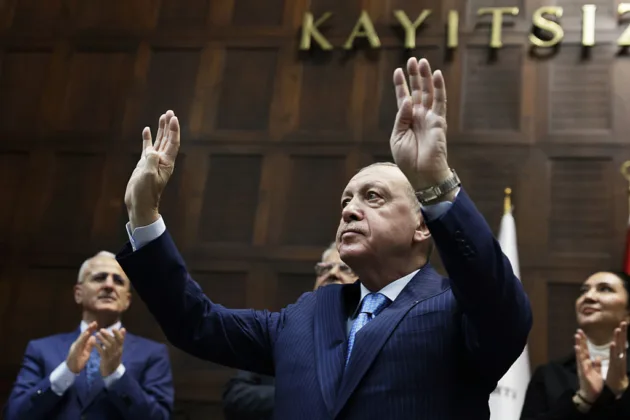
The scheme exploits Article 299 of the Turkish Penal Code, which provides for up to four years in prison for insulting President Recep Tayyip Erdoğan. The client publishes an offensive message to trigger a criminal complaint. Documents from any resulting proceedings are entered into UYAP, Turkey’s National Judiciary Informatics System, where they can be downloaded and submitted to German authorities as evidence of political persecution.
Why forge documents when you can trigger a genuine investigation? Intermediaries advertise their services on TikTok and Telegram. One broker contacted by Die Zeit offered an €800 package covering an investigation, a search and formal charges. He claimed to have satisfied clients in Hamburg and Berlin, although he provided no verifiable evidence. How many, if any, actually obtained asylum remains unknown.
On February 13, 2026, the Administrative Court of Gelsenkirchen, North Rhine-Westphalia, had already examined a case involving criminal proceedings allegedly engineered to support asylum applications. The ruling addresses the issue of genuine criminal charges entered into UYAP through possible collusion within the Turkish judiciary. The appeal was dismissed.
Austrian courts have also examined the phenomenon. A ruling dated May 6, 2026 addresses the role of intermediaries, lawyers and corrupt officials in producing judicial documents that can be used in asylum proceedings. The judges observed that the presence of a case file in Turkey’s electronic judicial system does not guarantee that the charges amount to genuine political persecution.
Since 2021, approximately 140,000 Turkish citizens have applied for protection in Germany. In 2025, there were 14,686 applications, while the substantive recognition rate fell to 9.7 per cent, compared with 43.3 per cent in 2021. In Gelsenkirchen, two chambers of the Administrative Court handle appeals from Turkish asylum seekers, with 685 cases still pending.
The law Erdoğan uses to prosecute those who insult him has thus become a tool for those promising to manufacture the grounds for obtaining protection abroad. Yet an investigation deliberately triggered for this purpose can lead to a real conviction, making any eventual return to Turkey dangerous.
The offers documented by Die Zeit do not establish that intermediaries can actually secure asylum. Court rulings in Germany and Austria do, however, confirm that the problem was already known. They also challenge the assumption on which this market depends: that an authentic judicial document is sufficient to prove political persecution.