









Spain’s general election campaign has officially begun, with the main parties holding opening rallies across the country ahead of the November 29 vote.
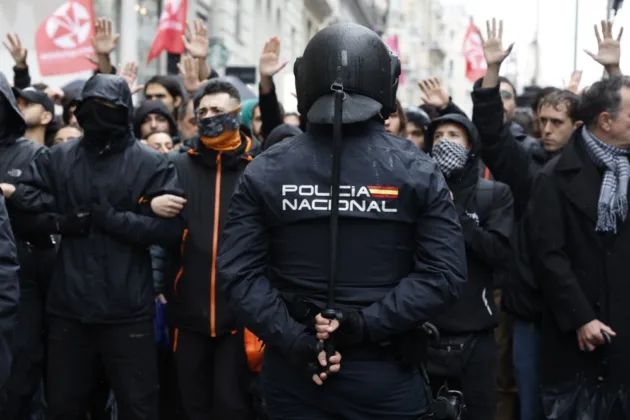
The campaign started at midnight on November 13 and runs until November 27. It follows a general strike over housing and wages on November 11, the first backed by the main unions, CCOO and UGT, since 2012.
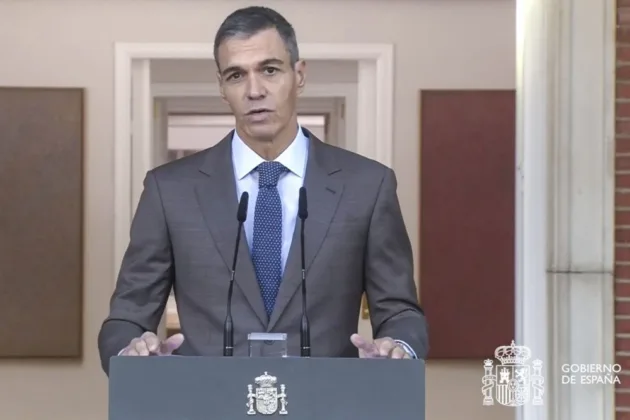
Prime Minister Pedro Sánchez called the snap vote on October 5 after Congress rejected two housing decrees. He went into the campaign nursing a fresh setback after parliament’s standing committee, which acts for Congress while it is dissolved, rejected his rental decree on November 12.
Sánchez, leader of the Spanish Socialist Workers’ Party (PSOE), opened his campaign that evening at the Fibes congress centre in Seville, southern Spain, before about 4,000 supporters, according to EFE. He predicted an epic comeback and likened the People’s Party (PP) and Vox to US President Donald Trump, Brazil’s former president Jair Bolsonaro and Argentine President Javier Milei.
His wife, Begoña Gómez, who is awaiting trial on corruption charges she denies, addressed the rally before him. Vox leader Santiago Abascal responded that the Socialists had no shame.
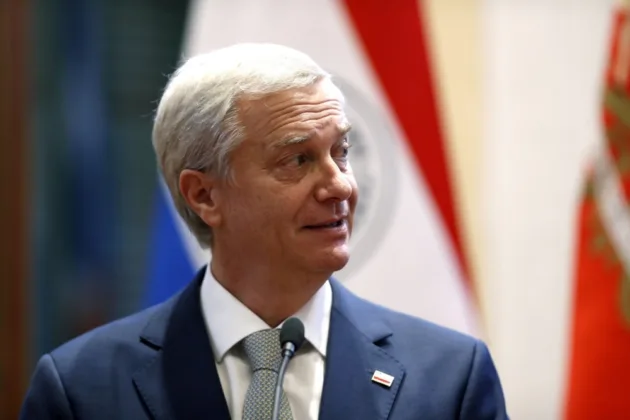
PP leader Alberto Núñez Feijóo launched his bid at a sports centre in Badalona, near Barcelona, alongside the city’s mayor, Xavier García Albiol, the party’s lead candidate for Barcelona, under the slogan El cambio necesario (The necessary change). He promised an audit to establish where public money had gone under the Socialists.
Feijóo also said Spain had the right to decide who entered the country, how and why. Of the strike, he said Spaniards would vote rather than walk out on November 29.
Abascal closed Vox’s pre-campaign in Huesca, northeast Spain, and skipped the midnight poster-hanging ahead of a rally in Madrid’s Plaza de Colón on November 13. He defended giving Spaniards priority in public aid, a policy his party calls “national priority”, and linked the pressure on housing to mass immigration.
Vox’s 55-page programme also calls for a levy on remittances sent abroad, an end to mass regularisations of migrants and a military reinforcement of Ceuta and Melilla following the July 30 invasion of Ceuta. It rejects the European Union’s trade deal with Mercosur, which farmers across the bloc oppose.
On the Left, former Barcelona mayor Ada Colau launched Frente Amplio (Broad Front), the alliance that replaced Sumar, in the Madrid district of Vallecas, with a target of more than 10 per cent of the vote.
All 15 private polls published up to November 12 gave the PP and Vox a combined absolute majority, averaging 50.6 per cent of the vote. A Sigma Dos survey for El Mundo on November 9 put the PP on 131 seats, the PSOE on 105 and Vox on 68, giving the two parties 199 seats, well above the 176 needed.
The State-run Centre for Sociological Research (CIS) told a different story. Its pre-election survey put the PSOE first on 33.3 per cent and left the PP and Vox short of a majority.