
Spain’s two largest trade union confederations have staged their first joint general strike since 2012, two days before campaigning formally opens for the November 29 general election.
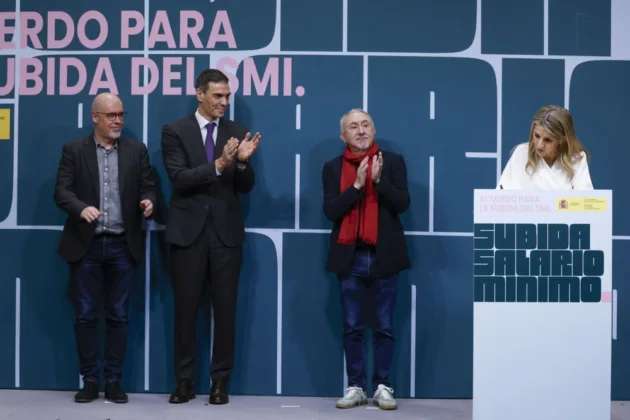
The 24-hour stoppage on November 11 was called by the General Union of Workers (UGT) and the Workers’ Commissions (CCOO), alongside the General Confederation of Labour (CGT) and the Confederation of Tenants’ Unions. It was organised under the banner of wages, housing and prices.
The Youth Council of Spain has said the average rent of €1,176 ($1,315) is equivalent to almost all of a young person’s average monthly salary.
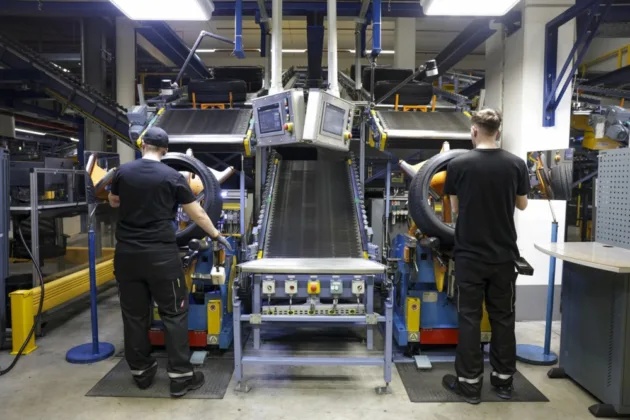
The unions said early participation reached 90 per cent in the car and port sectors, 85 per cent in the meat industry and 82 per cent in waste collection. They reported total stoppages at Volkswagen’s plant in Navarre and SEAT’s factory in Barcelona, according to Reuters.
Health and postal services recorded 38 and 35 per cent respectively, by the unions’ own count. UGT spokesman Rafael Espartero acknowledged participation had been uneven, AFP reported.
Employers painted a different picture. Antonio Garamendi, president of the Spanish Confederation of Employers’ Organisations (CEOE), described the day as largely normal, with low turnout in most sectors and regions.
In Castilla-La Mancha, central Spain, unions put turnout at 60 per cent against the 5 per cent claimed by employers, elDiario.es reported. The same outlet counted at least 27 arrests in the early hours.
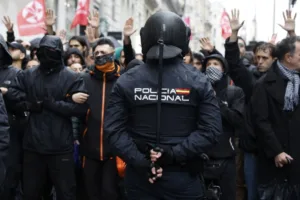
Pickets blocked more than 30 roads in Catalonia, including the AP-7 motorway, according to EFE. In Madrid, police clashed with pickets at the Mercamadrid wholesale food market and CCOO accused officers of using pepper spray.
Madrid’s metro ran 93 per cent of its trains during the morning, though passenger numbers fell by about half. Large demonstrations were planned in Madrid and Barcelona for later in the day.
Prime Minister Pedro Sánchez dissolved parliament and called the snap vote after the Congress of Deputies rejected two emergency housing decrees on October 2. His Spanish Socialist Workers’ Party (PSOE) has trailed the Popular Party (PP) in the polls since.
The PP and Vox argued the unions were acting to keep Sánchez in office. PP secretary general Miguel Tellado said on November 10 it was an electoral strike rather than a general one.
PP leader Alberto Núñez Feijoo warned the unions risked being tied to Sánchez for good. He also said pressing ahead was a serious mistake after the October 28 high-speed rail collision near Urda, Toledo province, which killed 69 people.
Garamendi had earlier branded the action an electoral strike and threatened to challenge it in court, though the CEOE did not file before the stoppage.