








Sweden’s parliament has given final approval to a constitutional amendment allowing the state to revoke the citizenship of dual nationals who obtained it fraudulently or are convicted of serious crimes threatening the nation’s vital interests.
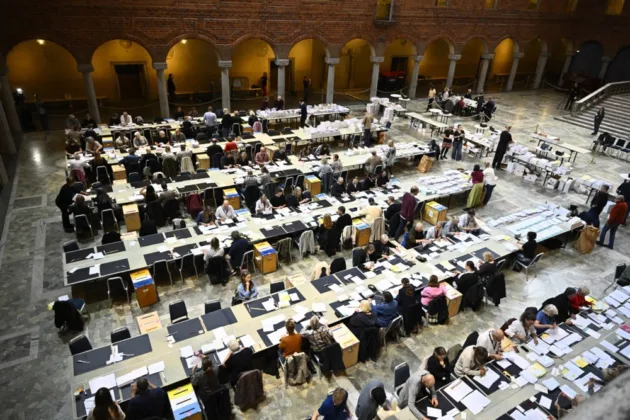
The Riksdag passed the dormant constitutional bill on November 11 by 292 votes to 51, with six MPs absent.
Under Sweden’s Instrument of Government, the regeringsformen, amending the constitution requires two identical parliamentary votes separated by a general election.
Following the first vote on May 20, 2026 and the general election on September 13, the second vote completes the parliamentary approval process, clearing the amendment to enter into force on January 1, 2027.
Under existing constitutional protections, no Swedish citizen who is or has been domiciled in the country can be stripped of their nationality.
The revised text introduces targeted exceptions permitting revocation where dual citizens either acquired Swedish nationality through false information, bribery or other improper means, or have been convicted of offences that seriously harm Sweden’s vital interests — such as espionage, treason or terrorism.
In accordance with international conventions against statelessness, the provision applies strictly to dual nationals.
The reform was initiated by caretaker Prime Minister Ulf Kristersson’s centre-right coalition of the Moderates, Christian Democrats and Liberals and the nationalist Sweden Democrats (SD) under the 2022 Tidö Agreement.
While the Tidö parties had initially pushed to extend revocation to gang-related offences, a cross-party parliamentary committee stopped short of that in January 2025, limiting its proposal to fraud and crimes against the State such as espionage and treason.
The Swedish Government’s bill of December 2025 then framed the crime ground as offences harming Sweden’s vital interests, a formula ministers said could reach the leaders of criminal gangs.
Because the measure was bundled into a single constitutional package alongside enshrining abortion rights and permitting bans on criminal associations, it secured broad backing across the chamber, including from the opposition Social Democrats and the Centre Party.
The Left Party (Vänsterpartiet) and the Green Party (Miljöpartiet) voted against the package in its entirety, as it could only be adopted or rejected as a whole.
Both parties argued during the debate that while they supported constitutional protection for abortion, creating conditions under which dual nationals can lose citizenship establishes a two-tier legal system and erodes equal protection under the law.
Although the constitutional hurdle has now been cleared, no citizenships can be revoked immediately.
Ordinary enabling legislation defining the exact qualifying offences and transitional rules must still be drafted and passed by parliament, a task complicated by unresolved government formation talks in Stockholm following September’s narrow election.
The Riksdag has already rejected two candidates for prime minister, most recently Centre Party leader Elisabeth Thand Ringqvist on November 3 by 324 votes to 25. Kristersson, who leads a caretaker government, is due to report to Speaker Andreas Norlén on November 17.
A government-commissioned inquiry, SOU 2026:21, published in March 2026 proposed that the accompanying statutory framework take effect on January 1, 2028, with the Swedish Migration Agency (Migrationsverket) deciding cases subject to appeal in the migration courts.
Under the inquiry’s proposal, fraud-based revocation would apply only to citizenship acquired after the new law takes effect and crime-based revocation only to offences committed after that date.
Human rights organisations oppose the change. Aida Samani, senior legal adviser at Civil Rights Defenders, said ahead of the vote that “in practice, the proposal would create two kinds of Swedish citizenship: one robust and one that is weak and conditional”.
They ignore, though, that inequality already exists because of the existence of dual citizenship itself.