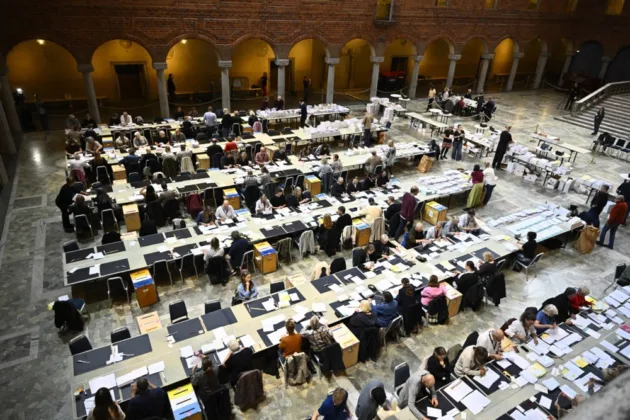











According to the Organization for Security and Co-operation in Europe (OSCE), “free and fair elections are the backbone of functioning democratic societies.” Fair enough, but it is therefore regrettable that it declined to organise an electoral mission to verify whether this will be the case in Spain on November 29. Yet the country is on the verge of a nervous breakdown because suspicions of fraud have been accumulating for months, to the point of calling into question the integrity of a crucial election. A few days before the vote, the question that millions of Spaniards are asking themselves is not whether there will be fraud, but whether it will be enough to prevent a defeat for Sánchez that all the polls (except one, we will come back to it) anticipate.
This distrust is fuelled by a series of indications that mainly stem from three causes. The first is the 2022 Democratic Memory Law, which allows the descendants of those exiled for political or ideological reasons after the Civil War who had lost their nationality to apply for it again. Five days after it was published, a senior civil servant — who is none other than the sister of Sánchez’s former transport minister — reinterpreted the text fraudulently: from then on, all persons who had emigrated between 1936 and 1955 were presumed to be exiles, and the government put pressure on the consulates so that they would grant nationality en masse and as quickly as possible. The result, according to the foreign minister, is that 2.4 million foreigners applied for Spanish nationality, 600,684 obtained it and 117,723 are registered on the electoral rolls, whereas only 901 of them — 0.8 per cent — were actually descendants of exiles. A fraud of such magnitude that the Supreme Court suspended by interim order the right to vote of those who had not proven their status as descendants of exiles, without doing the same for their children. In the end, 190,000 voters who have no link with Spain will be able to vote on polling day, but in which constituency? No one knows; the authorities refuse to say, and yet the question is crucial because in Spain there is no specific constituency for Spaniards living abroad and they are supposed to vote in their province of origin or last residence. But what if they do not have one — would their votes be allocated to those constituencies that are decided by a handful of votes? Will they be encouraged to vote as required and where required? The risk is real and the electoral impact would be decisive: in the last elections, 13 seats were decided by a few hundred or a few thousand votes, and this time, according to pollsters, it could be around twenty. Moreover, recent precedents are surprising: in the last four regional elections, the Socialist Party suffered crushing defeats but came first among non-residents.
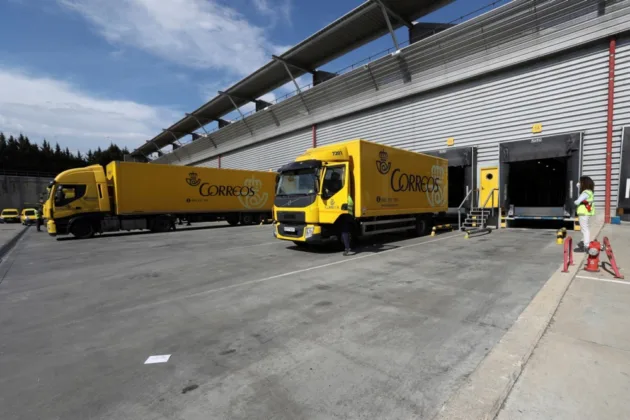
The second source of concern is postal voting, which would not offer the necessary guarantees. On paper there are protocols, but between 2018 and 2023 the president of the Spanish Post Office was none other than Juanma Serrano, Sánchez’s former chief of staff, one of the most loyal of the loyal, and who literally sank the company. And between 2021 and 2024 the director of institutional affairs, who was personally involved in postal voting in the last elections, was none other than Leire Díez, the Socialist Party’s go-to person for illegal operations, including harassing and threatening the judges investigating Sánchez’s corruption cases. The two have just been placed under formal investigation for fraud and misappropriation of public funds, a day before a reputable newspaper revealed that entire bags of postal votes had been “forgotten” in Post Office warehouses in 2023 and then destroyed. Another troubling element that reveals Sánchez’s obsession with postal voting is that the Post Office is now obliged to transmit crucial data on this method of voting to the Ministry of the Interior during the campaign, without making this information public.
The third vector of distrust is the Centre for Sociological Research (CIS), which takes the pulse of Spanish society — an institution that has lost an impeccable reputation since Sánchez placed a party member at its head in 2018 who turned it into a propaganda organ. Since then, the CIS does not poll public opinion; it manipulates it. According to the very pro-government El País, these polls have overestimated the left in 41 cases out of 42 since 2018. Error is human, deliberate manipulation no less so: while all private institutes put the right-wing coalition in the lead, the CIS sees Sánchez almost eight points ahead. At the same time, the latter is urging the right to recognise the results and concede their defeat, which he takes as a given. Bluff by a candidate or the prophecy of an announced fraud in order to make it easier to swallow? After eight years of shameless excesses, doubt is permitted.
Add to all this Sánchez’s shady past — he stuffed the ballot boxes in the Socialist Party primaries in 2014 and attempted a coup de force in 2016 — the introduction of an identification app for voters which, according to the Supreme Court, still presents a residual risk of fraud, the emergency purchase of 61,000 geolocatable mobile phones to verify QR codes, the calling of elections for the end of July 2023 when half of Spain was on holiday, or the manoeuvres to influence the governance of Indra, the company responsible for counting the votes. In the light of all this evidence, how can one in good faith assume that these elections will be free and fair? It is likely that the OSCE will regret not having sent an electoral mission, both for its own credibility and for that of a crucial election on which Sánchez has already cast irreparable discredit.