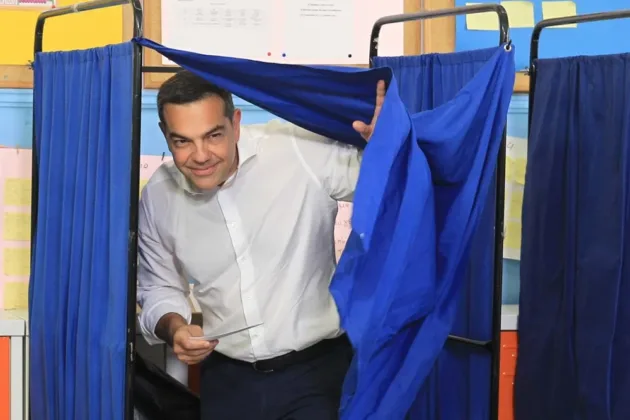




Former prime minister Alexis Tsipras has returned to frontline Greek politics by launching a new left-wing party, immediately surging to second place in national opinion polls and shaking up the country’s fragmented opposition.
Just days after announcing the formation of his new political vehicle, Tsipras, the 51-year-old firebrand who governed Greece from 2015 to 2019 during the height of the debt crisis, becoming the country’s youngest prime minister in 150 years, is already challenging the dominance of the centre-left Panhellenic Socialist Movement (PASOK) and the remnants of the Coalition of the Radical Left (SYRIZA).
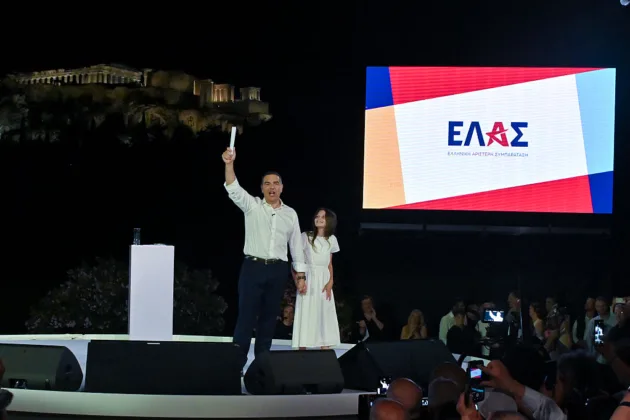
His new party, unveiled in Athens on May 26, is called the Greek Left Alliance (ELAS), a name deliberately chosen for its historical resonance with the wartime resistance while sounding like the Greek word for Greece itself.
The party aims to create a more centrist, broad progressive alliance that brings together the radical left, social democracy and political ecology.
Its programme focuses on fighting corruption and ending parliamentary immunity, restoring the rule of law, affordable housing, stronger labour protections, a robust welfare state and a fairer economic model with greater emphasis on agriculture, manufacturing and reducing inequality.
Tsipras has promised “a life with dignity”, higher wages, social justice and what he calls a “new patriotism” linked to democratic accountability and national sovereignty.
The latest polls show Tsipras’ new party in second place with 16 per cent support, ahead of PASOK and other smaller left-wing forces. A RealPolls survey for the website Protagon put the new party at 16.1 per cent in vote projection, while a separate poll by the firm Interview placed it at 12.8 per cent, in both cases narrowly ahead of PASOK.
Prime Minister Kyriakos Mitsotakis’ New Democracy still leads comfortably at around 29 per cent, down sharply from the 41 per cent it won at the 2023 election, but the party has seen its support erode amid corruption scandals and public discontent over issues such as the February 2023 Tempi rail disaster, in which 57 people died in Greece’s deadliest train crash.
Greece, RealPolls poll:
ND-EPP: 31% (-1)
ELAS-*: 16% (new)
EgtD-*: 13% (new)
PASOK – KINAL-S&D: 10% (-3)
KKE-NI: 6% (-1)
EL-ECR: 5% (-3)
FL-PfE: 4%
PE-NI: 4% (-4)
Niki-NI: 2% (+1)
DPK-RE: 2%
MeRA25~LEFT: 2% (-2)
SYRIZA-LEFT: 1% (-4)
NA-LEFT: 1%
Spartiates-*: 0%+/- vs. 18-20… pic.twitter.com/n0kAsOgfbJ
— Europe Elects (@EuropeElects) May 27, 2026
Tsipras is pitching his return as a fight against corruption, a push for more inclusive economic growth and a renewed challenge to the Mitsotakis government.
Analysts say he is attracting disaffected voters from both SYRIZA and the broader centre-left. SYRIZA itself has all but collapsed in the polls, dropping from 3.1 per cent to 0.5 per cent in one survey.
Tsipras is trying to present a fresh image by surrounding himself with a mix of loyal former SYRIZA cadres who remained personally close to him and newer faces from the broader left, while deliberately distancing himself from the current leadership of SYRIZA.
The move comes as Greece heads towards parliamentary elections expected before summer 2027. Mitsotakis’ government, now in its seventh year, has ruled out calling an early vote.
New Democracy remains the clear frontrunner but is unlikely to secure a single-party majority in the current fragmented landscape, which now includes “Hope for Democracy”, a party led by Maria Karystianou, whose daughter died in the Tempi crash.
Tsipras’ re-entry is expected to further split the opposition vote while putting pressure on PASOK and other smaller parties.
His comeback has been met with enthusiasm from parts of the traditional left and scepticism from others who remember the years of capital controls, bailouts and confrontations with Brussels during his premiership, when Greece came close to crashing out of the eurozone. Former finance minister Euclid Tsakalotos told broadcaster Action24 that he believed Tsipras had concluded the story of the traditional left was over for him. Mitsotakis was dismissive, describing the launch as “a spectacular dive into the past”.
Yanis Varoufakis, the flamboyant economist who served as Tsipras’ finance minister in 2015, is not part of Tsipras’ new party. The two had a very public and bitter falling-out years ago.
In his 2025 memoir, Tsipras sharply criticised Varoufakis, calling him a “celebrity” more interested in promoting his books than governing. Varoufakis now leads his own small party, MeRA25, which is separate and often critical of Tsipras.
The name ELAS that Alexis Tsipras chose for his new party carries strong historical symbolism in Greece. It has also drawn mockery, as ELAS is the acronym of the Hellenic Police.
ELAS (ΕΛΑΣ) was the acronym for the Communist Ethnikos Laikos Apeleftherotikos Stratos (National Popular Liberation Army). This was the largest and most powerful resistance organisation during the Nazi occupation of Greece in the Second World War.
ELAS fighters are widely celebrated on the Greek left as heroic anti-fascist partisans who fought against the German occupiers.
After the liberation of Greece, ELAS tried to seize power, which led directly to the Greek Civil War (1946-1949).
Interference podcast episode 3. This week, @ThatAlexWoman and @JustinStares are joined by Brussels Signal Columnist and former Greek MP @bogdanosk to dig into the latest wave of scandals shaking Greece.
Every week, veteran Brussels reporter Justin Stares and British journalist…
— Brussels Signal (@brusselssignal) July 6, 2025