





Iran has assessed options for attacking US military assets in Europe should the US escalate its confrontation with Tehran, according to people close to the Iranian regime cited by the Financial Times.
Two regime insiders told the newspaper that Iranian forces have examined potential strikes on US facilities in southeast Europe, including Bulgaria. Both Bulgaria and Cyprus, the two countries identified in the report, are EU member states.
Sofia authorised the use of its Bezmer air base in eastern Bulgaria by US refuelling aircraft on July 22, when parliament approved the deployment of up to eight KC-135 tankers and up to 250 US personnel until October 1. The first tanker landed at the base on July 31.
Iran had lobbied against the decision. Its foreign ministry warned Sofia on July 21 that hosting the aircraft would make Bulgaria complicit in aggression, and Foreign Minister Abbas Araghchi repeated the warning to his Bulgarian counterpart Ventsislava Petrova in a telephone call on July 30.
The Bulgarian Government has said no military operations connected to the conflict would be launched from its territory and that the tankers are limited to refuelling.
One of the sources added that Cyprus, which hosts a British military base struck by a drone on March 2, was also among possible targets for retaliation in the event of a renewed US offensive.
Cypriot officials attributed that attack, on RAF Akrotiri, to Hezbollah, the Iran-backed Lebanese movement, and said the drone was Iranian-made. Two further drones heading for the base were intercepted.
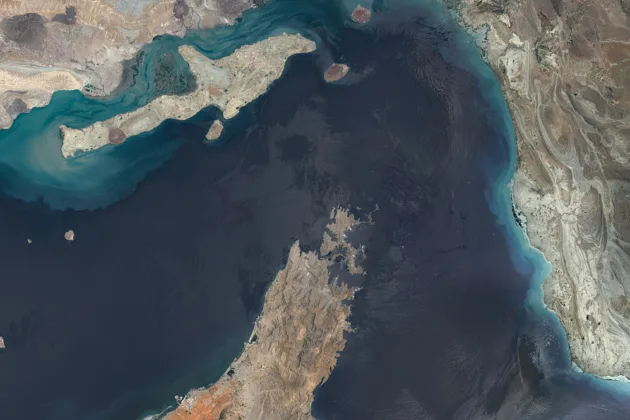
The same sources said Iranian planners have separately considered attacks on subsea fibre-optic cables in the Strait of Hormuz as a means of raising the costs of any further escalation.
One insider stated that Iran would place “no limits” on its response if Washington escalated: “Should the US go too far, Iran will defend itself at any price, go beyond the region and hit Europe too.”
The second pointed to an Iranian strike on a US base in Jordan that killed three American service members, presenting it as evidence of Tehran’s long-range accuracy and as a message to Europe that it could be hit as well.
The remarks reflect a defiant mood in Tehran, where many within the regime increasingly view a resumption of hostilities as a matter of when rather than if. The newspaper linked that mood to the promotion of hardliners to senior security and military posts.
The Islamic Revolutionary Guard Corps (IRGC) warned on July 25 that British facilities supporting American operations could be considered legitimate targets, telling state broadcaster IRIB that Britain would be a “definite and legitimate target” if it backed Washington in a new war.
Iran has previously demonstrated a willingness to strike distant targets, including an attempted missile attack on the joint UK-US base at Diego Garcia in the British Indian Ocean Territory on March 20 and the drone strike on RAF Akrotiri in Cyprus.
Neither missile reached Diego Garcia, one failing in flight and the other intercepted by a US warship. Tehran denied responsibility for the launch.
Sidharth Kaushal, a research fellow at the Royal United Services Institute (RUSI) in London, told the newspaper the threat to European targets was “real, but limited”.
Iran’s ability to damage European targets with medium-range ballistic missiles remains constrained by range and accuracy, and by the size of its stock of longer-range weapons.
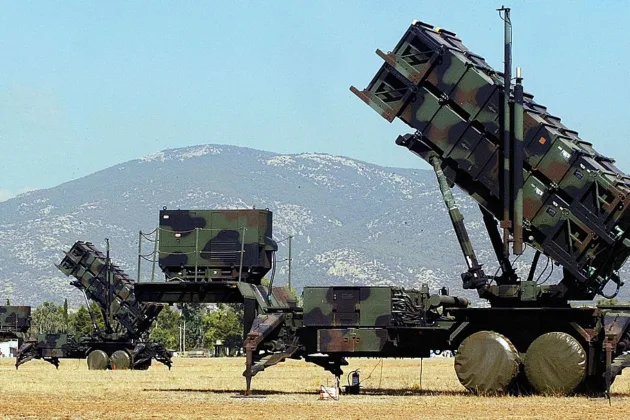
NATO has said its defences are ready. An alliance official described its deterrence and defence posture as strong and effective, pointing to four separate interceptions of Iranian ballistic missiles heading towards Turkey earlier this year.
The report comes amid stalled efforts to ease tensions and reopen the Strait of Hormuz, with US President Donald Trump saying on August 18 that no talks with Tehran are under way or scheduled.
Trump added that the naval blockade of Iranian ports remained in force and that the strait was open, contradicting Tehran’s position that it stays shut until Washington honours a memorandum of understanding signed in June.
A temporary ceasefire expired on August 17. Shipping through the strait has fallen from about 130 vessels a day before the war to roughly 12, pushing oil prices higher and borrowing costs for major economies to multi-decade highs.