



A new YouGov survey released today places the German right-wing party AfD at 29 per cent nationally, just one point shy of the 30 per cent threshold.
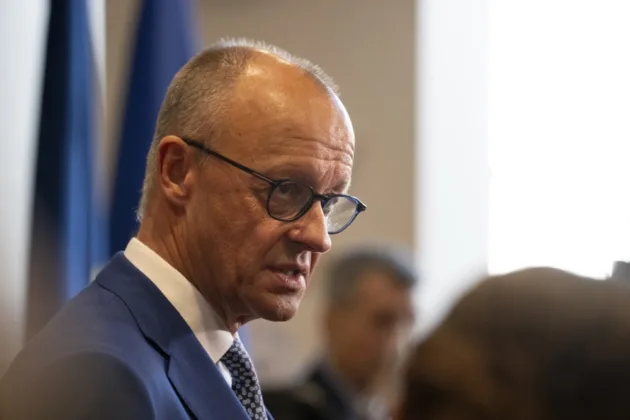
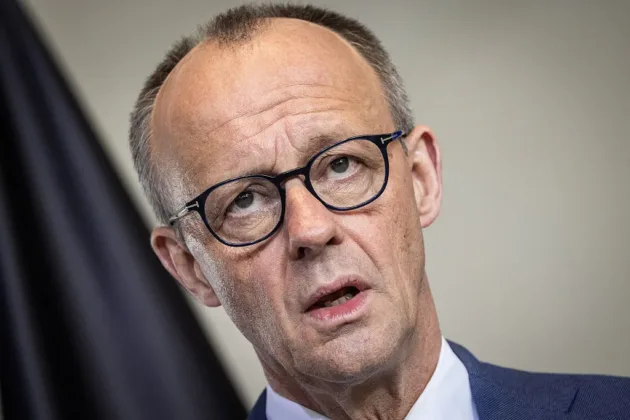
The party now stands nine points ahead of Chancellor Friedrich Merz’s CDU/CSU, which falls to its lowest level in five years with 20 per cent.
Together, the numbers suggest that the German traditional parties of government command barely a third of the electorate.
For most of the post-war era, the Christian Democrats (CDU) and Social Democrats (SPD) functioned as the twin pillars of German politics.
Today, both German mainstream parties are falling in the polls. The SPD polls just at 12 per cent, tying with hard left party Die Linke and reaching its lowest level in YouGov’s regular polling.
BUNDESTAGSWAHL | Sonntagsfrage YouGov
AfD: 29% (+1)
Union: 20% (-2)
GRÜNE: 14% (+1)
SPD: 12% (-1)
LINKE: 12% (+1)
FDP: 5% (+1)
BSW: 4%
Sonstige: 5%Änderungen zur letzten Umfrage vom 12. Mai 2026
Verlauf: https://t.co/f9MV7iZ8iJ#btw29 pic.twitter.com/yO2VS2jJn5
— Deutschland Wählt (@Wahlen_DE) June 16, 2026
The CDU and its Bavarian sister party, the CSU, still count nearly half a million members between them. The SPD retains roughly 350,000 members.
Yet these parties in the polls have little support at the ballot box and the beneficiaries of such a downfall is the German’s nationalist Right. Despite a smaller number in members AfD is leading.
The AfD’s rise has been visible for years, particularly in eastern Germany, but the latest poll suggests the party’s appeal is no longer confined to regions.
In Saxony-Anhalt, polling numbers suggest that the AfD could potentially secure an outright parliamentary majority thus making it the first AfD-led state government in German history. The party is currently polling around 38 per cent in the region with CDU at 25 per cent.
For years, Germany’s political establishment relied on a “firewall” strategy. All political parties refused cooperation with the AfD while assuming the party would eventually plateau.
On the Left, neither the Greens or Die Linke has succeeded in channelling the widespread discontent with the successive SPD and CDU government since 2021 into a coherent alternative capable of challenging the AfD’s momentum.