





Belgian federal police carried out coordinated house searches at approximately ten locations linked to activists of the radical climate network Code Rood (Code Red) on Wednesday morning.
The operation is part of a formal judicial investigation into suspected criminal organisation and significant material damage.
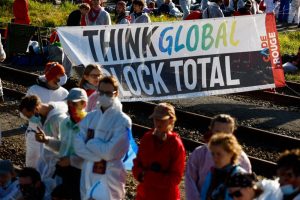
The raids, ordered by an investigating judge in Ghent, focus primarily on the group’s large-scale blockade of the Cargill plant in the port of Ghent on March 1, 2025.
During that action, several hundred activists occupied the facility, blocked access roads, cut cables, damaged infrastructure and triggered safety systems, creating what authorities described as a serious explosion hazard at an industrial site handling flammable materials.
Several activists were taken into custody for questioning, with at least some remaining in detention.
Prosecutors are examining whether the group’s coordinated actions go beyond legitimate protest into organised criminal behaviour.
Initially, Greenpeace was also involved in planning the Cargill action and the home of a Greenpeace employee was also raided on Wednesday morning.
However, Greenpeace has distanced itself from Code Red for some time and states that the two organisations have had no official connection anymore.
This police operation represents a marked escalation in the Belgian authorities’ approach to radical climate activism.
For years, disruptive protests by groups like Code Red were largely tolerated, but repeated blockades of critical infrastructure appear to have prompted a policy shift.
Justice Minister Annelies Verlinden and Interior Minister Bernard Quintin have indicated that while peaceful demonstration remains protected, deliberate targeting of ports, energy facilities and industrial sites that causes major economic disruption or endangers safety will now face serious criminal consequences.
Code Red, a decentralised network specialising in direct action against fossil fuel and agro-industrial targets, reacted with outrage.
The group described the raids as “state repression” and an attempt to intimidate climate activists.
In a statement, they vowed to continue their campaign of civil disobedience despite the pressure.
Their lawyer called the police’s actions “totally out of proportion”, claiming the activists were “peaceful”.
The March 2025 Cargill blockade was one of the most ambitious actions organised by Code Red to date.
Activists claimed over 1,400 participants, though police put the number significantly lower.
Police arrested around 150 activists at the time.
The protest gained international attention after Swedish activist Greta Thunberg joined the demonstration.
Belgian authorities say the action caused substantial financial damage and posed genuine safety risks to workers and nearby residents.
The development fits into a wider European pattern.
Governments across the continent have grown less tolerant of climate protest tactics that involve prolonged blockades, glue-ins, and infrastructure sabotage after years of disruption to transport, airports and energy supplies.
In Belgium, security services have increasingly monitored the radical elements of the climate movement for signs of escalating tactics and potential overlap with other extremist scenes.
Reacting to the events, Defence Minister Theo Francken said that he has been warning for the rise of the far-left and antifa.
“They’re becoming increasingly well-organised and more violent by the day.”
He warned that for them, “everything is fair game to undermine the capitalist system”.
Francken called Code Red a “full-fledged private militia”, stressing they learn to communicate without phones, know how to be interrogated by the police, evade surveillance camera’s and inflict maximum damage.
He also noted they had the full backing of organised Communist lawyers from the Progressive Lawyers Network and said that the move from the prosecutor’s office came “not a day too soon”.
Climate activists are radicalising and getting increasingly dangerous, a confidential Belgian government report has warned. https://t.co/F2lby2a3pL
— Brussels Signal (@brusselssignal) July 7, 2025