


When I arrived in Brussels four years ago to establish MCC Brussels, I expected robust debate in the political heart of Europe. What I did not expect was the degree of hostility directed toward those who challenge prevailing orthodoxies. From attempts to cancel events to administrative sanctions, a troubling pattern has emerged: Certain viewpoints are increasingly treated not as contributions to democratic debate, but as problems to be managed.
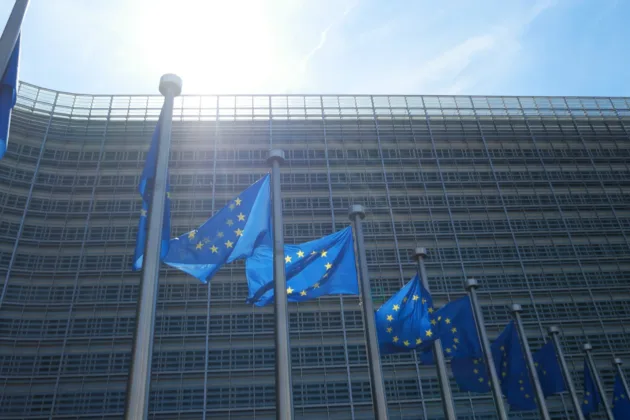
The latest example is the suspension of MCC Brussels from the EU Transparency Register. This was not the result of hidden lobbying, undisclosed meetings, financial impropriety, or any conventional breach of transparency rules. Rather, the dispute centres on the interpretation of the Transparency Register’s “single registration principle” and the relationship between MCC Brussels, an autonomous Belgian legal entity, and our Hungarian partner organisation, which provides our funding.
For more than a year, we engaged constructively with the Secretariat, responding to requests, supplying documentation, and meeting every deadline. Yet despite our efforts, the decision was made to suspend our registration.
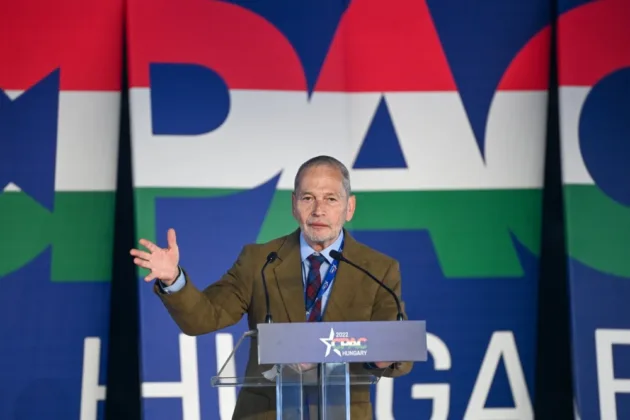
Viewed in isolation, this may appear to be a technical administrative dispute. But context matters. Since our arrival in Brussels, MCC Brussels has faced a sustained campaign of political and ideological hostility because we challenge dominant assumptions on issues such as migration, climate policy, national sovereignty, and democratic accountability.
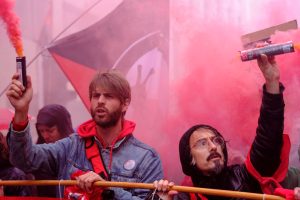
First came efforts to dismiss us as outsiders or to define us solely through our association with Hungary’s conservative government. Then came pressure on venues to withdraw from hosting our events. We also faced attempts by activist groups, including Antifa-affiliated networks, to disrupt public discussions and discourage participation in our programmes.
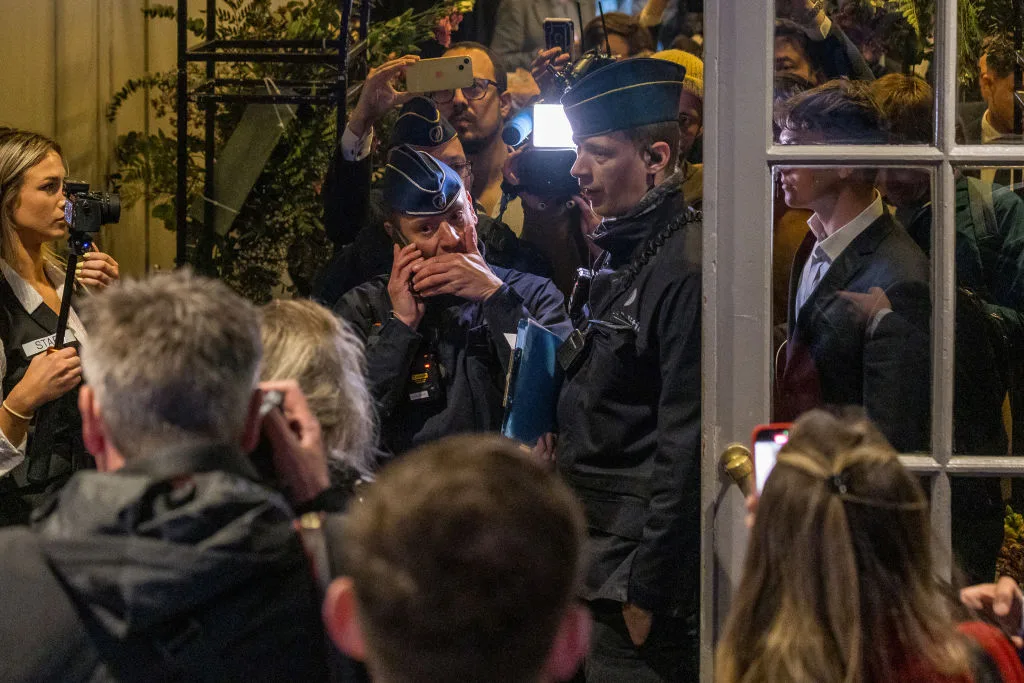
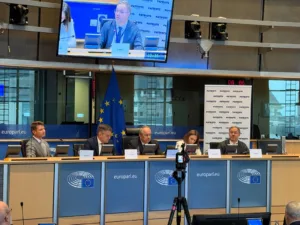
The most striking example occurred in April 2024 during the National Conservatism Conference (NatCon), a gathering of elected politicians, academics, journalists, and public intellectuals. Local authorities sought to shut down the conference through police intervention. Belgian courts swiftly overturned the decision, reaffirming the fundamental right to peaceful assembly and free expression. Yet the episode demonstrated how readily some officials were willing to use state power against lawful political debate.
Today, the battleground has shifted from public demonstrations and venue cancellations to administrative procedures. The methods may differ, but the objective appears remarkably similar: To diminish the visibility and legitimacy of viewpoints that challenge the dominant consensus in Brussels.
The double standards are difficult to ignore.
During our correspondence with the Transparency Register Secretariat, we pointed an example of another organisation operating within broader international networks while maintaining separate registrations. Among them are entities within the WWF network that continue to enjoy extensive access to EU institutions. In one instance, a WWF-affiliated organisation was granted a separate registration based on its independent legal status. We have since uncovered multiple groups like WWF. Taken together, these examples suggest that the “single registration” principle cited against MCC Brussels is far from being consistently applied across the Register’s more than 17,000 entries. The principle of organisational autonomy appears to be accepted in some cases and rejected in others.
MCC Brussels, meanwhile, has not engaged in traditional lobbying activity during the period under examination. We are a think tank. Our work consists of research, publications, conferences, and public debate. Yet we have found ourselves subjected to extraordinary scrutiny while organisations more closely aligned with prevailing policy preferences appear to encounter a far more accommodating regulatory environment. Administrative neutrality cannot mean one standard for those who reinforce the consensus and another for those who question it.
The origins of this case are also revealing. The complaint that triggered the process was submitted by Corporate Europe Observatory (CEO), an activist organisation that has repeatedly criticised our work on issues ranging from agricultural protests to climate policy and democratic governance. Its objections were not confined to technical questions about registration rules. They reflected a broader hostility to the ideas we promote and the audiences we reach.
This is why it is difficult to see the dispute as merely administrative. Transparency rules are important and should be applied fairly. But when regulatory mechanisms become vehicles for ideological contestation, public trust in those mechanisms inevitably erodes.
What is most striking is the confidence with which these measures are pursued. The European Union routinely presents itself as a champion of pluralism, democratic values, and freedom of expression. Yet too often, institutions and actors within the Brussels ecosystem treat independent conservative voices as something to be contained rather than engaged. Whether through political pressure, venue cancellations, activist campaigns, or bureaucratic exclusion, the impulse is frequently the same: marginalise dissent rather than debate it.
This reflects a misunderstanding of how democratic societies function.
Open debate is not a threat to democracy; it is one of its essential conditions. Institutions grow stronger when challenged, not weaker. Arguments improve when tested against competing perspectives. Citizens are more likely to trust public institutions when they see that disagreement is tolerated rather than suppressed.
Those who believe Europe’s future depends on ideological conformity are pursuing a dangerous course. The real strength of European democracy lies not in consensus, but in its capacity to accommodate disagreement.
There is a further irony. In recent years, MCC Brussels has devoted considerable effort to examining the relationship between EU institutions and the NGO sector, particularly the ways in which public funding can shape advocacy and policy debates. Raising questions about transparency and accountability in these areas has not always been welcomed. It may well be that our willingness to scrutinise powerful interests has contributed to the hostility we now face.
Whatever the motivation, our response will not be to retreat.
We reject the suspension and will pursue every available avenue of appeal. More importantly, we will continue our work. Our research will continue. Our conferences will continue. Our publications will continue. If anything, our commitment to fostering open debate in Brussels has only been strengthened.
Those who hope that administrative pressure will silence dissent are likely to be disappointed. Previous attempts have failed. The effort to shut down NatCon failed. Attempts to stigmatise or isolate conservative voices have failed. This latest manoeuvre will fail as well.
Europe does not need less debate. It needs more.
The struggle for intellectual diversity in Brussels is not a niche institutional dispute. It is part of a larger question about the future of democratic life in Europe. A healthy democracy requires competing ideas, vigorous argument, and the confidence to tolerate disagreement.
That principle is worth defending. And MCC Brussels intends to defend it.
Frank Furedi is Executive Director of MCC Brussels