





The European Central Bank (ECB) has raised interest rates for the first time since 2023, moving to contain inflation driven higher by the war between the United States and Iran.
The Governing Council lifted its three key rates by 25 basis points on June 11. From June 17, the deposit facility rate rises to 2.25 per cent, the main refinancing rate to 2.40 per cent and the marginal lending rate to 2.65 per cent.
The deposit rate, the ECB’s main policy benchmark, had held at 2.00 per cent during a long run of cuts that began in 2024. At its previous meeting in April the bank kept rates on hold, while warning that the risks to inflation from the war were intensifying.
Markets had almost fully priced in the increase after eurozone inflation accelerated to 3.2 per cent in May, the steepest rise in the cost of living across the bloc in almost three years. Core inflation also climbed, reaching 2.5 per cent from 2.2 per cent in April.
The ECB said the conflict in the Middle East was “generating inflation pressures” and that raising rates was a robust response across the range of scenarios it had mapped for the euro area.
The war has disrupted oil shipments through the Strait of Hormuz, pushing energy costs higher and threatening to entrench price rises across member states.
In fresh projections, the bank raised its inflation forecasts, expecting headline inflation to average 3.0 per cent this year before easing to 2.3 per cent in 2027 and 2.0 per cent in 2028. It also trimmed its growth outlook, forecasting eurozone expansion of 0.8 per cent in 2026, down from 0.9 per cent.
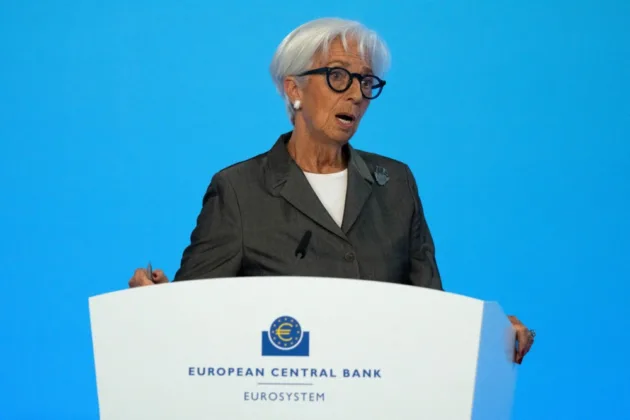
President Christine Lagarde said the Governing Council would not commit in advance to any particular path for rates, taking its decisions meeting by meeting as new data emerged. Investors expect at least one further increase before the end of the year.
The bank added it stood ready to adjust all its instruments to return inflation to its 2 per cent target over the medium term.
The decision came after the eurozone economy contracted in the first quarter of 2026, underlining the dilemma facing policymakers as they weigh rising prices against faltering growth.