



European Union finance ministers have endorsed a plan by the European Investment Bank (EIB) to take on more risk and ramp up lending for military projects, energy security and technology.
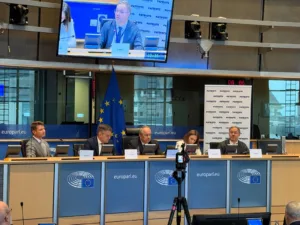
The bank’s Board of Governors, made up of the finance ministers of the 27 member states, approved the strategy at their annual meeting in Luxembourg on June 12, 2026.
The endorsement clears the way for the EIB to deploy what it called its full “firepower” as Europe’s investment engine, at a time when the bloc is under pressure to rearm and reduce its dependence on outside suppliers.
Defence has become the fastest-growing part of the bank’s work. The EIB said it had quadrupled such financing in 2025 to more than €4 billion and was on track to meet its target of channelling 5 per cent of EU lending into security and defence this year.
It pointed to a pipeline of around 25 flagship projects across 20 member states, spanning critical infrastructure, military facilities, research, supply-chain firms and dedicated private investment funds.
The push follows a series of changes since 2024 that widened the bank’s rules to cover purely military projects, a category it had previously avoided.
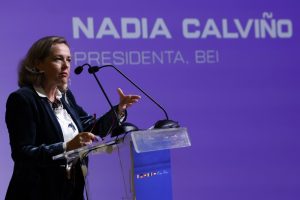
“EIB Group financing is delivering economic security for Europe,” said EIB President Nadia Calviño. “The endorsement of our strategy by Member States sends a strong signal of unity and determination to make full use of the EIB’s firepower as Europe’s investment engine.”
The bank also defended its record as the bloc’s main climate financier. It said it funded around half of Europe’s energy grid investment and backed one in five solar plants, one in three onshore wind farms and most offshore wind developments.
A separate programme aimed at small and medium-sized businesses was on course to help 350,000 firms cut energy costs and reduce emissions, the bank said.
On technology, the EIB committed more than €22 billion in 2025 through its TechEU programme, which targets artificial intelligence, clean tech and digital infrastructure. It said it would expand a scheme to support fast-growing start-ups, aiming to mobilise €15 billion and draw in private investors.
Outside the bloc, the bank said Ukraine would remain its top priority after a record volume of financing in 2025 to shore up the country’s economy and keep essential services running.
Danish minister Jakob Engel-Schmidt took over as chair of the Board of Governors for a one-year term, succeeding Czech finance minister Alena Schillerová.