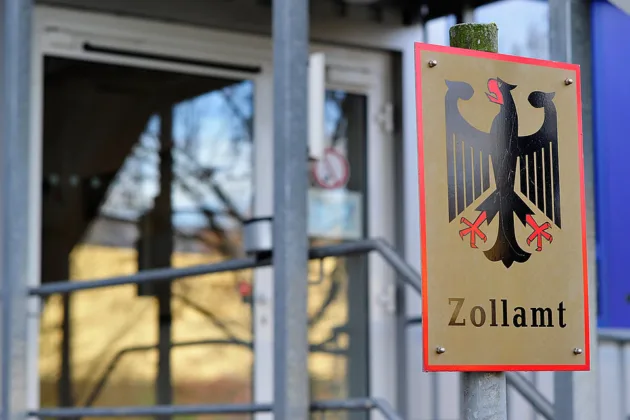







Rome has demanded that Berlin take responsibility for German-flagged NGO ships operating in the Mediterranean, picking up migrants off the Libyan coast and ferrying them to Italian shores. Italian government sources argue the practice effectively turns Italy into a landing zone for migrants brought into the Schengen area outside legal entry procedures.
The move is Italy’s response to Germany’s decision to resume transfers of asylum seekers whose first EU entry was through Italy, under the EU’s Dublin rules.
Germany announced in early August that it would resume transfers to Italy, with the first scheduled for August 19. A spokesman for the German interior ministry told ANSA that a functioning Dublin system was an indispensable condition for the success of the Common European Asylum System, and that Berlin expected transfers to Italy and Greece to resume.
Berlin argues that migrants who first entered the EU through Italy should have their asylum claims dealt with there rather than remaining in Germany after travelling onwards. The move follows the new rules of the EU’s Migration and Asylum Pact, which began to apply on June 12, 2026.
German media reported that the first case involves a 22-year-old Somali woman who entered Germany in March 2026. Italy has declined to take back Dublin cases from Germany since December 2022.
Rome is now turning Berlin’s argument back on Germany: If Italy must take back migrants because it was their first country of entry, why should German NGOs be able to transport migrants to Italy without Germany taking account of the consequences?
ANSA, citing sources at the Italian interior ministry on August 10, reported that Rome will object that a form of “compensation” must apply when determining future transfers. Ministry sources want the number of migrants brought to Italy by NGO vessels flying European flags taken into account when responsibility is distributed between member states, noting that most such vessels are German.
The move puts German organisations including Sea-Watch, Sea-Eye, SOS Humanity, Jugend Rettet and Mission Lifeline at the centre of the dispute. Their vessels have included the Sea-Watch 3, Sea-Watch 4, Alan Kurdi, Iuventa, Humanity 1, Lifeline and Eleonore.
Several of these organisations and their leading activists have openly aligned themselves with the European Left and have framed their Mediterranean operations not simply as humanitarian missions, but as part of a broader political campaign against European migration controls and what they describe as the “Fortress Europe” approach.
Their critics in Italy argue that these operations are therefore driven not only by humanitarian considerations but also by a strong ideological commitment to opposing restrictive border policies.
Italian authorities have for years accused some NGO operations of facilitating the business model of migrant smugglers.
Prosecutors in Trapani, western Sicily, alleged that migrants departing Libya in small boats were, in some cases, transferred directly from vessels operated by smugglers onto NGO ships, which then transported them to Italy. They argued that this effectively allowed smugglers to outsource the most dangerous part of the journey while retaining their boats for further crossings.
That case collapsed on April 19, 2024, when the Trapani court dismissed charges against 10 defendants, among them four crew of the Iuventa, operated by Jugend Rettet. The judge found the investigation had relied on incomplete evidence.
The numbers explain why the issue remains politically sensitive. Then interior minister Matteo Piantedosi said in December 2022 that NGO vessels had brought 11,892 migrants to Italy that year, including 11,076 from Tripolitania, or 34.8 per cent of arrivals along that route.
Their share of all arrivals has been smaller. Charity ships accounted for about 8 per cent of arrivals in Italy in 2023, down from a peak of 41 per cent in 2017, according to figures cited by the Associated Press.
Italy recorded more than 157,000 sea arrivals in 2023, followed by 66,617 in 2024 and 66,316 in 2025, according to UNHCR.
Arrivals have since fallen sharply. Interior ministry figures show 17,176 people reached Italy by sea between January 1 and August 10 this year, against 37,952 in the same period of 2025.
According to Italian interior ministry sources cited by ANSA on August 10, Rome considers cases involving migrants who arrived before June 12 to have already been dealt with under previous arrangements with Germany and other European countries. For those arriving afterwards, Italy says it is still too early to establish how many could subsequently move to other EU states.
The European Commission takes a different view. In an assessment published on July 15 it found that eight member states had sent Italy 12 transfer requests between June 12 and July 7, all of which Rome refused.
Italy is also among the countries the Commission has classified as under migratory pressure, alongside Greece, Cyprus and Spain. For 2026 the Council of the European Union set a solidarity pool equivalent to 21,000 relocations or €420 million.
The political message from Rome is clear: If Berlin insists that Italy must accept responsibility for migrants because they first entered the EU on Italian territory, Rome wants Germany to account for the role played by German NGO vessels in bringing migrants to Italy in the first place.